书单
百科
这个词条暂时没有中文维基百科条目,下面是英文维基百科的内容(英文原文):
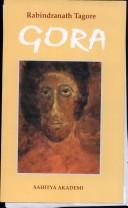
Gora (Bengali: গোরা) is a novel by Rabindranath Tagore, set in Calcutta (now Kolkata), in the 1880s during the British Raj. It is the fifth in order of writing and the longest of Tagore's twelve novels. It is rich in philosophical debate on politics and religion.
Other themes include liberation, universalism, brotherhood, gender, feminism, caste, class, tradition versus modernity, urban elite versus rural peasants, colonial rule, nationalism and the Brahmo Samaj.
The novel is the longest novel written by Tagore. It deeply influences the Indian society and emerged as a debate between Brahmo Samaj and Hinduism.
Contents
Gora consists of two parallel love stories of two pairs of lovers: Gora and Sucharita, Binoy and Lolita. Their emotional development is shown in the background of the social and political problems prevalent in India towards the end of the 19th-century.
Plot
The story mainly revolves around its protagonist, Gormohan alias 'Gora', a staunch Hindu Brahmin. Gora is a young man with a well-built body, good stature, white complexion, and a heavy voice. Because of his physique, he is the head of his circle of friends. Despite not being handsome, Gora is considered attractive because of his heavy speech and high stature. Gora's best friend is Binoybhushan aka Binoy. Binoy is a friendly and handsome young man. He has a special affection for Gora's mother Anandamayi, and regards Anandamayi as his mother as he was orphaned as a child. One day Binoy meets a Brahmo Samaji Paresh Babu and his daughter Sucharita when their wagon crashes outside Binoy's house. Binoy helps them, and starts visiting their house. And then Binoy is introduced to Paresh Babu, his wife Varadasundari, his eldest daughter Labonnyo, middle daughter Lolita, and younger daughter Leela. Along with them, he is introduced to Sucharita, the adopted daughter of Paresh Babu, and Satish, Sucharita's real brother. At the time of the story there is an ongoing conflict between the Brahmo Samaj and Hinduism; as Gora is a staunch Hindu who believes in untouchability, he forbids Binoy to meet Paresh Babu and his family. This leads to an argument between the two. Gora accuses Binoy of being attracted to Paresh Babu's daughter, but Binoy denies this. Gora's father Krishnadayal, a good friend of Paresh Babu, one day urges Gora to visit Paresh Babu's house to inquire about his well-being. When Gora goes there, Binoy is already present, disappointing and angering Gora. There, Gora is introduced to Haran alias Panu Babu, who is Bengali but has special affection for the British. Haran Babu is a special head of the Brahmo Samaj, and is going to marry Sucharita. Due to Gora's being Hindu, he does not get the same respect at Paresh Babu's house as Binoy did. He gets into an argument with Haran Babu. Sucharita, who earlier saw Gora as inferior because of his fanaticism, supports Gora by not supporting Haran Babu in the debate. Gora is then very angry with Binoy, but due to his special affection for him cannot leave him.
Later, Gora has to go to Paresh Babu's house once again, where Gora's love for Sucharita awakens; Sucharita reciprocates those feelings. Gora, who has sworn that he will never marry, feels deeply guilty about this and immediately sets off on an unknown journey. Varadasundari gets along well with Magistrate Brownlow, and she chooses Binoy and Lalita to star in a show at his house. Gora travels to a village which is haunted by the atrocities of the magistrate and the superintendent. He vows to bring justice to the village and rebels against the magistrate. Enraged by this, the magistrates send Gora to jail for a month without trial for any crime. Hearing this, Lalita, who cannot tolerate injustice, is enraged. Due to this she comes home overnight on a steamer with Binoy. The steamer incident — that a Brahmo girl has come alone with a Hindu boy at night — stirs up the Brahmo Samaj. Lalita becomes notorious, so Varadasundari blames Binoy. Binoy agrees to join the Brahmo Samaj under societal pressure, but Gora objects to it, with Lalita also forbidding Binoy from doing so. Meanwhile, Sucharita's widowed maternal aunt, Harimohini, visits Poresh's house and her being a Hindu arises conflict between her and Poresh's wife, Varadasundari. Seeing this conflict, Poresh reveals to Sucharita that she had her own house in the neighbourhood which he bought from Sucharita's father's savings. Sucharita and Harimohini move into the house.
After being released from prison, Gora starts visiting Sucharita's house. Harimohini, who is suspicious of Gora's intention, wants Sucharita to marry her relative, Kailash. Sucharita doesn't accept it and accepts Gora as her guru. Meanwhile, Binoy and Lalita get married with resistance from Varadasundari, Gora, and Binoy's relatives.
When one day, when Krishnadayal falls ill, he informs Gora of the truth about his origins. He explains that Gora is not actually his son, but the son of a Christian Irishman. They had met when he lived in Etawah; when war broke out there, Gora's military father was killed. Gora's mother was dependent on Krishnadayal's goodwill and gave birth to Gora in his house, dying in the process. Krishnadayal has raised him since. In that one moment, Gora's whole life is destroyed, the religion for which he sacrificed his whole life having rejected him. Eventually, Gora accepts Paresh Babu as his guru, after drinking water from Lachmiya's hand.
Characters
Gormohan aka Gora/Gaur is the son of Anandmoyi and Krishnadayal, younger half- brother of Mahim, best friend of Binoy and Sucharita's love interest. He is the protagonist and titular character of the novel.
Binoybhushan aka Binoy (Vinay) is Lolita's husband and Gora's best friend.
Sucharita (birth name: Radharani) is the adopted daughter of Paresh Babu and Vardasundari and sister of Satish, and her half- sisters, Lolita, Lavanya and Leela.
Lolita (Lalita) is Paresh Babu and Vardasundari's second daughter and Binoy's wife.
以上文字摘自英文维基百科「Gora (novel)」(有删节,去掉了参考文献等尾部小节),按 CC BY-SA 4.0 使用,作者为维基百科的各位编者。
资料卡
- 原题
- গোরা
- 原作语言
- 孟加拉语
- 首次出版
- 1910 年
- 作品形式
- 长篇小说
资料卡来自 Wikidata Q28003160(CC0),众包数据,个别字段可能不全。
改编作品
电影1
名单来自 Wikidata(CC0):只列条目里写明「改编自 / 取材于」这本书的作品,不按名字猜;众包数据,可能不全。