书单
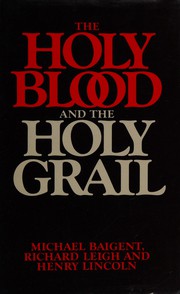
圣血与圣杯 (1982)
- 作者
- Michael Baigent、Richard Leigh、亨利·林肯
- 首版
- 1982 年
- 国家/地区
- 英国
- Open Library
- 27 个版本
百科
这个词条暂时没有中文维基百科条目,下面是英文维基百科的内容(英文原文):
The Holy Blood and the Holy Grail, published as Holy Blood, Holy Grail in the United States, is a book by Michael Baigent, Richard Leigh, and Henry Lincoln. The book was first published in 1982 by Jonathan Cape in London as an unofficial follow-up to three BBC Two TV documentaries that were part of the Chronicle series. The paperback version was first published in 1983 by Corgi books. A sequel to the book, called The Messianic Legacy, was originally published in 1986. The original work was reissued in an illustrated hardcover version with new material in 2005.
In The Holy Blood and the Holy Grail, the authors put forward a hypothesis that the historical Jesus married Mary Magdalene, had one or more children, and that those children or their descendants emigrated to what is now southern France. Once there, they intermarried with the noble families that would eventually become the Merovingian dynasty, whose special claim to the throne of France is championed today by a secret society called the Priory of Sion. They concluded that the legendary Holy Grail is simultaneously the womb of Mary Magdalene and the sacred royal bloodline she gave birth to.
An international bestseller upon its release, The Holy Blood and the Holy Grail spurred interest in a number of ideas related to its central thesis. Response from professional historians and scholars from related fields was negative. They argued that the bulk of the claims, ancient mysteries, and conspiracy theories presented as facts are pseudohistorical. Historian Richard Barber called the book "the most notorious of all the Grail pseudo-histories ... which proceeds by innuendo, not by refutable scholarly debate."
In a 1982 review of the book for The Observer, novelist and literary critic Anthony Burgess wrote: "It is typical of my unregenerable soul that I can only see this as a marvellous theme for a novel." The theme was later promoted by Margaret Starbird in her 1993 book The Woman with the Alabaster Jar and dramatised by Dan Brown in his 2003 novel The Da Vinci Code.
Background
One of the books that influenced the project was L'Or de Rennes (later re-published as Le Trésor Maudit), a 1967 book by Gérard de Sède, with the collaboration of Pierre Plantard. After reading it, Henry Lincoln persuaded BBC Two to produce a series of documentaries for their Chronicle series, which became quite popular and generated thousands of responses. Lincoln then joined forces with Michael Baigent and Richard Leigh for further research. This led them to the pseudohistorical Dossiers Secrets at the Bibliothèque nationale de France which, though alleging to portray hundreds of years of medieval history, were actually all written by Pierre Plantard and Philippe de Chérisey under the pseudonym of "Philippe Toscan du Plantier". Unaware that the documents had been forged, Baigent, Leigh and Lincoln used them as a major source for their book.
Comparing themselves to the reporters who uncovered the Watergate scandal, the authors maintain that only through speculative "synthesis can one discern the underlying continuity, the unified and coherent fabric, which lies at the core of any historical problem." To do so, one must realize that "it is not sufficient to confine oneself exclusively to facts."
Content
In The Holy Blood and the Holy Grail, Baigent, Leigh and Lincoln posit the existence of a secret society known as the Priory of Sion, which is supposed to have a long history starting in 1099 and had illustrious Grand Masters including Leonardo da Vinci and Isaac Newton. According to the authors' claims, the Priory of Sion is devoted to restoring the Merovingian dynasty, which ruled the Franks from 457 to 751, on the thrones of France and the rest of Europe. The Priory is also said to have created the Knights Templar as its military arm and financial branch.
The authors re-interpreted the Dossiers Secrets "in the light of their own Biblical obsessions." Contrary to Plantard's initial Franco-Israelist claim that the Merovingians were only descended from the Tribe of Benjamin, they asserted that the Priory of Sion protects Merovingian dynasts because they are the lineal descendants of the historical Jesus and his alleged wife, Mary Magdalene, traced further back to King David. According to them, the legendary Holy Grail is simultaneously the womb of saint Mary Magdalene and the sacred royal bloodline she gave birth to, and the Church tried to kill off all remnants of this bloodline and their supposed guardians, the Cathars and the Templars, in order for popes to hold the episcopal throne through the apostolic succession without fear of it ever being usurped by an antipope from the hereditary succession of Mary Magdalene. The authors therefore concluded that the modern goals of the Priory of Sion are:
the public revelation of the tomb and shrine of Sigebert IV as well as the lost treasure of the Temple in Jerusalem, which supposedly contains genealogical records that prove the Merovingian dynasty was of the Davidic line, to facilitate Merovingian restoration in France the re-institutionalization of chivalric knighthood and the promotion of pan-European nationalism the establishment of a theocratic "United States of Europe": a Holy European Empire politically and religiously unified through the imperial cult of a Merovingian Great Monarch who occupies both the throne of Europe and the Holy See the actual governance of Europe residing with the Priory of Sion through a one-party European Parliament.
以上文字摘自英文维基百科「The Holy Blood and the Holy Grail」(有删节,去掉了参考文献等尾部小节),按 CC BY-SA 4.0 使用,作者为维基百科的各位编者。
资料卡
- 原题
- The Holy Blood and the Holy Grail
- 原作语言
- 英语
- 首次出版
- 1982 年
- 体裁
- 随笔
- 首版出版社
- 乔纳森·凯普
- 续作
- Michael Baigent
资料卡来自 Wikidata Q1142518(CC0),众包数据,个别字段可能不全。