书单
百科
这个词条暂时没有中文维基百科条目,下面是英文维基百科的内容(英文原文):
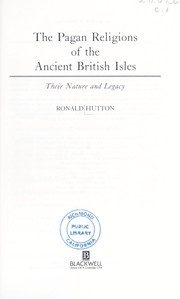
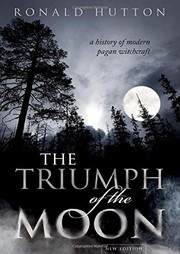
The Triumph of the Moon: A History of Modern Pagan Witchcraft is a book of religious history by the English historian Ronald Hutton, first published by Oxford University Press in 1999. At the time, Hutton was a Reader in History at Bristol University, and had previously published a study of ancient pre-Christian religion, The Pagan Religions of the Ancient British Isles (1991) as well as studies of British folk customs and the Early Modern period.
The Triumph of the Moon deals with the history of Wicca, a contemporary Pagan religion which developed in England in the early 20th century. The first academic study to tackle the entirety of this subject, Hutton questions many assumptions about Wicca's development and argues that many of the claimed connections to longstanding hidden pagan traditions are questionable at best. However, he also argues for its importance as a genuine new religious movement. The work was first presented as "The Triumph of the Moon" by Hutton, at the Centre For Pagan Studies in 1995.
The Triumph of the Moon was well received in both academia and the mainstream press. Various academics working in the fields of Pagan studies, the history of western esotericism and the history of magic have praised it as an influential study that helped to legitimise the historical investigation of alternate and occult religious movements. An academic anthology edited by Dave Evans and Dave Green was later published in its honour, entitled Ten Years of Triumph of the Moon (2009).
The book's reception has been mixed in the Pagan community itself. Many welcome it as an authoritative account of Wiccan history, but others are more critical, arguing that Hutton has prematurely rejected the idea that Wicca is the continuation of an ancient, pre-Christian tradition. Several Wiccans taking the latter view have published their criticisms, with the Wiccan Jani Farrell-Roberts taking part in a published debate with Hutton in the British Pagan magazine The Cauldron (2003), whilst the New Zealander Ben Whitmore published a short book casting a critical eye on Hutton's work, entitled Trials of the Moon (2010).
Background
Hutton and his research
Ronald Hutton was born in Ootacamund in India, and "was in fact brought up Pagan, in a modern English tradition which combined a reverence for the natural world with a love of the ancient Greek and Roman classics." In his teenage years he became acquainted with Wicca, attending his first Wiccan rite at Halloween 1968 and meeting the prominent Wiccan High Priest Alex Sanders.
Hutton had studied history at Pembroke College, Cambridge and then Magdalen College, Oxford, before gaining a job at the University of Bristol in 1981. Focusing his research interests on Early Modern England, he subsequently published a string of four books on the subject; The Royalist War Effort 1642–1646 (1982), The Restoration: A Political and Religious History of England and Wales 1658–1660 (1985), Charles the Second, King of England, Scotland and Ireland (1989) and The British Republic 1649–1660 (1990). 1991 saw the publication of his first work on the subject of pagan religion, The Pagan Religions of the Ancient British Isles, released by the publishers Blackwell.
In 1998, the year before the publication of Hutton's Triumph of the Moon, the American Wiccan Donald H. Frew (1960–) published an article entitled "Methodological Flaws in Recent Studies of Historical and Modern Witchcraft" in the Canadian journal Ethnologies in which he criticised the study of Wiccan history up till that point, including Hutton's Pagan Religions of the Ancient British Isles. Hutton responded to Frew in an article published in the journal Folklore in 2000. Entitled "Paganism and Polemic: The Debate over the Origins of Modern Pagan Witchcraft", in the paper Hutton commented that Frew's work had been a "historiographical landmark", being "only the second contribution to one of the key scholarly debates in the history of contemporary religions".
Synopsis
Opening with a preface in which Hutton explains his purpose in writing the book, the first half of the work, which is titled 'Macrocosm', deals with the various influences which existed in 19th and early 20th century Britain that played a part in the development of Wicca.
Part One: Macrocosm
Chapter one, entitled 'Finding a Language', deals with the definitions of various words pertinent to this study, such as "religion" and "paganism". Hutton proceeds to look at the ways in which ancient pagans, adherents of indigenous tribal religions and druids had been depicted in Romanticist and other forms of literature, such as in the works of R. M. Ballantyne, G. K. Chesterton and Lord Byron.
The second chapter, 'Finding a Goddess', looks at the development of both a moon goddess and Mother Earth in the works of literary figures like Keats, Shelley and Charlotte Brontë. Hutton then discusses the archaeological ideas of ancient goddesses which were prevalent at the time, in particular those put forward by the likes of Arthur Evans and Jane Ellen Harrison which argued for the existence of a singular Great Goddess. In the third chapter, 'Finding a God', Hutton then tackles the view of male pagan gods, noting the widespread adoption of Apollo and Pan as modern icons by Romanticists, and discussing the wealth of literary references to Pan produced in the 19th and early 20th centuries.
Part Two: Microcosm
The latter half of the book looks at the early development of Wicca.
以上文字摘自英文维基百科「The Triumph of the Moon」(有删节,去掉了参考文献等尾部小节),按 CC BY-SA 4.0 使用,作者为维基百科的各位编者。
资料卡
- 原题
- The Triumph of the Moon
- 原作语言
- 英语
- 首次出版
- 1999 年
- 首版出版社
- 牛津大学出版社
- 主题
- 宗教史
资料卡来自 Wikidata Q7770300(CC0),众包数据,个别字段可能不全。