书单
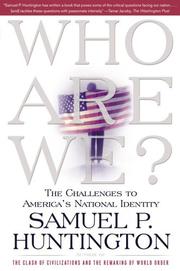
Who Are We? The Challenges to America's National Identity (2004)
- 作者
- 塞缪尔·P·亨廷顿
- 首版
- 2004 年
- 国家/地区
- 美国
- Open Library
- 9 个版本
百科
这个词条暂时没有中文维基百科条目,下面是英文维基百科的内容(英文原文):
Who Are We? The Challenges to America's National Identity (2004) is a treatise by political scientist and historian Samuel P. Huntington (1927–2008). The book attempts to understand the nature of American identity and the challenges it will face in the future.
Describing American identity
In describing the American identity, Huntington first contests the notion that the country is, as often repeated, "a nation of immigrants". He writes that America's founders were not immigrants, but settlers, since British settlers came to North America to establish a new society, as opposed to migrating from one existing society to another one as immigrants do. Later peoples who joined the culture present in the original British colonies, already established by these settlers, were indeed immigrants.
Many people point to the American Creed as the core of American identity. Huntington defines the American Creed as embodying the "principles of liberty, equality, individualism, representative government, and private property". Yet Huntington asks:
Would America be the America it is today if in the 17th and 18th centuries it had been settled not by British Protestants but by French, Spanish, or Portuguese Catholics? The answer is no. It would not be America; it would be Quebec, Mexico, or Brazil.
Huntington argues that, of all the nations in Europe, and of all the colonies, America alone developed the American Creed, and that this simple observation requires explanation. This observation leads to two conclusions: that America was an English colony, and that America alone was formed as a result of the Reformation.
To advance his argument about the contribution to America of its English heritage, he says:
The political and legal institutions the settlers created in the seventeenth and eighteenth centuries embodied in large part the institutions and practices of England's late-sixteenth-century and early-seventeenth-century "Tudor constitution." These included: the concept of a fundamental law superior to and limiting government; the fusion of executive, legislative, and judicial functions and the division of power among separate institutions and governments; the relative power of the legislature and chief executive; the merger of the "dignified" and "efficient" functions in the chief executive; a two-house legislature; the responsibility of the legislature to their local constituencies; a legislative committee system; and primary reliance for defense on militia rather than a standing army.
As for the importance of Protestantism, Huntington states: "The American Creed is the unique creation of a dissenting Protestant culture". In particular, he highlights the:
Protestant emphasis on the individual conscience and the responsibility of individuals to learn God's truths directly from the Bible promoted American commitment to individualism, equality, and the rights to freedom of religion and opinion. Protestantism stressed the work ethic and the responsibility of the individual for his own success or failure in life...With its congregational forms of church organization, Protestantism fostered opposition to hierarchy and the assumption that similar democratic forms should be employed in government.
Challenges to American identity
Huntington argues that it is during the 1960s that American identity begins to erode. This was the result of several factors:
The beginning of economic globalization and the rise of global subnational identities
The easing of the Cold War and its end in 1989 reduced the importance of national identity
Attempts by candidates for political offices to win over groups of voters
The desire of subnational group leaders to enhance the status of their respective groups and their personal status within them
The interpretation of Congressional acts that led to their execution in expedient ways, but not necessarily in the ways the framers intended
The passing on of feelings of sympathy and guilt for past actions as encouraged by academic elites and intellectuals
The changes in views of race and ethnicity as promoted by civil rights and immigration laws
Huntington places the passage and subsequent misinterpretation of the Civil Rights Act of 1964 and the Voting Rights Act of 1965 at the center of government actions that eroded the American Creed. Huntington writes:
Senator Hubert Humphrey, the floor manager of the bill, assured the Senate that nothing in the bill gave courts or executive agencies the power "to require hiring, firing, or promotion of employees in order to meet a racial 'quota' or to achieve a certain balance...Title VII prohibits discrimination...[and] is designed to encourage hiring on the basis of ability and qualifications, not race or religion.
Yet these acts gave rise to a system of quotas and affirmative action, so that "the Court derived from Title VII a legal requirement that the proponents of the law had expressly disclaimed".
以上文字摘自英文维基百科「Who Are We? The Challenges to America's National Identity」(有删节,去掉了参考文献等尾部小节),按 CC BY-SA 4.0 使用,作者为维基百科的各位编者。
资料卡
- 原题
- Who Are We? The Challenges to America's National Identity
- 原作语言
- 英语
- 首次出版
- 2004 年
- 主题
- 国家认同
- 故事发生地
- 美国
资料卡来自 Wikidata Q4243399(CC0),众包数据,个别字段可能不全。