书单
百科
这个词条暂时没有中文维基百科条目,下面是英文维基百科的内容(英文原文):
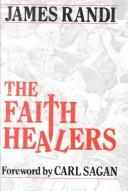
The Faith Healers is a 1987 book by conjurer and skeptic James Randi. In this book, Randi documents his exploration of the world of faith healing, exposing the tricks that religious con artists use in their healing shows to fool the audience. Randi's expertise in performing stage magic and mentalism allowed him to easily identify the same techniques when used by con artists. Randi analyzes the methods used by A. A. Allen, Ernest Angley, Willard Fuller, WV Grant, Peter Popoff, Oral Roberts, Pat Robertson, Ralph DiOrio and others, exposing their tricks. Popoff was dramatically exposed as a fraud by Randi on The Tonight Show Starring Johnny Carson. Randi expended considerable effort contacting people who were supposedly cured by these faith-healers. He found there was a lot of disappointment and not a single verifiable case of healing. Randi describes the "calling out trick," the "wheelchair trick," the "leg-stretching trick," the "how many fingers trick," the "shotgun technique," as well as methods used to gain personal information about potential victims in the audience. He also describes methods used, often by mail, to convince people to make large donations.
Randi also examines claims of miracles at holy sites such as at the Sanctuary of Our Lady of Lourdes again finding fraud and no verifiable cases of healing.
Prior to turning his attention to faith healing, Randi spent many years exposing fraud by psychics and mediums such as the famous Uri Geller. An updated edition of this book was released in 1989, and an e-book edition was released in 2011.
Contents and synopsis of the e-book edition
The information in the book, summarized below, was correct when the book was originally published in 1987, except information in the update section which was correct when that was first published in 1989. Many of the faith healers discussed in the book have Wikipedia pages which may have more up to date information on their activities. These pages can be accessed by clicking on their names, when highlighted, in the synopsis below. Some have died since the book was written; reference to these individuals matches Randi's depiction in the book.
Foreword
The foreword is written by Carl Sagan, author of numerous science books for the general public, creator of the Cosmos television series about the mysteries of the universe, promoter of the SETI program to search for scientific evidence of extraterrestrial life, and author of over 600 scientific papers (see his Wikipedia page). Sagan starts off discussing Hippocrates and his success in promoting the scientific method in medicine. He points out the difficulty in getting people to view disease rationally, especially in regards to medically incurable diseases, leaving them vulnerable to people who falsely claim to be able to cure for their personal gain. Sagan characterizes Randi as "fearless, angry, anecdotal, crotchety, and ecumenically offensive"; he describes the book as a tirade; but, he says, "We ignore him at our peril."
Introduction
James Randi worked for 40 years as a professional conjurer, e.g. a performer of stage magic. Having seen all the tricks, he became an expert at detecting fakery and was able to apply this knowledge to examine claims about the occult, supernatural, and paranormal. He later turned his expertise to claims about faith healing which led to the publication of this book. For a time he and his colleagues followed various well known faith healers around the country, recording their activities. As a result, they were the first investigators to expose the faith healing racket. He notes that in spite of the extensive evidence they had gathered, law enforcement failed to act. Philosopher Paul Kurtz defines three types of faith: intransigent faith which is unaffected by any sort of contrary evidence, willful belief which is choosing to believe with little or no evidence either way, and hypotheses based on evidence. Randi comments that probably only those in the third category are likely to be persuaded to change their minds. He goes on to discuss the "Freireich experimental plan (FEP)" which was first described by Emil J. Freireich, as an illegitimate experimental method that allows ineffective medical treatments including faith healing to appear to be effective even if the patient gets worse or dies.
The origins of faith healing
Many religions have a history of faith healing with holy objects. The Roman Catholic Church in particular has saved thousands of relics of saints (clothing, bone fragments, etc.) that are supposed to have healing powers. Beginning in the early 1300s, European royalty claimed to have the ability to heal by touching. In the 1500s, Christian reformer Martin Luther took credit for miraculous cures. In the 1600s, a practitioner called Valentine Greatrakes claimed to be able to cure a variety of diseases and acquired a large following. Many tombs and shrines were claimed to have curative powers. Lourdes in particular became a pilgrimage site for those in need of a cure. Established in 1876, it receives 5 million visitors annually. Although it is claimed that 30,000 are healed every year, only 64 in total were accepted as "miracles" by the Catholic Church. Lacking any proof in most cases that the ailments were real, Randi points out that the principle of parsimony (or Occam's razor) would suggest that most, if not all, of the supposed cures did not actually occur. Randi explores some of the difficulties of examining claims and discusses in detail two claims from Lourdes.
以上文字摘自英文维基百科「The Faith Healers」(有删节,去掉了参考文献等尾部小节),按 CC BY-SA 4.0 使用,作者为维基百科的各位编者。
资料卡
- 首次出版
- 1987 年
- 首版出版社
- 普罗米修斯出版社
资料卡来自 Wikidata Q7733138(CC0),众包数据,个别字段可能不全。