书单
百科
这个词条暂时没有中文维基百科条目,下面是英文维基百科的内容(英文原文):
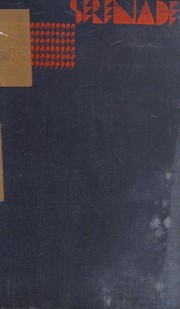
Serenade is a novel by James M. Cain published in 1937 by Alfred A. Knopf. and one of four Cain novels to feature opera as a plot device.
Loosely based on Bizet's Carmen, the story explores the sources of artistic development, in particular the role played by sexual orientation in the development of artistic talent.
Regarded as one of his most significant works, Serenade has been called "Cain's finest sustained piece of writing."
Plot Summary
John Howard Sharp, a once-successful American opera singer who lost his singing voice, is down-and-out in a Mexican café when he encounters the attractive Indio prostitute, Juana Montes. Sharp is attracted to Juana and wins her from a local bullfighter, Triesca. She takes Sharp to a brothel. When he sings excerpts from Bizet's Carmen, Juana's interest in him cools: she detects something unmanly in his performance. The pair part ways, and he continues his penurious existence.
Several months later, Juana wins 500 pesos and a new Ford roadster in a lottery. She plans to open a café-bordello in Acapulco catering to American tourists under the auspices of a politically connected kingpin. She enlists Sharp to be bartender, bouncer and bookkeeper for the establishment, in part because she suspects that he is sexually ambivalent and will not harass the female employees.
En route to Acapulco, the pair make a detour in the country to pick up food supplies from Juana's parents. As night falls, a storm breaks over the couple and the roadster becomes trapped by flood waters. Discovering a remote, abandoned Catholic church, Sharp crashes the car through its locked double doors to find shelter. He parks the car in front of the altar, exchanges his wet clothing for a priest's cassock and pilfers sacristy candles for utility lighting. Juana is initially appalled at the sacrilege.
Sharp makes a charcoal fire in the vestry and prepares a meal from their provisions. Juana joins him and they become intoxicated on sacramental wine. Superstitious, she becomes hysterical at hearing peals of thunder. Sharp attempts to calm her by playing the organ and singing the Nona Nobis as the storm rages, which Juana disparages. Juana disrobes and makes an "Aztec" offering before the altar, upon which Sharp then rapes her.
Unable to depart due to the flooding, they spend a second day at the church. Juana catches an iguana and, ritualistically, they prepare it for a meal. The iguana meat acts as an aphrodisiac and they make love. Sharp again sings and Juana assures him that he has been restored to his former vocal prowess. Sharp falls in love with Juana.
Determined to return to the United States to resume his operatic career, Sharp arranges passage for himself and Juana on the steamer Port of Cobh, operated by Captain Conners. At their hotel, the kingpin appears and demands sexual favors from Juana. Sharp intercedes and knocks the kingpin unconscious. The couple flee in the roadster. Conners intercepts the fugitives and clandestinely escorts them to Port of Cobh, on which they embark for San Pedro, California. Conners cunningly secrets the undocumented Juana past immigration officials, pledging to assist the couple in the event of a crisis.
Sharp begins to explore the market for opera singers in Hollywood, but agents show little interest in him. He resorts to performing in nightclubs. Desperately low on money, Sharp and Juana attend a performance of Carmen at the Hollywood Bowl. During the first act, a singer is suddenly pulled from the stage. Though undetected by the audience, Sharp instantly recognizes that the baritone has become incapacitated. Familiar with the part, Sharp offers to fill in. The conductor, though skeptical, allows him to sing. Sharp's performance is a grand success.
A studio executive immediately signs Sharp to a lucrative contract to sing in motion pictures. His debut film, a B-Western, is a critical and box office success. The studio is outraged when Sharp insists on $50,000 for his next feature, but they accept the terms on a three-picture contract. His movie career ascendant, Sharp introduces Juana to Hollywood society at co-star Elsa Chadwick's celebrity party. Juana, dressed in florid Indio garments, is deemed gauche by the hostess and shunned by the female guests. Furious, Sharp declines to sing and prepares to leave with Juana. Elsa insults Juana, causing Sharp to slap her and leave.
Deeply disillusioned with Hollywood, Sharp is informed that the Metropolitan Opera wishes to put him under contract. After a protracted struggle with his agent and the studio executive Rex Gold, Sharp is emphatically denied a temporary release to perform with the Metropolitan. Defying them, he bolts to New York and performs in all the standard repertoire that season, to great acclaim. The studio initiates litigation against Sharp for breach of contract. Sharp is urged to comply with his Hollywood obligations or cease singing with the Metropolitan. The crisis is at an impasse when Sharp receives a phone call which Juana, preternaturally, urges him not to answer; the caller is Winston Hawes.
Hawes is both a talented conductor and a music teacher who had mentored the young Sharp in Paris. He is also an entrepreneur who regards music as a commodity to be exploited: "He made a whore out of it." When Sharp realized that his dependency on Hawes had become a humiliating addiction, the quality of his voice deteriorated, resulting in his self-imposed exile in Mexico. Hawes informs Sharp that he has already booked him for a performance in New York. Sharp is loath to comply with the domineering Hawes, but Juana encourages him to go.
以上文字摘自英文维基百科「Serenade (novel)」(有删节,去掉了参考文献等尾部小节),按 CC BY-SA 4.0 使用,作者为维基百科的各位编者。
资料卡
- 原题
- Serenade
- 原作语言
- 英语
- 作品形式
- 长篇小说
资料卡来自 Wikidata Q42186372(CC0),众包数据,个别字段可能不全。
改编作品
电影1
名单来自 Wikidata(CC0):只列条目里写明「改编自 / 取材于」这本书的作品,不按名字猜;众包数据,可能不全。