书单
百科
这个词条暂时没有中文维基百科条目,下面是英文维基百科的内容(英文原文):
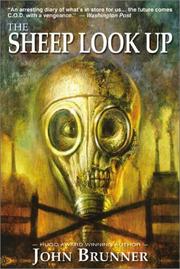
The Sheep Look Up is a 1972 dystopian science fiction novel by British author John Brunner, dealing with the deterioration of the environment in the United States. It was nominated for the 1972 Nebula Award for Best Novel.
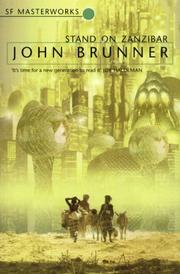
The novel is the third in Brunner's "Club of Rome Quartet", each novel dealing with a separate social issue. The Sheep Look Up explores a future dystopia occurring as a result of rampant consumerism and pollution. It follows 1968's Stand on Zanzibar (overpopulation), 1969's The Jagged Orbit (racial tension and violence) and precedes 1975's The Shockwave Rider (technology and future shock).
Background
The novel takes place in a very near future United States, not dated explicitly but clearly as near as the late 1970s. Human activities have resulted in wholesale destruction of the environment.
Water pollution is so severe that "don't drink" notices are frequently issued, water taps in public toilets are coin-operated and household water filters are popular. Air pollution has reached the point that people in urban areas cannot go outside without "filtermasks". Such fumes left behind by aircraft cause air sickness in planes trailing behind. California is blanketed by a thick layer of smog that prevents the sun from shining through. Acid rain forces people to cover themselves in plastic so that their clothes are not ruined. The sea has become so polluted and the beaches so strewn with garbage that Americans now vacation in the mountains. Environmentally minded people drive electric or "steam cars" with clean exhaust, but these in turn become target of their haters.
Coastal waters are mostly covered by a stinking, oily film made up of sewage, detergents, industrial effluent, and cellulose microfibers. The Mediterranean Sea is poisoned beyond recovery, which leads to famine, refugee waves, civil unrest and even wars in Europe and Africa. "… we killed the Great Lakes. They're in a fair way to killing the Baltic, with help from the Russians who have already killed the Caspian." The use of defoliants and herbicides created "the Mekong Desert" or dustbowl. The heavy use of chemicals has made large swathes of farmland unsuitable for growing anything, resulting in high food prices.
Many animal species and surface sea fish are on the brink of extinction, and birds are not as common as before, the bald eagle dead for years. Overuse of antibiotics has created a host of resistant bacteria and infections are rampant. Household pests have also developed pesticide resistance, and a new type of worms destroying all crops, known as Jigras, causes food shortages.
Several years ago there had been attempts to rein in the destruction with Environmental Acts, but these are weak, formalistic and made little difference. Even so, a Republican Senator claims that "chlorophyll addicts are hamstringing American business … by insisting that our manufacturers comply with regulations ignored by foreign competition."
Crime and unrest, both civil and racial are growing. Travel abroad is discouraged because of terrorist attacks on planes, and fewer and fewer people graduate with science, engineering, or business management degrees, as agriculture and food-related degrees are most in demand and most likely to lead to emigration from the US. Poverty is growing while the decreasing number of wealthy people enclose themselves in walled communities guarded by armed mercenaries.
The right-wing administration is indifferent to those problems. The President, known as Prexy, is a vulgar, populist former actor who can only offer snappy soundbites in response to various disasters. After poisonings, famine and unrest become rampant, the government scapegoats Honduran Tupamaro rebels and puts the US under martial law, resorting to violence and oppression to silence its critics.
The US had been defeated in several wars in Asia, similar to the Vietnam War, which was nearing its end when the novel was written. Many men (increasingly not just young ones) dodge the draft despite frequent crackdowns. The latest intervention in Honduras is hampered first by American soldiers coming down with an epidemic and then by the need for troops to quell unrest in the United States.
A growing, unorganised group of citizens and activists turn to environmental terrorism to stop the corporations from spoiling the Earth. They are called Trainites after Austin Train, an environmental scientist and popular writer who despite predicting and interpreting social change, has become disillusioned by society's failure to listen and had to go into hiding. (He himself prefers to call the movement "commensalism", though this led to abbreviation/slur "commies".) His character is used to drive the plot and to explain the backstory to the reader.
Plot
"The Sheep Look Up" takes place over the course of a year (December to November), with each part or chapter depicting one month. The story is a multi-strand one, involving a variety of characters whose paths cross as the world's ecological disaster brings them together.
December
以上文字摘自英文维基百科「The Sheep Look Up」(有删节,去掉了参考文献等尾部小节),按 CC BY-SA 4.0 使用,作者为维基百科的各位编者。
资料卡
- 原题
- The Sheep Look Up
- 原作语言
- 英语
- 首次出版
- 1972 年 8 月
- 作品形式
- 长篇小说
- 体裁
- 科学幻想、反乌托邦作品
- 首版出版社
- 哈珀与罗出版公司
资料卡来自 Wikidata Q3227879(CC0),众包数据,个别字段可能不全。