书单

百科
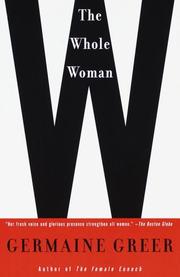
《女太监》(英语:The Female Eunuch),是一本出版于1970年的女权主义著作,作者是澳大利亚学者杰梅茵·格里尔。格里尔认为,传统的郊区生活、消费主义和核心家庭模式,造成了对女性的性压抑,并最终使得女人脱离正轨,变成她所描述的“女太监”。本书是女权主义运动中的重要文本,已被翻译成11种语言。该书的续作《完整的女人》(The Whole Woman)于1999年出版。
概述
与早期的女权主义者不同,格里尔在书中运用幽默、大胆和粗俗的语调,直接而坦诚地描述女人的性欲,并融合了学术研究与辩论这两种文体。在名为“身体”、“灵魂”、“爱”和“恨”的各个章节里,格里尔考察了女性对自我感知的历史定义,并批判了现代消费社会、“女人该有的样子”、以及刻板印象中的“男子气概”,她写道:“世界失去了灵魂,而我失去了性”。
以上文字摘自维基百科「女太监」(去掉了参考文献等尾部小节),按 CC BY-SA 4.0 使用,作者为维基百科的各位编者。
中文维基百科的条目比较短,下面附上英文维基百科的内容(英文原文):
The Female Eunuch is a 1970 book by Germaine Greer that became an international bestseller and an important text in the feminist movement. Greer's thesis is that the "traditional" suburban, consumerist, nuclear family represses women sexually, and that this devitalizes them, rendering them eunuchs. The book was published in London in October 1970. It received a mixed reception, but by March 1971, it had nearly sold out its second printing. It has been translated into eleven languages.
A sequel to The Female Eunuch, entitled The Whole Woman, was published in 1999.
Summary
The book is a feminist analysis, written with a mixture of polemic and scholarly research. It was a key text of the feminist movement in the 1970s, broadly discussed and criticised by other feminists and the wider community, particularly through the author's high profile in the broadcast media. In sections titled "Body", "Soul", "Energy", "Love" and "Hate" Greer examines historical definitions of women's perception of self and uses a premise of imposed limitations to critique modern consumer societies, female "normality", and masculine shaping of stereotypes quoting, "The World has lost its soul, and I my sex." In contrast to earlier feminist works, Greer uses humour, boldness, and coarse language to present a direct and candid description of female sexuality, much of this subject having remained undiscussed in English-speaking societies. Greer's irreverence towards Sigmund Freud and psychoanalysis was inspired by Simone de Beauvoir's The Second Sex. The work bridged academia and the contemporary arts in presenting the targets of the final section of the book, Revolution; it is in accord, and often associated, with a creative and revolutionary movement of the period.
Greer argues that men hate women, though the latter do not realise this and are taught to hate themselves.
In her final title labelled Revolution, Greer argues that change had to come about via revolution, not evolution. Women should get to know and come to accept their own bodies, taste their own menstrual blood, and give up celibacy and monogamy. Yet they should not burn their bras. "Bras are a ludicrous invention", she wrote, "but if you make bralessness a rule, you're just subjecting yourself to yet another repression." Greer complains of the "genteel, middle-class ladies" who sit on women's rights committees and spend their time signing petitions to achieve equality. Greer expresses that to gain equality a woman must not be genteel but she should instead seek revolution.
In a foreword added to the 21st anniversary edition, Greer references the loss of women's freedom with the "sudden death of communism" (1989) as catapult for women the world over for a sudden transition into consumer Western society wherein there is little to no protection for mothers and the disabled; here, there is no freedom to speak:
The freedom I pleaded for twenty years ago was freedom to be a person, with dignity, integrity, nobility, passion, pride that constitute personhood. Freedom to run, shout, talk loudly and sit with your knees apart. Freedom to know and love the earth and all that swims, lies, and crawls upon it ... most of the women in the world are still afraid, still hungry, still mute and loaded by religion with all kinds of fetters, masked, muzzled, mutilated and beaten.
以上文字摘自英文维基百科「The Female Eunuch」(有删节,去掉了参考文献等尾部小节),按 CC BY-SA 4.0 使用,作者为维基百科的各位编者。
资料卡
- 原题
- The Female Eunuch
- 原作语言
- 英语
- 首次出版
- 1970 年
- 体裁
- 非虚构作品
资料卡来自 Wikidata Q7733656(CC0),众包数据,个别字段可能不全。