书单
百科
这个词条暂时没有中文维基百科条目,下面是英文维基百科的内容(英文原文):
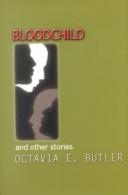
Bloodchild and Other Stories is the only collection of science fiction stories and essays written by American writer Octavia E. Butler. Each story and essay features an afterword by Butler. "Bloodchild", the title story, won the Hugo Award and Nebula Award. It was first published in 1995. The 2005 expanded edition contains the additional stories "Amnesty" and "The Book of Martha".
Stories
"Bloodchild"
"Bloodchild" was the winner of the 1984 Nebula Award for Best Novelette, the 1985 Hugo Award for Best Novelette, the 1985 Locus Award for Best Novelette, and the 1985 Science Fiction Chronicle Award for Best Novelette. It was published in Isaac Asimov's Science Fiction Magazine in 1984, in Bloodchild and Other Stories, Four Walls Eight Windows in 1995, and by Seven Stories Press in 1996 and 2005.
"Bloodchild" describes the unusual bond between a race of lifeforms called the Tlic and a colony of humans who have escaped Earth and settled on the Tlic planet. When the Tlic realize that humans make excellent hosts for Tlic eggs, they establish the Preserve to protect the humans, and in return require that every family choose a child for implantation.
Summary
The story is set when society is ruled by an insect-like species called the Tlics. Gan, the narrator, lives on the preserve, a protected community, where all humans or “Terrans” live. Here, each family must volunteer one child to bear the eggs of a Tlic. Gan was chosen by the Tlic T'Gatoi before he was born, which in his eyes was an honor. However, Gan starts to grow contempt and fear for T'Gatoi after he watches her perform a bloody Caesarean section on Lomas who is the human host of T'khotgif's eggs and caring for the Tlic larva more than the Terran man who was bleeding out on the floor and close to death. After the graphic surgery was finished, T'Gatoi walked in on Gan with an illegal gun in his hand about to end his own life, realizing he had no choice but to hold T'Gatoi's children if he lived. She asked Gan if he preferred that she impregnate his sister, Xuan Hoa, instead. But out of a mix of jealousy, protectiveness, and love for his sister, he agrees to bear T'Gatoi children, under the conditions that she lets him keep the gun. She agrees and promises to take care of him.
Butler's inspiration
In many interviews and in the afterword of "Bloodchild" Butler reveals the motivation behind her writing. She wrote the story to simply explore her fears behind the parasitic botfly that she discovered while in the Amazon. She also aimed to depict a human male's experience of pregnancy "my pregnant man story" including the physical risks and the development of maternal feelings towards his alien offspring. This resulted in the creation of a story about a loving symbiotic relationship between two very different species, which Butler emphasizes is not about slavery despite some critics' interpretations. Lastly, Butler wanted to address the theme of "paying the rent" in human emigration into space, and the need for a quid pro quo or "accommodation" rather than repeating colonialist tropes in traditional science fiction.
Themes
Butler's short story "Bloodchild" disrupts many conventional categories of identity through hinting at the idea of race, gender and sexuality. She uses the concept of a human boy becoming impregnated by a female creature to reverse the roles and give the reader a point of view on birth that is different from the conventional way of thinking. It's unconventional to show a female Tlic in power over a submissive boy, especially because she is in a higher power over the other Tlics. Though T'Gatoi is in power, in a place that is conventionally held by a man, she still keeps what may be identified as feminine traits, such as kindness, empathy and understanding. Conversely, the male humans in the story sometimes exhibit a revulsion to taking on what they perceive as a female role, and experience relations with Tlics as oppression despite their own role as colonizers. The mix of unconventional ideas of gender and power go against simple binaries to reveal how identity is simply constructed through systems of control. These binaries are not innate but created by society.
Critical reception
María Ferrández San Miguel views the relationships between the Terrans and Tlics as a form of continuous traumatic stress (CTS). Ferrández cites a 2013 article from the Journal of Peace Psychology on CTS research by mental health professionals who investigated the impact of apartheid in South Africa during the 1980s. The Terrans' residence in the Preserve creates a perceived threat to their survival, leading to a symbiotic relationship between the two species rooted in fear.
Critic Jane Donawerth observes that "in this short story... the conventional adolescent male narrator/hero is punished by rape, incest, reproductive exploitation by the dominant race, and anticipation of a painful caesarean birth—and he is expected to like it, as women in many cultures have been expected to comply with their oppression." Specifically, the narrator takes on the role of black female slaves in the United States, who were "forced to carry the offspring of an alien race." Kristen Lillvis further argues that this reference to historical reproductive slavery allows the male narrator to have "access to the power of maternal love" that follows the "tradition of nonphallic maternal authority that developed out of black women's experiences during slavery."
以上文字摘自英文维基百科「Bloodchild and Other Stories」(有删节,去掉了参考文献等尾部小节),按 CC BY-SA 4.0 使用,作者为维基百科的各位编者。
资料卡
- 原题
- Bloodchild and Other Stories
- 原作语言
- 英语
- 首次出版
- 1995 年 9 月
- 作品形式
- 短篇小说集
- 体裁
- 科学幻想、恐怖作品
- 首版出版社
- Four Walls Eight Windows、七故事出版社
资料卡来自 Wikidata Q4927917(CC0),众包数据,个别字段可能不全。