书单
百科
这个词条暂时没有中文维基百科条目,下面是英文维基百科的内容(英文原文):
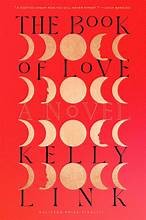
The Book of Love is a 2024 novel by American author Kelly Link. Set in the fictional small coastal town of Lovesend, Massachusetts in December of 2014, the novel follows four teenagers who return from the dead and must navigate magical challenges to remain among the living. The Book of Love is Link's first novel.
The novel was featured on the New York Times list of "The Best Science Fiction and Fantasy Novels of 2024", compiled by Amal El-Mohtar.
Plot
Three teenagers—Laura, Daniel, and Mohammed (Mo)—vanish from their Massachusetts shore town of Lovesend and are presumed dead. One year later, they magically reappear in their high school music teacher Mr. Anabin's classroom. Anabin reveals that they have spent the past year in the realm of the mysterious Bogomil, between life and death. To fully return to life, they and another person, Bowie, who escaped with them, must enter a magical competition where only two of the four can remain among the living—the other two must return to Bogomil's realm.
When the teenagers return to their homes, they discover their families have been bewitched into believing they were not dead but studying music in Ireland for the year. The teenagers now possess miraculous abilities: they can change the weather and transform into animals.
The story follows their quest to discover how they died and learn to use their magical powers. They face opposition from the faded, malevolent goddess Malo Mogge, who arrives searching for a lost precious object that alternates between appearing as a cup and a ring. Anabin and Bogomil are revealed to be trapped in a game against each other while also playing against their former mistress, Malo Mogge, and her other servants.
As the teenagers perform magical tasks, the novel explores their personal struggles: Laura dreams of musical stardom and feuds with her sister Susannah; Daniel serves as the caring eldest brother to his mixed-race siblings while being pathologically ambitionless; and Mo, a gay orphan and one of the few Black residents of Lovesend, grieves for his beloved grandmother, a romance novelist who died while he was in the realm of death.
The teenagers eventually learn that the world beyond contains a series of doors, each guarded by two sentinels and requiring special keys. They ultimately rebel against the constraints imposed by Anabin and Bogomil and work to overthrow Malo Mogge, who threatens to destroy Lovesend in her search for her magical key lost in an occult ritual centuries ago.
Characters
Mohammed (Mo): A gay teenager who writes operas, one of the few Black residents of Lovesend.
Daniel: The eldest brother in a large family, musically talented but deliberately unambitious.
Laura: An aspiring singer-songwriter who dreams of stardom.
Bowie: A shape-shifting former servant of Malo Mogge who returns with the teenagers from Bogomil's realm.
Malo Mogge: A tyrannical moon goddess seeking her lost magical key.
Thomas: Malo Mogge's servant, who has unfinished business with Bowie.
Anabin: The teenagers' music teacher, revealed to be one of Malo Mogge's servants.
Bogomil: Guardian of the realm of death, also a servant of Malo Mogge.
Themes
In his review for Spectator, Philip Womack noted that interpersonal relationships serve as the emotional foundation of the story and pointed out that the narrative draws upon hero's journey conventions. Gary K. Wolfe at Locus pointed out that the story focused on the complexities and challenges inherent in different forms of love, including romantic relationships, sibling dynamics, intergenerational bonds, friendships, mentorship, and creative partnerships. Gabino Iglesias for NPR praised Link's ability to explore themes of mourning, human resilience, adaptability, and fundamental questions about the nature of existence.
Storytelling and writing
The novel operates as a meta-narrative that examines the craft and significance of storytelling itself. The narrative structure incorporates multiple layers of storytelling, weaving together memory-driven passages and psychological explorations that reveal the inner lives of its characters. Through Mo's grandmother Maryanne, a prolific author who produced 73 books over four decades, Link explores how writing serves as both economic sustenance and a means of providing care. Maryanne's biography becomes a vehicle for examining the complex position of Black women writers in the publishing industry, particularly those who achieve commercial success writing about white protagonists.
Magic as social commentary
Link's approach to magic serves as social commentary on power structures. In interviews, Link describes her magical system as functioning like money and power—unevenly distributed among individuals, with some possessing greater access than others. Her design creates a self-perpetuating system where those granted magical abilities can generate additional power, though she notes that such access fundamentally alters individuals the way unlimited wealth and power transform people. Link intentionally maintains ambiguity in her fantastical elements, expressing resistance to overly explicit real-world parallels while recognizing that readers will inevitably draw their own connections between magical concepts and contemporary social realities.
Genre
Gabino Iglesias for NPR, wrote that The Book of Love succeeds in "obliterating any perceived dividing line between speculative fiction and literary fiction", and that though the book is written for adult audiences, it contains numerous elements that give it the feel of a young adult fantasy novel. Gary K. Wolfe for Locus pointed out that the novel incorporates traditional elements of ghost stories, romance novels, coming-of-age tales, horror, and epic fantasy. Constance Grady, writing for Vox, characterized the novel as "a love story...ghost story, coming-of-age narrative, and portrait of a small-town."
以上文字摘自英文维基百科「The Book of Love (Link novel)」(有删节,去掉了参考文献等尾部小节),按 CC BY-SA 4.0 使用,作者为维基百科的各位编者。
资料卡
- 原题
- The Book of Love
- 原作语言
- 英语
- 作品形式
- 长篇小说
资料卡来自 Wikidata Q131762615(CC0),众包数据,个别字段可能不全。