书单
百科
这个词条暂时没有中文维基百科条目,下面是英文维基百科的内容(英文原文):
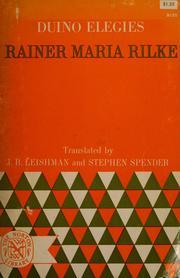
The Duino Elegies (German: Duineser Elegien) are a collection of ten elegies written by the Bohemian-Austrian poet Rainer Maria Rilke. He was then "widely recognized as one of the most lyrically intense German-language poets", and began the elegies in 1912 while a guest of Princess Marie von Thurn und Taxis at Duino Castle on the Adriatic Sea. The poems were dedicated to the Princess upon their publication in 1923. During this ten-year period, the elegies languished incomplete for long stretches of time as Rilke had frequent bouts with severe depression—some of which were related to the events of World War I and being conscripted into military service.
Aside from brief periods of writing in 1913 and 1915, he did not return to the work until a few years after the war ended. With a sudden, renewed burst of frantic writing which he described as a "boundless storm, a hurricane of the spirit"—he completed the collection in February 1922 while staying at Château de Muzot in Veyras, Switzerland. After their publication in 1923, the Duino Elegies were soon recognized as his most important work.
The Duino Elegies are intensely religious, mystical poems that employ the symbolism of angels and salvation, but in a manner atypical of Christian interpretations. Rilke begins the first elegy in an invocation of philosophical despair, asking: "Who, if I cried out, would hear me among the angelic orders?" (Wer, wenn ich schriee, hörte mich denn aus der Engel Ordnungen?) and later declares that "each single angel is terrifying" (Jeder Engel ist schrecklich). While labelling of these poems as "elegies" would typically imply melancholy and lamentation, many passages are marked by their positive energy.
Together, the Duino Elegies are described as a metamorphosis of Rilke's "ontological torment" and an "impassioned monologue about coming to terms with human existence", discussing themes of "the limitations and insufficiency of the human condition and fractured human consciousness ... man's loneliness, the perfection of the angels, life and death, love and lovers, and the task of the poet". Rilke's poetry, and the Duino Elegies in particular, influenced many of the poets and writers of the twentieth century. In popular culture, his work is frequently quoted on the subject of love or of angels and referenced in television programs, motion pictures, music and other artistic works, in New Age philosophy and theology, and in self-help books.
Writing and publication history
Duino Castle and the first elegies
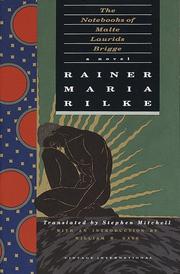
In 1910 Rilke completed the loosely autobiographical novel, Die Aufzeichnungen des Malte Laurids Brigge (The Notebooks of Malte Laurids Brigge) in which a young poet is terrified by the fragmentation and chaos of modern urban life. After he experienced a psychological crisis accompanied by severe depression. Rilke was invited in late 1911 to Duino Castle, then part of Austria-Hungary, by Princess Marie von Thurn und Taxis, whom he had met a few years earlier.
Rilke and Marie collaborated on a translation of Dante's La Vita Nuova (The New Life) while at Duino. After the Princess left to join her husband at their Lautschin estate, Rilke spent the next few weeks alone to focus on his work. While writing Das Marien-Leben (The Life of Mary) in January 1912, Rilke claimed that he heard a voice calling in the roar of the wind while walking along the cliffs near the castle, speaking the words that would become the first lines of the Duino Elegies: "Wer, wenn ich schriee, hörte mich denn aus der Engel Ordnungen?" ("Who, if I cried out, would hear me among the hierarchies of angels?") He quickly wrote them in his notebook and completed the draft of the '"First Elegy" that night. Within days, he drafted the "Second Elegy" and composed passages and fragments that would later be incorporated into later elegies—including the opening passage of the "Tenth Elegy".
In the following years, Rilke worked sporadically on the elegies. While staying at Ronda, Spain in 1913, he wrote part of what would become the "Sixth Elegy". He moved to Paris later that year where he continued work on the "Sixth Elegy" and completed the "Third Elegy". During World War I, Rilke wrote the "Fourth Elegy", completing it the day before he was conscripted into the Austro-Hungarian army in November 1915. After Rilke was discharged in 1916, he returned to Munich for the duration of the war, but wrote very little poetry during that time.
Château de Muzot and the creative "hurricane"
It wasn't until 1920 that Rilke began to focus on completing the Duino Elegies. Rilke, who had become romantically involved with Baladine Klossowska, journeyed to Switzerland looking to find a place to live near Geneva, where he could immerse himself in French culture. Rilke and Klossowska wanted to move into the Château de Muzot, a 13th-century manor house that lacked gas and electricity, near Veyras in the Rhone Valley, but they had trouble negotiating the lease. At Rilke's suggestion, Werner Reinhart, a Swiss merchant who used his wealth to support composers and writers, leased the property on their behalf. In July 1921, Rilke and Klossowska had moved in. Later, Reinhart bought the property and turned it over to Rilke for life.
以上文字摘自英文维基百科「Duino Elegies」(有删节,去掉了参考文献等尾部小节),按 CC BY-SA 4.0 使用,作者为维基百科的各位编者。
资料卡
- 原题
- Duineser Elegien
- 原作语言
- 德语
- 首次出版
- 1923 年
- 作品形式
- 诗集
- 体裁
- 诗歌
资料卡来自 Wikidata Q688426(CC0),众包数据,个别字段可能不全。