书单
百科
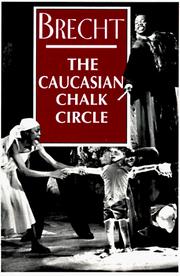
《高加索灰栏记》(德语:Der kaukasische Kreidekreis)是德国剧作家贝托尔特·布莱希特的戏剧,于1948年首演,素材源自中国元代李潜夫所作杂剧《灰栏记》。本剧采用戏中戏的结构,故事发生于格鲁吉亚,主要讲述一位女佣救下总督的儿子后发生的故事。本剧被广泛认为是布莱希特的代表作品之一。
以上文字摘自维基百科「高加索灰欄記」(去掉了参考文献等尾部小节),按 CC BY-SA 4.0 使用,作者为维基百科的各位编者。
中文维基百科的条目比较短,下面附上英文维基百科的内容(英文原文):
The Caucasian Chalk Circle (German: Der kaukasische Kreidekreis) is a play by the German modernist playwright Bertolt Brecht. An example of Brecht's epic theatre, the play is a parable about a peasant girl who rescues a baby and becomes a better mother than the baby's wealthy biological parents.
The play was written in 1944 while Brecht was living in the United States. It was translated into English by Brecht's friend and admirer Eric Bentley. After Bentley failed to have it programmed at the University of Minnesota, where he taught, it was premiered by his student, Henry Goodman, in a student production at Carleton College, Northfield, Minnesota, in 1948. Its first professional production was at the Hedgerow Theatre, Philadelphia, directed by Bentley. Its German premiere by the Berliner Ensemble was on October 7, 1954, at the Theater am Schiffbauerdamm in Berlin.
The Caucasian Chalk Circle is one of Brecht's most celebrated works and one of the most regularly performed 'German' plays. It reworks Brecht's earlier short story "Der Augsburger Kreidekreis." Both derive from the 14th-century Chinese play The Chalk Circle by Li Xingdao.
Plot summary
Prologue
Brecht, in his typical anti-realist style, uses the device of a "play within a play". The "frame" play is set in the Soviet Union around the end of the Second World War. It shows a dispute between two koljós (communes), the "Rosa Luxemburg" fruit growing commune and the collective goat farmers "Galinsk", over who is to own and manage an area of farm land after the Germans have retreated from a village and left it abandoned. A parable has been organised by one group, an old folk tale, to be played out to cast light on the dispute. The Singer, Arkadi Tcheidse, arrives with his band of musicians, then tells the peasants the parable, which forms the main narrative, and intertwines throughout much of the play. The Singer often takes on the thoughts of characters, enhances the more dramatic scenes with stronger narration than simple dialogue, and is responsible for most scene and time changes. Often the role is accompanied by several "musicians" (which incorporate music into the play itself) that help the Singer keep the play running smoothly. At the end he states that the land should go to those who will use it most productively, the fruit growers, and not those who had previous ownership.
Scene one: The Noble Child
The Singer's story begins with Governor Georgi Abashwili and his wife Natella blatantly ignoring the citizens on the way to Easter Mass. The Singer shows us the show's antagonist, Arsen Kazbeki, the Fat Prince. He sucks up to the pair and remarks how their new child Michael is "a governor from head to toe." They enter the church, leaving the peasants behind. Next to be introduced is the heroine Grusha Vashnadze, a maid to the governor's wife. Grusha, while carrying a goose for the Easter meal, meets a soldier, Simon Shashava, who reveals he has watched her bathe in the rivers. She storms off enraged.
The Singer continues the story: as the soldier contacts two architects for the Governor's new mansion, the Ironshirts, gestapo-esque guards, turn on him. The Fat Prince has orchestrated a coup and is now in control. The Governor is quickly beheaded. Simon finds Grusha and proposes, giving her his silver cross. Grusha accepts. Simon runs off to fulfill his duty to the Governor's wife, who has been foolishly packing clothing for the "trip", caring nothing for the loss of her husband. She is carried off, away from the flaming city of Nuhka and inadvertently leaves her son, Michael, behind. Grusha is left with the boy and, after seeing the Governor's head nailed to the church door, takes him with her to the mountains. Music is often incorporated throughout much of this scene with the aid of the Singer, musicians, and possibly Grusha, as Brecht includes actual "songs" within the text.
以上文字摘自英文维基百科「The Caucasian Chalk Circle」(有删节,去掉了参考文献等尾部小节),按 CC BY-SA 4.0 使用,作者为维基百科的各位编者。
资料卡
- 原题
- Der kaukasische Kreidekreis
- 原作语言
- 德语
- 首次出版
- 1949 年
- 作品形式
- 剧作
- 体裁
- 史诗剧、戏剧
- 改编自 / 取材于
- 包待制智赚灰栏记
- 故事发生地
- 格鲁吉亚
资料卡来自 Wikidata Q891857(CC0),众包数据,个别字段可能不全。