书单
百科
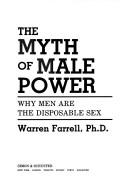
男权的神话(The Myth of Male Power: Why Men are the Disposable Sex)是沃伦·法雷尔于1993年出版的一本书,作者在书中指出,人们普遍认为男人拥有过大的社会和经济权力,但这其实是错误的,男人在许多方面都处于弱势。男权的神话这本书被认为是男权运动的标杆,并被翻译成多种语言,包括德语和意大利语。
以上文字摘自维基百科「男權的神話」(去掉了参考文献等尾部小节),按 CC BY-SA 4.0 使用,作者为维基百科的各位编者。
中文维基百科的条目比较短,下面附上英文维基百科的内容(英文原文):
The Myth of Male Power: Why Men are the Disposable Sex is a 1993 book by Warren Farrell, in which the author argues that the widespread perception of men having inordinate social and economic power is false, and that men are systematically disadvantaged in many ways.
Like Herb Goldberg's The Hazards of Being Male, Farrell's The Myth of Male Power is considered a standard of the men's movement, and has been translated into several languages, including German and Italian.
Defining male power and powerlessness
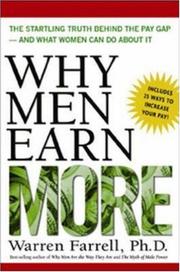
In The Myth of Male Power, Warren Farrell offered his first in-depth outline of the thesis he would eventually apply in his subsequent books—books on communication (Women Can’t Hear What Men Don’t Say), parenting (Father and Child Reunion), and the workplace (Why Men Earn More).
As The Myth of Male Power's title implies, Farrell challenges the belief that men have the power by challenging the definition of power. Farrell defines power as "control over one's life." He writes that, "In the past, neither sex had power; both sexes had roles: women's role was [to] raise children; men's role was [to] raise money."
One of the examples that Farrell uses to illustrate male powerlessness is male-only draft registration. He writes that if any other single group (the examples he lists are Jews, African Americans, and women) were selected based on their birth characteristics to be the only group required by law to register for potential death, we would call it anti-Semitism, racism or genocidal sexism. Men, he says, have been socialized to call it "glory" and "power," and as a result do not view this as a negative.
Farrell contends that this viewpoint creates psychological problems for both sexes: that "men's weakness is their facade of strength; women's strength is their facade of weakness." He adds that societies have generally socialized boys and men to define power as, in essence, "feeling obligated to earn money someone else spends while we die sooner." Feeling obligated, he contends, is not power.
Critical responses
Academic Kenneth Clatterbaugh, in an overview of literature of the men's movement, comments that "eventually, [Farrell's] arguments reach absurd heights, as when Farrell actually argues against sexual harassment laws and child molestation laws on the grounds that they give even more power (to abuse men) to (women) employees and children".
Feminist social critic Camille Paglia, writing for The Washington Post, says The Myth of Male Power "attacks the unexamined assumptions of feminist discourse with shocking candor and forces us to see our everyday world from a fresh perspective," though she added that Farrell is sometimes guilty of "questionable selectiveness or credulity about historical sources". Paglia nevertheless concludes that the book "is the kind of original, abrasive, heretical text that is desperately needed to restore fairness and balance to the present ideology-sodden curriculum of women's studies courses."
Reviewer Robert Winder describes the book as "shock-horror hyperbole posing as scholarship" and goes on to write "Farrell might be right to see the gender conflict as a war to which only one side has turned up, but this is only a sarcastic way of confessing to an authentic male worry: the twinge of jealousy men sometimes feel when confronted by feminine solidarity. Farrell, however, just like some of his female opposite numbers, prefers accusation to self-examination".
Linda Mealey notes that the book is recommended reading for educators in the social sciences, particularly gender studies; she does also critique Farrell for easily seeing causality in correlation.
Academic Margot Mifflin writes that "most of Farrell’s tit-for-tat theories about man’s greater societal burden are slanted, self-serving, and absurdly simplistic."
The Los Angeles Times notes that "some critics say 'The Myth of Male Power' goes beyond the nurturing rituals of the male movement to mount an outright assault on the victories of the modern women's movement."
以上文字摘自英文维基百科「The Myth of Male Power」(有删节,去掉了参考文献等尾部小节),按 CC BY-SA 4.0 使用,作者为维基百科的各位编者。
资料卡
- 原题
- The Myth of Male Power
- 原作语言
- 英语
- 首次出版
- 1993 年
- 体裁
- 随笔
- 首版出版社
- 伯克利出版社
- 主题
- 性别研究
资料卡来自 Wikidata Q7752955(CC0),众包数据,个别字段可能不全。