书单
百科
这个词条暂时没有中文维基百科条目,下面是英文维基百科的内容(英文原文):
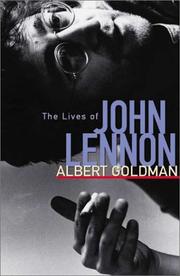
The Lives of John Lennon is a 1988 biography of musician John Lennon by American author Albert Goldman. The book is a product of several years of research and hundreds of interviews with Lennon's friends, acquaintances, servants, and musicians. It is best known for its criticism and generally negative representation of the personal lives of Lennon and his wife, Yoko Ono.
Upon its release, the book received negative attention from critics, and was largely dismissed by those who knew Lennon.
Lennon in the work
When first published in 1988, The Lives of John Lennon was controversial because of its portrayal of Lennon in a highly critical light. Lennon was presented in the book as a talented but deeply flawed man who manipulated people and relationships throughout his life, flinging them aside when they were no longer useful to him. Goldman, who was Jewish, also suggested that Lennon was an anti-Semite, that he was a heavy drug user, and that he was dyslexic and schizophrenic.
Sexuality
The book goes into detail about the long-rumoured homosexual affair between Lennon and The Beatles' manager Brian Epstein (previously discussed in both Pete Shotton’s Lennon in My Life and Peter Brown's The Love You Make), as well as alleging several liaisons by Lennon with other men, including a claim that he solicited underage male prostitutes in Thailand. This latter assertion greatly angered Yoko Ono and Paul McCartney. The book was criticized by Lennon fans for allegedly containing much unsubstantiated conjecture, and tending to present worst-case scenarios when doing so.
Violence
According to accounts in Goldman's book, Lennon felt guilty over having attacked a sailor he met during the Beatles' time in Hamburg, and also over the sudden death of bandmate Stuart Sutcliffe, whose sister, Pauline, later falsely accused Lennon of murdering him. Goldman also presents a story from an Ono assistant that Ono's 1968 miscarriage was triggered by a beating from Lennon. Other primary sources also support Goldman's claims about Lennon's tendency toward violence, a tendency Lennon himself owned up to in a Playboy interview.
Drug use
Lennon was a heavy drug user, as has been acknowledged by most people who knew him well, including Ono and Lennon's first wife, Cynthia Lennon. Goldman also claims that when Lennon started making music again in 1980 following a long seclusion, he was not oblivious to Manhattan's cocaine-fueled disco scene. According to Goldman, on the day Lennon was murdered he was scheduled to undergo plastic surgery several days later to repair his nasal septum due to snorting cocaine, which he supposedly did at the Hit Factory recording studio where he and Ono recorded their album Double Fantasy. Goldman does not cite anyone who might have witnessed this at the studio.
Goldman alleges further that on December 8, 1980 (the day of Lennon's murder) not only did the singer's cocaine-snorting warrant plastic surgery, but he was in such bad physical condition from drug abuse and lack of exercise that during his autopsy the medical examiner recorded observations to that effect, overlooking the five bullet wounds momentarily.
Goldman further asserts that this drug-addled, dangerously unhealthy isolation was a result of Lennon's natural laziness and dependence on strong women throughout his life. Goldman also claims that Lennon’s isolation and physical decline were instigated by Yoko Ono, who Goldman claims was jealous of Lennon and saw his fame as competition for her musical ambitions.
Musical achievement and public image
Goldman does show genuine respect for Lennon's musical achievements with the Beatles and his solo work (although he dismisses the widely acclaimed "Imagine"). Lennon's copyright infringement lawsuit for "Come Together" is also explored in the text.
The overarching theme of the book is to debunk the notion that Lennon retired from the music business for five years, from 1975 until the rehearsals for his 1980 comeback album, Double Fantasy, to live as a "househusband," as Rolling Stone magazine and Playboy described him, and to raise the couple's son, Sean. Goldman asserts that in reality, a drug-addicted Lennon retreated into a secluded, darkened room in Manhattan's Dakota building watching television all day, every day, leaving domestic servants to tend to his son, while Ono was feeding a chronic heroin habit and managing his share of profits from the Beatles’ music. This portrayal is supported by Robert Rosen's book Nowhere Man: The Final Days of John Lennon, a controversial book which is supposedly based on the author's "memories of reading Lennon's diaries" from the months and weeks leading up to his murder. These diaries have never been made public.
Goldman quotes Harold Seider, Lennon's lawyer for the last few years of his life, as saying that much of Lennon's public image was largely fabricated:
The real Lennon was not the public statements that he made. They were made because they were public statements, and he was looking to make a point. He couldn't give a shit (about lying) because, to a certain extent, he had contempt for the media. After all, they bought all the crap. He was there to manipulate the media. He enjoyed doing that. He understood how to use the media. You got to give him credit for that, and you got to give her credit... They would use the media, but it was not that they believed it, but that was the image they wanted to present.
以上文字摘自英文维基百科「The Lives of John Lennon」(有删节,去掉了参考文献等尾部小节),按 CC BY-SA 4.0 使用,作者为维基百科的各位编者。
资料卡
- 原题
- The Lives of John Lennon
- 原作语言
- 英语
- 首次出版
- 1988 年
- 主题
- 约翰·列侬
资料卡来自 Wikidata Q7747812(CC0),众包数据,个别字段可能不全。