书单
百科
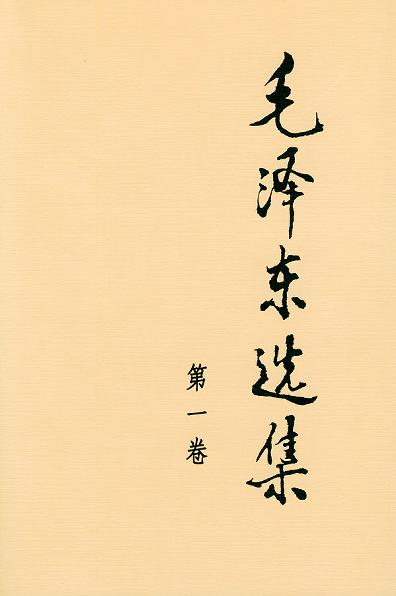
《实践论》创作于1937年,是毛泽东最重要的哲学作品之一,与《矛盾论》合称“两论”。此书从马克思主义哲学认识论上分析批判了教条主义与狭隘经验主义的根源与危害。
哲学内容
《实践论》遵循了马克思主义的辩证唯物主义,认为人获取逻辑知识的过程开始于感知(perception)、认知(cognition)与概念化(conceptualizing)三个阶段。人必须把获取的逻辑知识通过实践应用于现实以检验其真理性。《实践论》认为其他哲学忽视了认识论中实践的重要性。
评价
毛泽东自己评价:对《实践论》“是比较满意的,《矛盾论》就并不很满意”。这个评价,他后来始终坚持。1965年,在回答记者斯诺时,他说道:“其实,《矛盾论》不如《实践论》那篇文章好。《实践论》是讲认识过程,说明人的认识是从什么地方来的,又向什么地方去。”
傅雷在写给儿子的家书中写道:“‘毛选’中的《实践论》及《矛盾论》,可多看看,这是一切理论的根底……可以帮助你对马列主义及辩证法有深切了解……我本来富于科学精神,看这一类书觉得很容易体会,也很有兴趣……”
以上文字摘自维基百科「实践论」(去掉了参考文献等尾部小节),按 CC BY-SA 4.0 使用,作者为维基百科的各位编者。
中文维基百科的条目比较短,下面附上英文维基百科的内容(英文原文):
On Practice (simplified Chinese: 实践论; traditional Chinese: 實踐論; pinyin: Shíjiànlùn) is one of Mao Zedong's most important philosophical works. Along with On Contradiction, this essay is a part of lectures Mao gave in 1937. It expresses Mao's support for Marxism and attempts to establish a distinctly Chinese brand of communist philosophy. On Practice argues that people must apply knowledge to practice in reality in order to test its truthfulness. At the time it was written, the Chinese Communist Party (CCP) had just endured the Long March and their nationalist foes were still at large. Plus, China was facing a tremendous Japanese threat. Mao hoped to establish himself as the leader of the CCP in order to unite China and vanquish the Japanese. On Practice was written as a part of this mission, for it gave Mao a more legitimate claim to lead by creating the basis for his communist philosophy, Maoism.
Philosophical argument
On Practice expands on Mao's criticism of dogmatism in his 1930 essay, Oppose Book Worship. The text begins with Mao's emphasis on practice over theory, and states, "Marxists hold that man's social practice alone is the criterion of the truth of his knowledge of the external world." The text defines "social practice" as "material production, class struggle, or scientific experiment." In this view, a person must "discover the truth through practice, and again through practice verify and develop the truth."
According to On Practice:
If people want to succeed (that is, achieve anticipated results), they must bring their ideas into correspondence with the laws of the objective external world; if these do not correspond, people will fail in their practice. After they fail, they draw a lesson from their failure, correct their ideas to make them correspond to the laws of the objective world, and can thus turn a failure into success; this is what is meant by "failure is the mother of success" and "a fall into the pit, a gain in your wit."
On Practice states that the masses, as owners of the means of production, should engage in material production. According to the text, "man's knowledge depends mainly on his activity in human production". Through participation in material production, people develop their understanding of class relationships, social relations, and human relationships. Thus, according to Mao, practical participation in social environments or production are the only reliable mechanism for developing useful knowledge.
The text states that knowledge begins with perceptual knowledge rooted in experience. A person has to perceive physical things before understanding their "essence and internal relations". A person must then synthesize "the data of perception by arranging and reconstructing them." A dialectical process thus leads from perceptual knowledge to rational knowledge. After rational knowledge comes a "leap" to "revolutionary practice," in which theory is deployed back into the world of practice.
Influence
On Practice, along with Mao's On Contradiction, elevated his reputation as a Marxist theoretician. Both works became widely read in the USSR after Mao was celebrated in the Eastern Bloc for China's intervention in the Korean War.
On Practice laid the theoretical foundation for Mao's subsequent slogan, "seek truth from facts." The primacy of practice discussed in the text serves as the theoretical basis for the mass line, a practice summarized by the slogan, "from the masses, to the masses." Expressions used in the text like "failure is the mother of success" and "practice is the sole criterion of truth" became widespread.
The text's discussion of knowledge production informed approaches to arts and science throughout the Mao era.
以上文字摘自英文维基百科「On Practice」(有删节,去掉了参考文献等尾部小节),按 CC BY-SA 4.0 使用,作者为维基百科的各位编者。
资料卡
- 原题
- 实践论
- 原作语言
- 中文
- 首次出版
- 1937 年
- 体裁
- 随笔
资料卡来自 Wikidata Q11452861(CC0),众包数据,个别字段可能不全。