书单
百科
这个词条暂时没有中文维基百科条目,下面是英文维基百科的内容(英文原文):
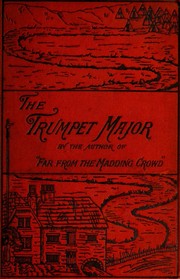
The Trumpet-Major is the seventh published novel by English author Thomas Hardy published in 1880, and his only historical novel. Hardy included it with his "romances and fantasies". It concerns the heroine, Anne Garland, being pursued by three suitors: John Loveday, the eponymous trumpet major in a British regiment, honest and loyal; his brother Bob, a flighty sailor; and Festus Derriman, the cowardly nephew of the local squire. Unusually for a Hardy novel, the ending is not entirely tragic; however, there remains an ominous element in the probable fate of one of the main characters.
The novel is set in Weymouth during the Napoleonic Wars; the town was then anxious about the possibility of invasion by Napoleon. Of the two brothers, John fights with Wellington in the Peninsular War, and Bob serves with Nelson at Trafalgar. The Napoleonic Wars was a setting that Hardy would use again in his play, The Dynasts, and it borrows from the same source material.
Edward Neill has called the novel an attempt to repeat the success of his earlier work Far from the Madding Crowd (1874), after the limited success of his intervening works. The novel originally appeared in 1880 in the Evangelical serial Good Words (January–December) with 33 illustrations by John Collier. The three-volume first edition was published in October 1880.
Plot
Window overlooking the Down
It's 1804 and England expects an invasion attempt by Napoleon Bonaparte's armies. Near Budmouth (Weymouth) Anne Garland lives with her widowed mother in part of a flour mill, next to their landlord and friend miller William Loveday. Thousands of soldiers pitch camp on the downs nearby, ready to meet the invasion. Anne attracts the admiration of two of them, both with local connections: Trumpet Major John Loveday, the decent and thoughtful son of the miller, and Yeomanry officer Festus Derriman, the boastful and aggressive nephew of the skinflint local squire. Anne favours John and loathes Festus, but Festus pesters her, a situation not helped by her mother's desire for her to marry him on account of his rank and (assumed) wealth. However, when her mother changes her view (partly due to the miller's courting of her) and favours marriage to John, Anne changes her mind and favours Festus, thinking herself too ‘high’ for a miller's son.
Into all this walks Bob Loveday, the miller's younger son, home from a life in the merchant navy. Anne has a secret passion for him (they were childhood sweethearts), but he has brought home Matilda, a prospective bride whom he met just two weeks earlier in Southampton. John and Matilda recognise each other, and after a private conversation about her past she does a midnight flit. John tells Bob what's happened, and although Bob understands, he can't help resenting John's intervention. Miller Loveday and Mrs Garland marry, John's regiment moves away (with neither Anne, Bob nor Festus sorry to see him go), and Anne turns her focus to Bob. Anne plays hard to get with Bob, while Festus continues to pester her. She discovers that John sent Matilda away for honourable reasons (she'd previously thought he'd done it to elope with her), and writes him an apologetic letter, which he misinterprets as encouragement. Festus's uncle insists on telling Anne where he's hidden his will and other documents, but she drops the (cryptic) details in a field, where they're found by a mysterious woman.
The Conversation in the Crowd
The invasion beacons are lit, although it's a false alarm. In the chaos Festus almost has Anne at his mercy in an isolated cottage. She escapes and is found by John. He finds Festus and beats him, but drunken Festus thinks he's Bob. John thinks he has a chance with Anne but discovers she's with Bob, so to cover his embarrassment he pretends to be in love with an unnamed actress at the Budmouth theatre. Pressed to show Anne and Bob his sweetheart, John buys them tickets for the play, which is also attended by the King and Queen, who are staying in Budmouth. Matilda appears on stage, and John's shocked expression is mistaken for passion. Festus, lurking as always, encounters Matilda (who is also the mysterious woman from earlier) out for a late-night walk. The press gang (naval recruiters who force men into service) are in town, and Festus and Matilda tip them off that Bob is an experienced sailor. The press gang come to the mill, but Bob escapes, with help from Matilda, who regrets her earlier action.
Bob, however, feels increasing guilty about not serving his country. Discovering that John still loves Anne tips the balance, and Bob persuades local man Captain Hardy (real-life captain of Nelson's flagship, HMS Victory) to take him on board, thus doing his duty and leaving the way clear for John.
Anne goes to Portland Head to watch the Victory sail past. In Budmouth she sits crying, and is comforted by the King, who is passing by. The Loveday family endure a long wait for news of the Victory, eventually hearing of the Battle of Trafalgar, but not whether Bob has survived. Finally a sailor comes to tell them that Bob is unharmed – but also that he's engaged to a baker's daughter in Portsmouth.
以上文字摘自英文维基百科「The Trumpet-Major」(有删节,去掉了参考文献等尾部小节),按 CC BY-SA 4.0 使用,作者为维基百科的各位编者。
资料卡
- 原题
- The Trumpet-Major
- 原作语言
- 英语
- 首次出版
- 1880 年
- 作品形式
- 长篇小说
- 体裁
- 历史小说
资料卡来自 Wikidata Q2363473(CC0),众包数据,个别字段可能不全。