书单
百科
这个词条暂时没有中文维基百科条目,下面是英文维基百科的内容(英文原文):
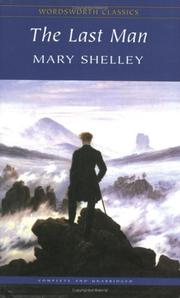
The Last Man is an apocalyptic, dystopian science fiction novel by Mary Shelley, first published in 1826. The narrative concerns Europe in the late 21st century, ravaged by the rise of a bubonic plague pandemic that rapidly sweeps across the entire globe, ultimately resulting in the near-extinction of humanity. It also includes discussion of the British state as a republic, for which Shelley sat in meetings of the House of Commons to gain insight to the governmental system of the Romantic era. The novel includes many fictive allusions to her husband Percy Bysshe Shelley, who drowned in a shipwreck four years before the book's publication, as well as their close friend Lord Byron, who had died two years previously.
The Last Man is one of the first pieces of dystopian fiction published. It was critically savaged and remained largely obscure at the time of its publication. It was not until the 1960s that the novel resurfaced for the public.
Characters
Lionel Verney: The Last Man. The orphan son of an impoverished nobleman, Lionel is originally lawless, self-willed, and resentful of the nobility for casting aside his father. When he is befriended by Adrian, however, he embraces civilization and particularly scholarship. Verney is largely an autobiographical figure for Mary Shelley.
Adrian, Earl of Windsor: Son of the last King of England, Adrian embraces republican principles. He is motivated by philosophy and philanthropy, rather than ambition. He is based on Percy Bysshe Shelley.
Lord Raymond: An ambitious young nobleman, Raymond becomes famous for his military efforts on behalf of Greece against the Turks, but eventually chooses love over his ambition to become King of England. He instead becomes Lord Protector of England before returning to Greece. Raymond is motivated by passion and ambition rather than principle. He is based on Lord Byron.
Perdita: Lionel's sister, and Raymond's wife. Growing up an orphan, Perdita was independent, distrustful, and proud, but she is softened by love for Raymond, to whom she is fiercely loyal.
Idris: Adrian's sister, and Lionel's wife. She is loving, maternal, and self-sacrificing.
Countess of Windsor: Mother of Adrian and Idris, an Austrian princess and former Queen of the United Kingdom. She is haughty and ambitious, scheming to restore the monarchy through her children.
Evadne Zaimi: A Greek princess with whom Adrian falls in love, but who loves Raymond. She is devoted and proud, even when she becomes impoverished.
Clara: Daughter of Raymond and Perdita.
Alfred and Evelyn: Sons of Lionel and Idris.
Ryland: Leader of the popular democratic party, Ryland has grand plans for the abolition of nobility before the plague, but is unwilling to govern England during the plague.
Merrival: An astronomer who is oblivious to the plague, instead speculating about the condition of the Earth in six thousand years, until his family dies. Broken by his tragedy, he dies not long afterwards.
Lucy Martin: A young woman who chose to marry a repulsive suitor rather than wait for her true love, to provide for her ageing mother. Her devotion to her mother almost leads to her being left behind in England after the exile.
The Impostor: Unnamed – a false prophet (from ambition, rather than fanaticism) who creates a radical religious sect in opposition to Adrian while in France.
Juliet: A young noblewoman who joins the Impostor's party to support her baby, but is later killed revealing his imposture.
Plot summary
Introduction
Mary Shelley states that in 1818 she discovered, in a cave near Naples, prophetic writings painted on leaves by the Cumaean Sibyl. She says she has edited these writings into the narrative of a man living at the end of the 21st century, commencing in 2073 and concluding in 2100.
Volume 1
Lionel's father was a friend of the king before he was cast away because of his gambling. Lionel's father left to take his life, but before he did so he left a letter for the king to take care of his family after his death. After Lionel's father died, the letter was never delivered. Lionel and his sister grow up with no parental influence and become uncivilised. Lionel develops a hatred of the royal family, and Perdita grows to enjoy her isolation from society.
When the king leaves the throne, the monarchy comes to an end, and a republic is created. When the king dies, the Countess attempts to raise their son, Adrian, to reclaim the throne. However, Adrian opposes his mother and refuses to take the throne. He moves to Cumberland where Lionel, who bears a grudge against Adrian and his family for the neglect of the Verney family, intends to confront Adrian. He is mollified by Adrian's good nature and his explanation that he only recently discovered the letter. The two become close friends, and Lionel becomes civilised under Adrian's influence. Adrian assists Lionel in pursuing political endeavours in Vienna, which Lionel accepts, and leaves for 2 years. He later chooses to return to England because he has not heard from either Adrian or his sister.
Lionel returns to England to face the personal turmoil amongst his acquaintances. Lord Raymond, who came to be renowned for his exploits in a war between Greece and Turkey, has returned to England searching for a political position. Perdita and Evadne soon fall in love with him. On discovering that his beloved, Evadne, is in love with Raymond, Adrian goes into exile, presumably mad. Raymond intends to marry Idris (with whom Lionel is in love) as a first step towards becoming king, with the help of the Countess. However, he ultimately chooses his love for Perdita over his ambition, and the two marry. Under Lionel's care, Adrian recovers but remains physically weak. On learning of the love between Idris and Lionel, the Countess schemes to drug Idris, bring her to Austria, and force her to make a politically motivated marriage. Idris discovers the plot and flees to Lionel, who marries her soon after. The Countess leaves for Austria, resentful of her children and of Lionel.
以上文字摘自英文维基百科「The Last Man」(有删节,去掉了参考文献等尾部小节),按 CC BY-SA 4.0 使用,作者为维基百科的各位编者。
资料卡
- 原题
- The Last Man
- 原作语言
- 英语
- 首次出版
- 1826 年
- 作品形式
- 长篇小说
- 体裁
- 末日后幻想、科学幻想
- 故事年代
- 21世纪(2073)
资料卡来自 Wikidata Q2323961(CC0),众包数据,个别字段可能不全。