书单
百科
这个词条暂时没有中文维基百科条目,下面是英文维基百科的内容(英文原文):
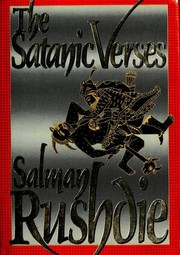
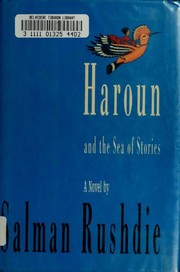
Haroun and the Sea of Stories is a 1990 children's novel by Salman Rushdie. It is Rushdie's fifth major publication and followed The Satanic Verses (1988). It is a phantasmagorical story that begins in a city so miserable and ruinous that it has forgotten its name.
Haroun and the Sea of Stories is an allegory for problems existing in society at the time of its publication, especially in the Indian subcontinent. It presents these problems from the perspective of the young protagonist, Haroun. Salman Rushdie dedicated this book to his son, from whom he was separated for some time. Many elements of the story deal with the problems of censorship, an issue particularly pertinent to Rushdie because of the fatwa against him issued in 1989 by Ayatollah Khomeini. The book is highly allusive and contains puns in multiple languages. Many of the major characters' names allude to some aspect of speech or silence.
It is available as an audiobook read by Rushdie himself.
Plot summary
At the beginning of the story, protagonist Haroun Khalifa lives with his father Rashid, a famous storyteller and doctor, and his mother Soraya, until the latter is seduced by their neighbour "Mr. Sengupta" to leave home. Rashid is hired to speak on behalf of local politicians but fails his initial assignment. Rashid and Haroun are taken to the "Valley of K" by courier "Mr. Butt," to speak for "Snooty Buttoo," another politician. Attempting to sleep aboard Buttoo's yacht, Haroun discovers "Iff the Water Genie," assigned to detach Rashid's imagination, and demands to speak with Iff's supervisor, the Walrus, to argue against this decision. They are then carried to the eponymous "Sea of Stories" by an artificial intelligence in the form of a hoopoe, nicknamed "Butt" after the courier. In the Sea of Stories, Haroun learns the Sea is endangered by antagonist "Khattam-Shud," who represents the end.
In the Kingdom of Gup, King Chattergy, Prince Bolo, General Kitab, and the Walrus announce their plans for war against the neighbouring kingdom of Chup, to recapture Bolo's betrothed Princess Batcheat and to stop the pollution of the Sea of Stories. Rashid joins them here, having witnessed Batcheat's kidnapping. Thereafter, Haroun and his companions join the Guppee army of "Pages" toward Chup, where they befriend Mudra, Khattam-Shud's former second-in-command.
Haroun, Iff, Butt the Hoopoe, and Mali, the stories' gardener, investigate the Sea's "Old Zone" and are captured by Khattam-Shud's animated shadow, who plans to plug the Story Source at the bottom of the Sea. Before he can do so, Mali destroys the machines used by Khattam-Shud to poison the Sea, and Haroun restores the Sea's long-annulled alternation between night and day, thus destroying the antagonist's shadow and those assisting him, and diverting the giant "Plug" meant to seal the Source. In Chup, the Guppee army destroys the Chupwalas' army and releases Princess Batcheat; whereupon Khattam-Shud himself is crushed beneath a collapsing statue commissioned by himself. Thereafter the Walrus promises Haroun a happy ending of his own story. On return to the human world, Rashid reveals Haroun's adventures to local citizens, who expel Snooty Buttoo. And they all lived happily ever after.
When Rashid and Haroun return home, the people of their city are loosened from the shackles of their misery and remember the name of their home, Kahani. Soraya returns to her son and husband.
The novel concludes with an appendix explaining the meaning of each major character's name.
Places
A work of magic realism, the story begins and takes place partly in "a sad city" which is located beside "a mournful sea full of glumfish," which were so miserable to eat that they made people "belch with melancholy." This city is thickly populated by people, of whom only the lead character Haroun and his parents are ever happy, while in the north of the city are factories wherein sadness is allegedly manufactured and exported. The factories produce air pollution that is only relieved during rain, which also heralds the arrival of pomfret into the nearby waters.
Most of the Earthly locations present in the book are located in the fictional nation of Alifbay, which is a combination of first two letters of the Arabic script based Urdu alphabet, Alif and Bay, and therefore contains many places named after letters, such as the "Valley of K" and the "Tunnel of I (which was also known as J)."
In the center of the Valley of K is the Dull Lake, which is said in the novel's appendix to be named after the Dal Lake in Kashmir. This implies that Kashmir is the place on which K is based. The Dull Lake itself is the location of the Moody Land, a landscape whose weather changes to reflect the emotions of the people currently present in it.
The larger part of the plot occurs on a fictional moon of Earth, named Kahani, whose orbit is controlled by a "Process Too Complicated To Explain" also referred to in the book as the "P2C2E." These processes enable it to fly over every single point on Earth like a satellite. Kahani consists of a massive ocean, which is composed of an infinite number of stories, each story taking the form of a current or stream of a unique colour. The colours encompass the whole visible spectrum and extend beyond into spectra that are not known to exist. The name "Kahani" itself means "Story" in Urdu and Hindi, and is ultimately revealed to be the name of the sad city; a revelation that removes the sadness from the city's people.
以上文字摘自英文维基百科「Haroun and the Sea of Stories」(有删节,去掉了参考文献等尾部小节),按 CC BY-SA 4.0 使用,作者为维基百科的各位编者。
资料卡
- 原题
- Haroun and the Sea of Stories
- 原作语言
- 英语
- 首次出版
- 1990 年 9 月 27 日
- 作品形式
- 长篇小说
- 首版出版社
- 格兰塔
- 前作
- 撒旦诗篇
- 续作
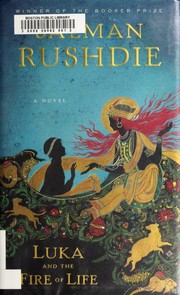
- Luka and the Fire of Life
资料卡来自 Wikidata Q897003(CC0),众包数据,个别字段可能不全。
改编作品
舞台剧 / 歌剧 / 芭蕾1
名单来自 Wikidata(CC0):只列条目里写明「改编自 / 取材于」这本书的作品,不按名字猜;众包数据,可能不全。