书单
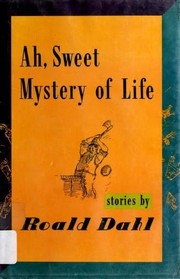
Ah, Sweet Mystery of Life: The Country Stories of Roald Dahl (1989)
- 作者
- 罗尔德·达尔
- 首版
- 1989 年
- 国家/地区
- 英国
- Open Library
- 8 个版本
百科
这个词条暂时没有中文维基百科条目,下面是英文维基百科的内容(英文原文):
Ah, Sweet Mystery of Life: The Country Stories of Roald Dahl is a 1989 short story collection by Roald Dahl. The book is a collection of seven of Dahl's stories published in various magazines and collections in the 1950s and 1970s. Containing much black humour, the book contains sickening and grotesque stories about ratcatching, maggot breeding, poaching, and the mysteries and eccentricities of rural life.
Contents
Ah, Sweet Mystery of Life
The story was commissioned by The New York Times and ran on September 14, 1974. The title is derived from Rida Johnson Young's lyrics for Naughty Marietta.
The story purports to be autobiographical, telling how Dahl mated his heifer with a local bull. Its owner, Mr. Rummins, guarantees Dahl a heifer by facing his cow into the sun during mating. He shows the author 32 years of records that prove the reliability of the method, which Rummins learned from his father. In the theory, female spermatozoa are heliotropic and will outrace their male counterparts if the sun is behind their target. Rummins points to his four sons as proof that the method also works with humans.
Parson’s Pleasure
First published in Esquire April 1958. Cyril Boggis is an antique dealer who has been posing as a parson to gain access to people's homes. He claims to belong to a society for preserving rare furniture and then buys antiques from unsuspecting owners for a pittance. On one of his scouting trips, he comes across Rummins and his son Bert at their farm. They are being visited by their neighbor Claud, and all three are suspicious of the approaching parson.
Inside Rummins' house, Boggis spots a Chippendale commode. He is so stunned that he feigns a heart ailment to buy time. He convinces the men that the commode is a cheap replica and offers them £10 for the legs, pretending that they are the only part that interests him. He huffs that he would probably use the rest for firewood.
Rummins haggles, and Boggis doubles his offer. As he walks to his car, he is giddy over purchasing a £15–20,000 commode for only £20. Meanwhile, the men figure that they would be doing the parson a favor by cutting off the legs for him. When they are done, they decide to chop it into firewood to further convenience its buyer.
The Ratcatcher
This story and the following three were grouped together under the title "Claude's Dog" in Dahl's 1953 story collection Someone Like You.
A ratcatcher comes to Claud's petrol station to combat an infestation. He scatters some poisoned oats around a hayrick across the road. When he arrives to collect the dead rats a few days later, he is peeved to find none.
To regain the waning respect of his clients, the ratcatcher puts a ferret and a rat in his shirt and stands motionless while the ferret kills the rat. He then bets the men he can kill a rat without using his hands or feet. To win the wager, he kills it with his teeth. As he spits out the blood, he claims rat blood is the secret ingredient in liquorice.
Rummins
Claud Cubbage is walking his greyhound when he comes across Rummins. He tells Rummins a ratcatcher has been to the hayrick across from Claud's petrol station. Rummins huffs that all hayricks have rats, but Claud insists the infestation in this one is unusual.
Rummins and his son Bert decide to dismantle the hayrick. Claud and the narrator watch as the rats start to flee the structure. As Bert cuts bales out of the hayrick, his knife hits an obstruction. He uneasily grinds through it upon his father's urging.
The narrator recalls when Rummins built the hayrick in June. He and Claud and other men, like the town drunk Ole Jimmy, had helped Rummins and Bert with the effort. They were in a hurry to finish before a storm approached. During a break, Claud and the narrator crossed the road to the station to make sandwiches. Jimmy disappeared for a nap, having drunk some beer. When Claud and the narrator returned, Jimmy was gone. Rummins assumed he had gone home and continues frantically piling hay as the storm grew nearer.
Finally, Bert cuts through the obstruction and throws down a bale to his father. He is horrified by what he sees. Rummins knows right away what Bert has bisected and runs away as his son starts to scream.
Mr. Feasey
First published as "Dog Race" in The New Yorker on July 25, 1953.
Claud and Gordon swap a ringer for the greyhound they have been racing at Mr. Feasey's tracks. The original dog, Black Panther, is a terrible runner, barely able to beat out dogs who come up lame. Having established his incompetence, Claud brings Jackie, a nearly identical dog who is very fast, to Mr. Feasey's latest race.
Knowing how inept Black Panther is, Mr. Feasey refuses to let him run until Claud wagers a quid that the dog will not finish last. Gordon's job is to place small bets with all the bookies at the race. The odds on Black Panther are 25-1. Jackie easily wins the race, and Feasey realizes the dog is a ringer. When Gordon collects his winnings, none of the bookies pay out.
Mr. Hoddy
Claud Cubbage is visiting his fiancee Clarice's father, Mr. Hoddy. He knows Mr. Hoddy will look down on his scheme to win greyhound races with a ringer. So, he regales his host with tales of the maggot farm he is planning to open with his friend Gordon. Mr. Hoddy is disgusted by the notion.
The Champion of the World
First published in The New Yorker on January 31, 1959.
At the filling station, Claud delights his friend Gordon with tales of his father's poaching exploits. One of his prized techniques uses raisins to ensnare pheasants. They can be used as bait in traps or filled with horsehair, which chokes the birds. Gordon suggests filling the raisins with seconal. Claud thrills at the suggestion. He wants to use the tactic to ruin pie and sausage manufacturer Victor Hazell's annual pheasant hunt.
以上文字摘自英文维基百科「Ah, Sweet Mystery of Life: The Country Stories of Roald Dahl」(有删节,去掉了参考文献等尾部小节),按 CC BY-SA 4.0 使用,作者为维基百科的各位编者。
资料卡
- 插图
- 约翰·劳伦斯
- 原作语言
- 英语
- 首次出版
- 1989 年
- 作品形式
- 短篇小说集
- 体裁
- 惊悚
- 首版出版社
- Michael Joseph
资料卡来自 Wikidata Q3606954(CC0),众包数据,个别字段可能不全。