书单
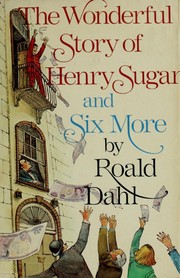
亨利·休格和其他六人的精彩故事 (1977)
- 作者
- 罗尔德·达尔
- 首版
- 1977 年
- 国家/地区
- 英国
- Open Library
- 46 个版本
百科
这个词条暂时没有中文维基百科条目,下面是英文维基百科的内容(英文原文):
The Wonderful Story of Henry Sugar and Six More is a 1977 short story collection by British author Roald Dahl. The seven stories are generally regarded as being aimed at a slightly older audience than many of Dahl's other children's novels.
The stories were written at various times throughout his life. Two of the stories are autobiographical in nature; one describes how he first became a writer while the other describes some of Dahl's experiences as a fighter pilot in the Second World War. Another piece in the collection is a non-fiction account of a British farmer finding a legendary haul of ancient Roman treasure.
In 2023, the title story of the collection, "The Wonderful Story of Henry Sugar", was adapted into a short film directed by Wes Anderson with Benedict Cumberbatch as the titular character, alongside Ralph Fiennes, Dev Patel, Ben Kingsley, and Richard Ayoade. Another short story from the collection, "The Swan", was also adapted into a short film directed by Anderson in 2023 and subsequently included into his 2024 anthology film.
Chapters
The Boy Who Talked with Animals
This is a first-person fiction piece of medium-length writing. The narrator, on advice from friends, decides to vacation in Jamaica. One night, a sea turtle, ancient and huge, is caught by a group of fishermen. Rich people want to buy it, while the manager of a nearby hotel wants to make turtle soup out of it, but both plans are foiled when a little boy appears and shames the crowd for their cruelty. His parents explain that he has a deep affinity for animals, and even talks to them. The boy's father pays off the fisherfolk and hotel manager, and the turtle is set free. The next day, the boy is missing, and the fisherfolk reveal that they have seen the child riding on the back of the sea turtle into the distance.
The Hitch-Hiker
This is another fictional first-person narrative. The narrator in this case has a brand new BMW 3.3 Li, and is enjoying a trip down the highway when he spots a hitchhiker. He lets the man into his car; the passenger is described as being curiously rat-like, with long, slim fingers. They engage in conversation, revealing the man's Cockney accent and attitudes.
As they talk, the narrator is urged by the hitchhiker to test the car's engine power by going ever faster. This results in a police motorbike pulling them over for speeding. The police officer who writes the ticket acts particularly harshly, threatening the narrator with a long prison sentence and a huge fine.
The narrator is despondent until his new friend challenges the narrator to guess his true profession. As he does, the hitchhiker suddenly reveals various items from the narrator's person, from a wallet to a watch to the narrator's shoelace. The narrator accuses the hitchhiker of being a pickpocket. The hitchhiker disagrees, claiming that he is a "fingersmith"—just as a goldsmith has mastered gold, he has mastered the use of his fingers. He claims that he is never caught due to his "fantastic fingers". He then reveals that he has stolen both of the police officer's notebooks, which contain the tickets and the details of the offence. Relieved, the narrator and the hitchhiker then stop on the highway to light a bonfire of the notebooks.
The Mildenhall Treasure
This is a non-fiction account of the discovery of the Mildenhall Treasure. Gordon Butcher, a ploughman, uncovers a vast hoard of Roman silver while working for a man named Ford. Ford tricks Butcher into believing that the find is worthless and takes it home for himself, but he gets his comeuppance when a visiting archaeologist recognises it as an unreported treasure trove.
It was first published in The Saturday Evening Post in the US in 1946 and was first published in book form in this collection. It was published as a single title edition in 1999 by Jonathan Cape, with illustrations by Ralph Steadman.
The Swan
Ernie, a loutish school bully, receives a rifle for his 15th birthday. He and a friend use it to shoot small birds before training it on the school swot, Peter Watson. At gunpoint, Peter is made to lie in the path of an oncoming train; he survives by sinking into the trackbed as the train passes. Next, the bullies take him to a duck pond and force him to act as their "retriever dog". The bird-loving Peter becomes incensed when Ernie kills a swan, and Ernie responds by promising to make it fly again. He accomplishes this by cutting the bird's wings off and tying them to Peter's arms, before forcing him to climb to the top of a weeping willow. Peter declines the bullies' invitation to jump, but a shot from Ernie's rifle hits him in the leg and knocks him off balance. As Peter struggles to keep himself aloft, he sees a bright light which seems to beckon him on. Letting go of the tree, he dives towards it, creating the image of an enormous swan flying over the village. He lands in the garden of his home, where his mother calls for help before cutting the wings from his arms.
The Wonderful Story of Henry Sugar
Henry Sugar, an independently wealthy man who enjoys gambling, finds and reads a doctor's report on a strange patient who called himself "The Man Who Sees Without Using His Eyes". The patient had the ability to see even after doctors had sealed the man's eyes shut and bandaged his head. The man was part of a circus act and used his ability to make money. The man had been interested in magic all his life, and studied with Yogi Hardawar in India, who taught him how to see through thin objects such as paper or playing cards, and to see around solid objects such as a wooden door if he is allowed a finger or hand around it. The doctors decide the man could be of great benefit as a teacher of the blind and return to the circus, only to find that The Man Who Sees Without Using His Eyes has died.
以上文字摘自英文维基百科「The Wonderful Story of Henry Sugar and Six More」(有删节,去掉了参考文献等尾部小节),按 CC BY-SA 4.0 使用,作者为维基百科的各位编者。
资料卡
- 原题
- The Wonderful Story of Henry Sugar and Six More
- 原作语言
- 英语
- 首次出版
- 1977 年
- 作品形式
- 短篇小说集
- 体裁
- 儿童与青年文学
资料卡来自 Wikidata Q534970(CC0),众包数据,个别字段可能不全。