书单
百科
这个词条暂时没有中文维基百科条目,下面是英文维基百科的内容(英文原文):
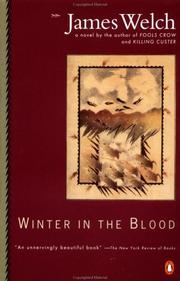
Winter in the Blood is the debut novel of James Welch. It was published by Harper and Row's Native American Publishing Program in 1974. Set on the Fort Belknap Indian Reservation in north-central Montana during the late 1960s, Winter in the Blood follows a nameless Blackfeet and Gros Ventre (A'aninin) man's episodic journey to piece together his fragmented identity. Welch received praise from such luminaries as Pulitzer Prize-winning Ojibwe author Louise Erdrich, celebrated American novelist Reynolds Price, and Coeur d'Alene author Sherman Alexie. Alexie later produced the film adaptation of the novel, which was released in 2012.
Plot summary
The novel features a self-destructive narrator undergoing an identity crisis. After getting into a bar fight with a white man, the narrator comes home drunk to discover that his girlfriend, Agnes, has disappeared with his electric razor and gun. The narrator travels to Malta, Montana, to track her down, where he meets a white nameless "Airplane Man" from New York heading out West. He meets the Airplane Man again when he travels to Havre, Montana, where the man tries to convince the narrator to take him across the border to Calgary in an attempt to escape from the FBI. While the man buys a hunting knife and an old Ford Falcon, the narrator sees Agnes and her brother Dougie in the street. Later that night, the narrator finds Agnes in a bar and tries to talk to her, but Dougie and his friends beat him up. As the narrator leaves the bar, he sees the Airplane Man being arrested.
The narrator hitchhikes home and discovers that his grandmother has passed away. The next day he, Teresa, and Lame Bull dig a grave for her. While digging, the narrative flashes back to a memory of the narrator and his brother (Mose) herding cattle, which results in Mose's death. Once the grave is finished, the narrator leaves to visit Yellow Calf, who talks about the narrator's grandmother. She was the youngest wife of Standing Bear, from the Blackfeet tribe. The tribe survives starvation and a military assault during which Standing Bear is killed. The Blackfeet turn on the grandmother, and Yellow Calf helps her survive. The narrator then realizes that Yellow Calf is his grandfather. The next day, with the help of Teresa and Lame Bull, the narrator buries his grandmother. He ponders the future and resolves to work things out with Agnes.
Characters
The Narrator: A self-destructive, unnamed protagonist living with his mother and grandmother. He believes himself to be Blackfeet and Gros Ventre. The narrator is disconnected from his ancestry and is a "servant to a memory of death" due to unresolved trauma from the death of his father and older brother.
First Raise: The narrator's father, from whom the narrator gets his connection to Fort Belknap. He froze to death in a borrow pit.
Teresa: The narrator's Blackfeet and Catholic mother. She is married to Lame Bull after being widowed by her first husband, John First Raise. She is described as never having been "beautiful, [but] a woman who had grown handsome" with a stout body. A proprietor of good land, Teresa is financially stable and was wealthier partner from both her marriages. Her first marriage was an unhappy one, and she describes her former husband as a "foolish man." Teresa owns the ranch they live on and has a large expanse of good land and cattle.
Airplane Man: A flighty, white man the narrator meets after leaving Fort Belknap.Together they spend time together drinking and loitering around the airport. The Airplane Man is representative of the "American" or "white" world that the narrator is a part of, but also alienated from.
Agnes: The narrator's girlfriend. She is a Cree woman from Havre who's "scorned by the reservation people," and is believed to be married to the narrator. The narrator's grandmother harbors negative feelings toward Agnes because she is Cree. She only makes brief appearances in the novel, but her theft of the narrator's gun and electric razor engenders his journey. She is later found accompanied by her brother, Dougie.
Mose: The narrator's older brother. He died at the age of fourteen after being hit by a car while herding cattle.
Yellow Calf: A member of the Blackfeet tribe whom the narrator meets first when his father takes him on horseback to visit Yellow Calf. The narrator visits Yellow Calf twice as an adult. He is a blind and old. In his youth he helped the narrator's grandmother survive when her tribe ostracized her. The narrator discovers that Yellow Calf is his grandfather.
The Grandmother: An old Blackfeet woman and the narrator's grandmother. She is blind and does not speak throughout the novel. Welch writes of her dislike of Agnes because she is Cree. Given that Agnes is Cree, the grandmother believes that she is a kind of bad luck charm and internally shames the narrator for having married her. She dies before the narrator returns from Havre.
Setting
The novel takes place on the Fort Belknap Indian Reservation and along the Hi-Line of Montana. The narrator visits multiple cities in Montana, beginning with Fort Belknap. He travels north to Malta, and then west to Havre as he follows Agnes and the Airplane Man. The narrator moves in and out of the boundaries separating one part of his identity from the other. Paula Gunn Allen identifies Welch's work as one of many Native American fictional works to utilize opposing settings in a way that which "indicate[s] the pervasiveness of alienation as a continuing theme in American Indian writing...".
以上文字摘自英文维基百科「Winter in the Blood」(有删节,去掉了参考文献等尾部小节),按 CC BY-SA 4.0 使用,作者为维基百科的各位编者。
资料卡
- 原题
- Winter in the Blood
- 原作语言
- 英语
- 首次出版
- 1974 年
- 作品形式
- 长篇小说
- 故事发生地
- 蒙大拿州
资料卡来自 Wikidata Q8026389(CC0),众包数据,个别字段可能不全。