 书单
百科
这个词条暂时没有中文维基百科条目,下面是英文维基百科的内容(英文原文):
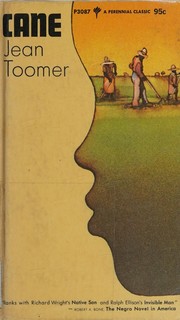
Cane is a 1923 novel by noted Harlem Renaissance author Jean Toomer. The novel is structured as a series of vignettes revolving around the origins and experiences of African Americans in the United States. The vignettes alternate in structure between narrative prose, poetry, and play-like passages of dialogue. As a result, the novel has been classified as a composite novel or as a short story cycle. Though some characters and situations recur in different vignettes, the vignettes are mostly freestanding, tied to the other vignettes thematically and contextually more than through specific plot details.
The novel's ambitious and unconventional structure is frequently discussed in the context of modernism. Some of the vignettes from the novel have been excerpted and included in literary collections, while the poetic passage "Harvest Song" has been featured in multiple Norton poetry anthologies. The poem begins with the line: "I am a reaper whose muscles set at sundown."
Writing Cane
Jean Toomer began writing sketches that would become the first section of Cane in November 1921 on a train from Georgia to Washington D.C. By Christmas of 1921, the first draft of those sketches and the short story "Kabnis" were complete. Waldo Frank, Toomer's close friend, suggested that Toomer combine the sketches into a book. In order to form a book-length manuscript, Toomer added sketches relating to the black urban experience. When Toomer completed the book, he wrote: "My words had become a book…I had actually finished something."
However, before the book was published, Toomer's initial euphoria began to fade. He wrote, "The book is done but when I look for the beauty I thought I'd caught, they thin out and elude me." He thought that the Georgia sketches lacked complexity and said they were "too damn simple for me." In a letter to Sherwood Anderson, Toomer wrote that the story-teller style of "Fern" "had too much waste and made too many appeals to the reader."
In August 1923, Toomer received a letter from Horace Liveright asking for revisions to the bibliographic statement Toomer had submitted for promotions of the book. Liveright requested that Toomer mention his "colored blood," because that was the "real human interest value" of his story. Toomer had a history of complex beliefs about his own racial identity, and in the spring of 1923 he had written to the Associated Negro Press saying he would be pleased to write for the group's black readership on events that concerned them. However, when Toomer read Liveright's letter he was outraged. He responded that his "racial composition" was of no concern to anyone except himself, and asserted that he was not a "Negro" and would not "feature" himself as such. Toomer was even willing to cancel the publication of the book.
Structure
Toomer spent a great deal of time working on the structure of Cane. He said that the design was a circle. Aesthetically, Cane builds from simple to complex forms; regionally, it moves from the South to the North and then back to the South; and spiritually, it begins with "Bona and Paul," grows through the Georgia narratives, and ends in "Harvest Song." The first section focuses on southern folk culture; the second section focuses on urban life in Washington D.C. and Chicago; and the third section is about the racial conflicts experienced by a black Northerner living in the South.
In his autobiography, Toomer wrote: "I realized with deep regret, that the spirituals, meeting ridicule, would be certain to die out. With Negroes also the trend was towards the small town and then towards the city—and industry and commerce and machines. The folk-spirit was walking in to die on the modern desert. That spirit was so beautiful. Its death was so tragic. Just this seemed to sum life for me. And this was the feeling I put into Cane. Cane was a swan-song. It was a song of an end."
Contents
Preamble
"Cane" (poem)
First section:
"Karintha" – A vignette about a young black woman desired by older men who wish "to ripen a growing thing too soon."
"Reapers" – A poem written in couplets about reapers in a field, their "silent swinging," and the stark death of a field rat.
"November Cotton Flower" – A sonnet written in couplets with images of death in nature in the octave. These images become "beauty so sudden" in the sestet.
"Becky" – Vignette of an ostracized white woman with two black sons who lives in a small stone house with the railway.
"Face" (poem)
"Cotton Song" (poem)
"Carma" – Vignette about a strong woman whose husband becomes involved in shady business.
"Song of the Son" (poem)
"Georgia Dusk" (poem)
"Fern" (short story) – A Northern man attempts to woo a southern black woman, with strange results.
"Nullo" (poem)
"Evening Song" (poem)
"Esther" – A young woman who works in a drug store ages and pines for the wandering preacher Barlo, eventually seeking him out.
"Conversion" (poem)
"'Portrait in Georgia" (poem)
"Blood Burning Moon" – Black man Tom Burwell and white man Bob Stone each pursue the young Louisa, resulting in a violent encounter and a tragic climax.
Second section:
"Seventh Street" – Brief vignette about a street which is "a bastard of Prohibition and the War."
"Rhobert" – Brief vignette about a solitary man.
"Avey" – A young college student pursues a lazy girl named Avey, but cannot figure out why.
"Beehive" (poem)
"Storm Ending" (poem)
"Theater" – A dancer named Dorris seeks the approval and adoration of a patron named John.
"Her Lips are Copper Wire" (poem)
"Calling Jesus" – A brief vignette.
"Box Seat" – Dan Moore lusts after a reluctant Muriel, and follows her to a dwarf fight, where he starts a scene.
"Prayer" (poem)
"Harvest Song" (poem)
"Bona and Paul" – A story of indifferent love.
Third section:
以上文字摘自英文维基百科「Cane (novel)」(有删节,去掉了参考文献等尾部小节),按 CC BY-SA 4.0 使用,作者为维基百科的各位编者。
资料卡
- 原作语言
- 英语
- 首次出版
- 1923 年
- 作品形式
- 长篇小说
- 故事发生地
- 芝加哥
- 获奖
- 20世纪百大英文小说
资料卡来自 Wikidata Q3655399(CC0),众包数据,个别字段可能不全。