书单
百科
这个词条暂时没有中文维基百科条目,下面是英文维基百科的内容(英文原文):
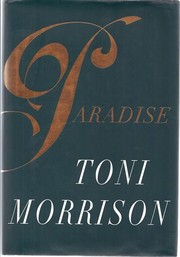
Paradise is a 1997 novel by Toni Morrison. The novel, Morrison’s first publication following her 1993 win for the Nobel Prize in Literature, completes a "trilogy" with Morrison’s previous novels Beloved (1987) and Jazz (1992).
Paradise was chosen as an Oprah's Book Club selection for January 1998 and ranked in the BlackBoard Bestsellers List the following August.
Plot
Paradise centers on the all-Black fictional town of Ruby, Oklahoma, and the Convent, a property outside the town’s fringes where a number of highly troubled and eccentric women reside. After the men of Ruby resolve that the Convent’s women are to blame for the townspeople’s recent spate of misfortunes, they set out to murder the women in a shocking act of brutal violence. The novel’s largely non-linear story structure--which is divided into nine parts, each bearing a woman’s name--explores the storied histories of Ruby and its people, the lives of the Convent’s women, and the intertwining narratives precipitating the massacre.
Ruby
One early morning in July 1976, the most prominent men of Ruby open fire at the Convent. Once a mansion owned by a paranoid embezzler, and later a Catholic-run residential school for Native American girls, the Convent has now become a somewhat derelict homestead for five women–Connie, Mavis, Grace, Seneca, and Divine–all of whom have arrived from elsewhere. While most residents of Ruby had long publicly regarded the Convent’s women with some skepticism and curiosity, the town’s patriarchs grow increasingly distrustful of the convent’s women, deeming their presence an affront to God.
The men each represent the founding families of Ruby, a prosperous, isolated, and hierarchical all-Black town in rural Oklahoma. Twin brothers Stewart and Deacon “Deek” Morgan, the de facto leaders of Ruby and the official leaders of the massacre, reminisce about Ruby’s founding, illuminating the reasons for the town’s insularity. Before Ruby, there was Haven, originally founded in 1890 by a group containing nine complete families (the Blackhorses, Beauchamps, Catos, two DuPres families, Fleetwoods, Floods, Morgans, and Pooles) and fragments of others. The founding fathers, led by Zechariah Morgan, establish Haven as an escape from the racist violence and exclusion pervading contemporary society. When they arrive in the place where they decide to situate their new town, they first build a large and sturdy Oven of brick and iron, even though they are living in wagons and sod shelters. Haven flourishes for several decades, but falters in the years following World War II. Returning from service, Deek and Steward Morgan seek to renew the mission begun by their forefather Zechariah. In 1949, they lead a group of fifteen families out of Haven to establish a new all-black town. In the process of relocating, the town's men painstakingly transport and rebuild the Oven, although it now serves a symbolic rather than practical purpose. The new town is eventually christened “Ruby” for the younger sister of the Morgan twins, who dies in childbirth after local hospitals refuse to admit her because of her race. The inhabitants are proud of the fact that Ruby has no jail or cemetery because it has never needed either; besides Ruby Smith herself and Delia Best, no one has ever died on its soil.
By the mid-1970s, a number of troubling incidents occurred in Ruby; familial conflicts erupt into violence, while four children born into the Fleetwood family suffer from severe (but unspecified) disability or illness, and the Oven is anonymously vandalized. The men of Ruby draw connections, however tenuous, between each of these incidents and the Convent, convincing them that to murder the women would be a divinely sanctioned act in defense of their town and its legacy. As the women desperately attempt to flee for their lives, the chapter concludes: “God at their sides, the men take aim. For Ruby.”
Mavis
Mavis Albright, a young housewife, sits uncomfortably on her sofa while a local journalist inquires about the death of her children. Mavis’s infant twins, Merle and Pearl, suffocated in the family’s new Cadillac while Mavis shopped for groceries, though it’s unclear whether the twins’ deaths were accidental, intentional, or the result of Mavis’s mental illness. Mavis fears her abusive husband and dreads her seemingly sadistic young daughter, Sal. One morning, while her husband and children sleep, Mavis steals the Cadillac, has it repainted, and flees the family’s Maryland home. She initially stays at her mother’s house in New Jersey, but her mother quickly grows exasperated with Mavis’s apparent instability and paranoia. This prompts Mavis to begin driving west, with vague intents on California. When her Cadillac breaks down in rural Oklahoma, Mavis wanders on foot until she happens upon the Convent, inhabited only by a mysterious and charming blind woman, Connie, and an elderly bedridden woman Connie refers to only as “mother.” Despite planning to stay only long enough to have her car repaired, Mavis, with nowhere else to go and no real desire for much else, remains at the Convent for years.
Grace
K.D. Morgan, Deek and Steward's nephew and heir apparent of the Morgan family, learns that Arnette Fleetwood is pregnant with his child. As the couple argue, K.D. is distracted by and begins to gape at a strange and alluring woman arriving at the town bus stop. This enrages Arnette, who begins to insult K.D. for his womanizing; K.D. slaps her, triggering a massive conflict between the Morgans and Fleetwoods. The mystery woman is an eccentric, seductive, countercultural drifter named Grace, who calls herself "Gigi" and lives a free-spirited, semi-nomadic existence. On the same day that the old woman, known as “mother,” dies, Gigi arrives at the Convent, joining Connie and Mavis. Gigi begins a surreptitious affair with K.D., and despite frequent bickering and fights with Mavis, finds life within the Convent fulfilling and liberating.
以上文字摘自英文维基百科「Paradise (Morrison novel)」(有删节,去掉了参考文献等尾部小节),按 CC BY-SA 4.0 使用,作者为维基百科的各位编者。
资料卡
- 原题
- Paradise
- 原作语言
- 英语
- 首次出版
- 1997 年 12 月 24 日
- 作品形式
- 长篇小说
- 首版出版社
- 阿尔佛雷德·A·克诺夫
- 前作
- Jazz
- 续作
- Love
资料卡来自 Wikidata Q7134233(CC0),众包数据,个别字段可能不全。