书单
百科
这个词条暂时没有中文维基百科条目,下面是英文维基百科的内容(英文原文):
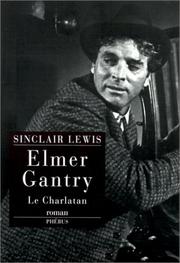
Elmer Gantry is a 1927 American satirical novel by Sinclair Lewis that satirizes religious activity in evangelistic circles and public attitudes toward such activity during the 1920s. The novel centers on Elmer Gantry, an ambitious, corrupt minister who rises to prominence in the Methodist Church despite his hypocrisy, sexual misconduct, and opportunism.
Lewis researched the novel in 1926 with the assistance of the Unitarian minister Leon Milton Birkhead, a former Methodist whose knowledge of American religious life helped shape the work.
Elmer Gantry was published in the United States by Harcourt Trade Publishers in March 1927 and dedicated to H. L. Mencken. The novel was a commercial success and the best-selling work of fiction in the United States in 1927, but it also provoked widespread public controversy, being banned in Boston and other cities and drawing strong criticism from religious figures. The novel has been adapted for the stage, film, musical theatre, and opera.
Background and writing
In 1926, Lewis came to Kansas City to research a novel critical of ministers and fundamental Christianity. For novels on subjects that Lewis had little familiarity with, he often sought the aid of a subject-matter expert; for his 1925 critique of science culture, Arrowsmith, he received the aid of microbiologist Paul de Kruif. He came to Kansas City as it was the residence of moderate minister Bill Stidger, who had encouraged him to write a novel about preachers when they met on the Chautauqua circuit in 1922. Lewis planned for Stidger to be the subject-matter expert for Elmer Gantry, and Stidger spent a few weeks guiding Lewis around the city and introduced him to many ministers. However, Lewis soon met the Unitarian minister Leon Milton Birkhead, a former Methodist, with the circumstances of their meeting being contested. Biographers of H. L. Mencken, who had met and become friends with Birkhead while he was aiding the defense in the Scopes Monkey Trial in 1925, say that he put forward Birkhead's name to serve as Lewis's aide. Birkhead knew of Lewis and had favorably reviewed his novels. Birkhead said he met Lewis at a party in January 1926 and, while profiling Birkhead, The New Yorker journalist Ely Jacques Kahn Jr. said that Birkhead was introduced to Lewis by another minister. Biographers of Lewis generally conclude that Stidger brought Lewis into contact with Birkhead, possibly by bringing Lewis along to a meeting of the Southwest Federation of Religious Liberals, a group that Birkhead organized and which met semi-regularly.
At that meeting, Birkhead said that Lewis decided he wanted him to be his technical advisor, replacing Stidger. Before Lewis left Kansas City on January 28, it had been arranged that Birkhead would guide him when he returned in April. Lewis considered Birkhead's contribution to be similar to de Kruif's, although unlike de Kruif, who was an uncredited author of Arrowsmith and received 25% of its royalties, Birkhead did not write any of Elmer Gantry or receive any royalties. Various explanations have been put forward for why Lewis picked Birkhead. Birkhead thought Lewis picked him as he was able to smoke and swear in his presence. Lewis sometimes repeated that reasoning; on other occasions, he said that it was because Birkhead had a sense of humor and was knowledgeable about Eastern religions. In May 1926, Lewis would write to Harcourt Trade Publishers, his publisher, and say:
I couldn't have a better man than Birkhead to give me dope. Personally most charming as well as most learned, young enough to be comradely, he has had ten years as a Methodist preacher, ten as a Unitarian, both observantly; and though he doesn't even smoke, he enjoys language of the type made holy by Paul [de Kruif] and Spike [Hunt] and myself.
Lewis returned in April and stayed at the Birkheads home. Lewis said he had most of the novel sketched out and Birkhead said Lewis had already begun working on an outline when Lewis arrived. Lewis had the Southwest Federation of Religious Liberals meet weekly on Sunday under his guidance. The group has since been referred to as "Sinclair Lewis's Sunday School Class" or "Sinclair Lewis's Laboratory", with its existence before Lewis arrived often forgotten. It was made up of about 15 ministers, mostly liberal, from disparate denominations; most were Protestant, but it included an agnostic leader of the Rationalist Society, a Roman Catholic priest, and Rabbi Samuel S. Mayerberg. Stidger was part of the group. It had few conservatives and no fundamentalists, with there being little record of Lewis meeting with any fundamentalists at all. Most writers conclude that it was largely made up of "charlatans and opportunists" or "clowns and hypocrites", while noting that Birkhead was "noble and good", although John Tyler Blake argued that these characterizations have little basis in fact. At the meetings, Lewis and the ministers would engage in discussions about religion and he would interrogate the morality of the ministers and attack them.
Lewis's research included acquiring a library of about 200 books relating to ministry, nearly all of which were recommended by Birkhead. Also in April, Lewis was awarded and declined the 1926 Pulitzer Prize for Arrowsmith. Birkhead also recounted his own memories and experiences to Lewis. While he was in Kansas City, Lewis also gave various provocative speeches at various pulpits, beginning with a speech he delivered at Birkhead's church that was nearly identical in substance to a speech Birkhead delivered in January. One April 18 speech in particular, where Lewis challenged God to strike him down, garnered significant attention. Lewis left Kansas City on May 15. I. M. Hargett, a minister who Lewis clashed with, would advertise multiple May sermons after Lewis left with the sentence "Sinclair Lewis and Dr. Birkhead writing a preacher book. Woe to us preachers".
以上文字摘自英文维基百科「Elmer Gantry」(有删节,去掉了参考文献等尾部小节),按 CC BY-SA 4.0 使用,作者为维基百科的各位编者。
资料卡
- 原题
- Elmer Gantry
- 原作语言
- 英语
- 首次出版
- 1927 年 3 月
- 作品形式
- 长篇小说
- 体裁
- 讽刺
- 前作
- Mantrap
资料卡来自 Wikidata Q1247044(CC0),众包数据,个别字段可能不全。
改编作品
电影1
- 《孽海痴魂》Elmer Gantry
舞台剧 / 歌剧 / 芭蕾1
名单来自 Wikidata(CC0):只列条目里写明「改编自 / 取材于」这本书的作品,不按名字猜;众包数据,可能不全。