书单
百科
这个词条暂时没有中文维基百科条目,下面是英文维基百科的内容(英文原文):
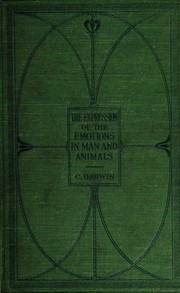
The Expression of the Emotions in Man and Animals is Charles Darwin's third major work of evolutionary theory, following On the Origin of Species (1859) and The Descent of Man, and Selection in Relation to Sex (1871). Initially intended as a chapter in Descent of Man, Expression grew in length and was published separately in 1872. Darwin explores the biological aspects of emotional behaviour and the animal origins of human characteristics like smiling and frowning, shrugging shoulders, the lifting of eyebrows in surprise, and the baring of teeth in an angry sneer.
Though Expression has never been out of print since its first publication, it has also been described as Darwin's "forgotten masterpiece". Psychologist Paul Ekman has argued that Expression is the foundational text for modern scientific psychology.
Before Darwin, human emotional life had posed problems to the traditional philosophical categories of mind and body. Darwin's interest in the subject can be traced to his time as an Edinburgh medical student and the 1824 edition of Anatomy and Philosophy of Expression by Charles Bell, which argued for a spiritual dimension to the subject. In contrast, Darwin's biological approach links emotions to their origins in animal behaviour and allows cultural factors only an auxiliary role in shaping the expression of emotion. This biological emphasis highlights six different emotional states: happiness, sadness, fear, anger, surprise, and disgust. It also appreciates the universal nature of expression, implying a shared evolutionary heritage for the entire human species. Darwin also points to the importance of emotional communication with children in their psychological development.
Darwin sought out the opinions of some leading psychiatrists, notably James Crichton-Browne, in preparation for the book, which forms his main contribution to psychology.
The book's development involved several innovations: Darwin circulated a questionnaire during his preparatory research; he conducted simple psychology experiments on the recognition of emotions with his friends and family; and (like Duchenne de Boulogne, a physician at the Salpêtrière Hospital) he uses photography in his presentation of scientific information. Darwin's publisher warned him that including the photographs would "make a hole in the profits" of the book.
Expression is widely regarded as a landmark in the history of book illustration.
The book's development: biographical aspects
Background
In the weeks before Queen Victoria's coronation in 1838, Charles Darwin sought medical advice for his mysterious physical symptoms. He then travelled to Scotland for rest and a "geologising expedition" but also revisited the old haunts of his undergraduate days. On the day of the coronation, 28 June 1838, Darwin was in Edinburgh. Two weeks later, he opened a private notebook—Notebook M—for philosophical speculation, and, over the next three months, filled it with his ideas about hereditary influences on the psychological aspects of life. Darwin also made his first attempt at autobiography in August 1838.
Darwin fully grasped his conception of natural selection towards the end of September 1838, after encountering the sixth edition of the Essay on Population (1826) by Thomas Malthus. However, Malthus and his essay are strangely unmentioned in Notebook M, their acknowledgement delayed till October 1838 in Notebook N.
In Notebook M, Darwin describes conversations with his father—a successful doctor with a special interest in psychiatric problems—about recurring patterns of behavior in successive generations of his patients' families. Howard Gruber comments that these passages are suggestive concerning the genetics of emotions and thought, and there is an emphasis on the continuity between sane and insane.
Darwin was concerned about the materialistic drift in his thinking and the suspicions this might arouse in early Victorian England. At the time, he was mentally preparing for marriage with his cousin Emma Wedgwood, who held firm Christian beliefs. On 21 September 1838, Notebook M discloses a "confusing" dream where Darwin found himself involved in a public execution; the corpse had come to life and joked about not running away and facing death like a hero.
Darwin assembled the central features of his evolutionary theory while developing an appreciation of human behavior and family life; during this period, he was experiencing some emotional turmoil, largely expressed in physical symptoms.
A detailed discussion of the significance of Notebook M can be found in Paul H. Barrett's Metaphysics, Materialism and the Evolution of Mind – Early Writings of Charles Darwin (1980).
Development of the text in 1866–1872
In its public management, Darwin understood that his evolutionary theory's relevance to human emotional life could provoke an anxious and hostile response.
While preparing the text of The Variation of Animals and Plants Under Domestication in 1866, Darwin began to explore topics related to human ancestry, sexual selection, and emotional life. After his initial correspondence with the psychiatrist James Crichton-Browne, Darwin set aside his material concerning emotional expression to complete Descent of Man, which covered human ancestry and sexual selection. He finished work on The Descent of Man on 15 January 1871. Two days later, he began work on The Expression of the Emotions in Man and Animals and completed most of the text within four months; progress then slowed because of work required on the sixth (and final) edition of The Origin of Species and a hostile review from St George Jackson Mivart. Darwin finished his work on the proofs on 22 August 1872.
Expression brings Darwin's evolutionary theory close to behavioural science, although several commentators have perceived a spectral Lamarckism within the text.
以上文字摘自英文维基百科「The Expression of the Emotions in Man and Animals」(有删节,去掉了参考文献等尾部小节),按 CC BY-SA 4.0 使用,作者为维基百科的各位编者。
资料卡
- 原题
- The Expression of the Emotions in Man and Animals
- 插图
- Thomas William Wood、Briton Rivière、奥斯卡·古斯塔夫·雷兰德
- 原作语言
- 英语
- 首次出版
- 1872 年
- 体裁
- 非虚构作品、学术著作
- 首版出版社
- 约翰·默里公司
- 主题
- 进化、人类行为、情绪
资料卡来自 Wikidata Q1192325(CC0),众包数据,个别字段可能不全。