书单
百科
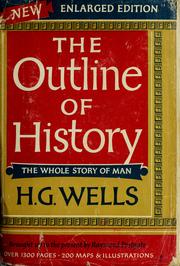
《世界史纲》是赫伯特·乔治·威尔斯所作一本有关地球和人类的世界通史,纵贯从地球形成到第一次世界大战的历史。有人指其在史实论述方面不够严谨,这可能与威尔斯本身并非专职历史学家有关。威尔斯在科学、历史和文学方面有所了解,他是好几部科幻小说的作者(包括《时间机器》《世界大战》《隐身人》)。
台湾的全球研究学者蔡百铨评,此书平等重视世界各地区的历史与文化,把第三世界文化与欧洲文化一视同仁。
以上文字摘自维基百科「世界史纲」(去掉了参考文献等尾部小节),按 CC BY-SA 4.0 使用,作者为维基百科的各位编者。
中文维基百科的条目比较短,下面附上英文维基百科的内容(英文原文):
The Outline of History, subtitled either "The Whole Story of Man" or "Being a Plain History of Life and Mankind", is a work by H. G. Wells chronicling the history of the world from the origin of the Earth to the First World War. It appeared in an illustrated version of 24 fortnightly installments beginning on 22 November 1919 and was published as a single volume in 1920. It sold more than two million copies, was translated into many languages, and had a considerable impact on the teaching of history in institutions of higher education. Wells modelled the Outline on the Encyclopédie of Denis Diderot.
Revised editions
Many revised versions were published during Wells's lifetime, and the author kept notes on factual corrections which he received from around the world. The last revision which was published during his lifetime was published in 1937.
In 1949, an expanded version was produced by Raymond Postgate, who extended the narrative so it could include the Second World War, and later, he published another version which extended the narrative up to 1969. Postgate wrote that "readers wish to hear the views of Wells, not those of Postgate," and he endeavoured to preserve Wells's voice throughout the narrative. In later editions G. P. Wells, the author's son, updated the early chapters about prehistory in order to make them reflect current theories: previous editions had, for instance, given credence to Piltdown Man before it was exposed as a hoax. The final edition appeared in 1971, but earlier editions are still in print. Some of the later editions appeared in two volumes rather than the single volume of the first edition.
Organization of the work
The third revised and rearranged edition is organized in chapters whose subjects are as follows:
Overarching themes
History as a quest for a common purpose
From Neolithic times (12,000–10,000 years ago, by Wells's estimation) "[t]he history of mankind . . . is a history of more or less blind endeavours to conceive a common purpose in relation to which all men may live happily, and to create and develop a common stock of knowledge which may serve and illuminate that purpose."
Recurrent conquest of civilization by nomads
Wells was uncertain whether to place "the beginnings of settled communities living in towns" in Mesopotamia or Egypt. He was equally unsure whether to consider the development of civilization as something that arose from "the widely diffused Heliolithic Neolithic culture" or something that arose separately. Between the nomadic cultures that originated in the Neolithic Age and the settled civilizations to the south, he discerned that "for many thousands of years there has been an almost rhythmic recurrence of conquest of the civilizations by the nomads." According to Wells, this dialectical antagonism reflected not only a struggle for power and resources, but a conflict of values: "Civilization, as this outline has shown, arose as a community of obedience, and was essentially a community of obedience. But . . . [t]here was a continual influx of masterful will from the forests, parklands, and steppes. The human spirit had at last rebelled altogether against the blind obedience of the common life; it was seeking . . . to achieve a new and better sort of civilization that should also be a community of will." Wells regarded the democratic movements of modernity as an aspect of this movement.
以上文字摘自英文维基百科「The Outline of History」(有删节,去掉了参考文献等尾部小节),按 CC BY-SA 4.0 使用,作者为维基百科的各位编者。
资料卡
- 插图
- J. F. Horrabin
- 原作语言
- 英语
- 首次出版
- 1919 年
- 体裁
- 历史书
- 首版出版社
- 乔治·纽恩斯
- 前作
- The Undying Fire
资料卡来自 Wikidata Q5840464(CC0),众包数据,个别字段可能不全。