书单
百科
这个词条暂时没有中文维基百科条目,下面是英文维基百科的内容(英文原文):
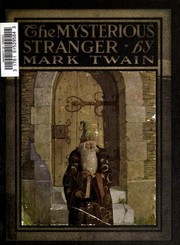
The Mysterious Stranger is a novella by the American author Mark Twain. He worked on it intermittently from 1897 through 1908. Twain wrote multiple versions of the story; each involves a supernatural character called "Satan" or "No. 44", encountering children. In one version, the children are Huckleberry Finn and Tom Sawyer.
Versions
The three stories differ in length: The Chronicle of Young Satan has about 55,000 words, Schoolhouse Hill 15,300 words and No. 44, the Mysterious Stranger 65,000 words.
"St. Petersburg Fragment"
Mark Twain wrote the "St. Petersburg Fragment" in September 1897. It was set in the fictional town of St. Petersburg, a name Twain often used for Hannibal, Missouri. Twain then revised this version, removing references to St. Petersburg, and used the text for The Chronicle of Young Satan.
The Chronicle of Young Satan
The first substantial version is entitled The Chronicle of Young Satan (also referred to as the "Eseldorf" version) and relates the adventures of Satan, the sinless nephew of the biblical Satan, in Eseldorf, a village in Austria, in the year 1702. Twain wrote this version between November 1897 and September 1900. "Eseldorf" is German for "Assville" or "Donkeytown".
Schoolhouse Hill
The second substantial text Twain attempted to write is known as Schoolhouse Hill or the "Hannibal" version. It is set in the U.S., and concerns the adventures of the familiar characters Huckleberry Finn and Tom Sawyer with Satan, referred to in this version as "No. 44, New Series 864962". Twain began writing it in November 1898 and, like the "St. Petersburg Fragment", set it in the fictional town of St. Petersburg.
No. 44, the Mysterious Stranger
The third text, called No. 44, the Mysterious Stranger: Being an Ancient Tale Found in a Jug and Freely Translated from the Jug, also known as the "Print Shop" version, returns to Austria, this time in the year 1490, not long after the invention of printing. It tells of No. 44's mysterious appearance at the door of a print shop and his use of heavenly powers to expose the futility of mankind's existence. This version also introduces an idea that Twain was toying with at the end of his life, involving a duality of the "self", composed of the "Waking Self" and the "Dream Self". Twain explores these ideas through the use of "Duplicates", copies of the printshop workers made by No. 44.
This version contains an actual ending, but the text still has many flaws and it is debatable whether it can be considered finished.
Twain wrote this version between 1902 and 1908.
Paine-Duneka text of 1916
The edition published in 1916 (in seven parts in Harper's Magazine, and separately as a book published by Harper & Brothers) is composed mainly of a heavily edited Chronicle of Young Satan, with a slightly altered version of the ending from No. 44 tacked on. Albert Bigelow Paine, who had sole possession of Twain's unfinished works after Twain's death and kept them private, claimed that he had searched through Twain's manuscripts and had found the proper intended ending for The Mysterious Stranger. After Paine's death in 1937, Bernard DeVoto became the possessor of Twain's manuscripts and released them to the public. In the 1960s, critics studied the original copies of the story and found that the ending Paine chose for The Mysterious Stranger referred to the characters from different versions of the story (such as No. 44 instead of Satan) and the original names had been crossed out and written over in Paine's handwriting.
In 1963, scholars led by researcher John S. Tuckey carefully examined Twain's papers and manuscripts and discovered that Paine had not only tampered with and patched together three previously unfinished manuscripts but also had with assistance from Frederick Duneka added passages not written by Twain in order to complete The Mysterious Stranger. The book version that was published nonetheless maintains Twain's criticisms of what he believed to be the hypocrisy of conventional religion.
According to editor W. M. Gibson, Paine's volume was a literary fraud that went undetected for more than 40 years. Nevertheless, Gibson also admits that "the cut, cobbled-together, partially falsified text has the power to move and to satisfy esthetically despite its flaws."
Summary
In 1590, three boys, Theodor, Seppi, and Nikolaus, live relatively happy simple lives in a remote Austrian village called Eseldorf (German for "Assville" or "Donkeytown"). The story is narrated by Theodor, the village organist's son. Other local characters include Father Peter, his niece Marget, and the astrologer.
One day, a handsome teenage boy named Satan appears in the village. He explains that he is an angel and the nephew of the fallen angel whose name he shares. Young Satan performs several magical feats. He claims to be able to foresee the future and informs the group of unfortunate events that will soon befall those they care about. The boys do not believe Satan's claims until one of his predictions comes true. Satan proceeds to describe further tragedies that will befall their friends. The boys beg Satan to intercede. Satan agrees but operates under the technical definition of mercy. For instance, instead of a lingering death due to illness, Satan simply causes one of Theodor's friends to die immediately.
以上文字摘自英文维基百科「The Mysterious Stranger」(有删节,去掉了参考文献等尾部小节),按 CC BY-SA 4.0 使用,作者为维基百科的各位编者。
资料卡
- 原题
- The Mysterious Stranger
- 插图
- 纽威·康瓦斯·魏斯
- 译者
- Alejandro Tobar
- 原作语言
- 英语
- 首次出版
- 1916 年
- 作品形式
- 长篇小说
- 体裁
- 奇幻
- 首版出版社
- 哈珀与罗出版公司
- 前作
- 巾帼英雄贞德传、My Platonic Sweetheart
资料卡来自 Wikidata Q2582895(CC0),众包数据,个别字段可能不全。