书单
百科
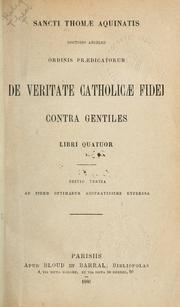
《驳异大全》(拉丁语:Summa Contra Gentiles),是托马斯·阿奎纳的天主教神学著作,传统上将其译为《驳异大全》或《反异教大全》,此名取其成书背景,即认为多玛斯之所以完成此书是为了西班牙教区请求,让当地与伊斯兰教徒接触的教士有一护教参考手册之故。书中所列多为基督宗教哲学观点。然也有另一种说法,即此书为《神学大全》写作前的尝试,以确认一本取代彼德·伦巴多《言语录注释》的神学教科书是否可能。
全书共分四卷,写作方式与其他主要著作略有不同,因其采取的是分章论述,而非中世纪的标准问答方式。第一卷名为《天主》,共102章,主要探讨的是基督宗教中神的概念,大部分观点在《神学大全》第一卷第一部中可见其浓缩的精华。第二卷名为《创造》,共101章,主要探讨受造物的存在基础。此卷第56至90章主要讨论人如何认识外在事物,并主要反驳伊斯兰哲学家对于人理智能力的主张。该卷结尾也谈论关于天使的问题。第三卷名为《神圣摄理》〔providere〕,共163章,主要讨论关于神在世界上所建立的秩序,以及关于多玛斯自然法的概念。此卷特别之处在于,第37至63章中专门谈论人对于神的默观能力,是关于多玛斯神秘主义主张的一段极长的记载。最后一卷名为《救赎》,共97章,主要论及耶稣基督的神性与人性,以及教会诸多圣事的原理与意义。
译本
在译本方面,英译本已由诺特丹大学出版四卷本的英译本,主导翻译的是研究多玛斯的著名学者A. G. Pegis。中文译本方面已由吕穆迪神父将四卷本译出,台湾商务出版社出版。
以上文字摘自维基百科「哲学大全」(去掉了参考文献等尾部小节),按 CC BY-SA 4.0 使用,作者为维基百科的各位编者。
中文维基百科的条目比较短,下面附上英文维基百科的内容(英文原文):
The Summa contra Gentiles is one of the best-known treatises by Thomas Aquinas, written as four books between 1259 and 1265.
Whereas the Summa Theologiæ was written to explain the Christian faith to theology students, the Summa contra Gentiles is more apologetic in tone. While the last of the four books (parts) of the S.C.G. deals with topics of revealed theology such as trinity, incarnation, and the sacraments, the first three books limit themselves to natural theology: arguments on the basis of reason, Thomas believes, will be understood also by those who do not believe in Christian revelation.
Title
The conventional title Summa contra Gentiles, found in some of the earliest manuscripts, is sometimes given in the variant Summa contra Gentes. The title is taken from chapter I.2, where Thomas states his intention as the work's author:
I have set myself the task of making known, as far as my limited powers will allow, the truth that the Catholic faith professes, and of setting aside the errors that are opposed to it. To use the words of Hilary: 'I am aware that I owe this to God as the chief duty of my life, that my every word and sense may speak of Him' (De Trinitate I, 37).
A longer title is also given as Tractatus de fide catholica, contra errores infidelium, meaning "Tractate on the universal faith, against the errors of the pagans".
Date and composition
The work was written over a period of several years, between 1259 and 1265.
In the spring of 1256 Thomas was appointed regent master in theology at Paris and one of his first works upon assuming this office was Contra impugnantes Dei cultum et religionem, defending the mendicant orders, which had come under attack by William of Saint-Amour.
During his tenure from 1256 to 1259, Thomas wrote numerous works, and he was working on Summa contra Gentiles by the time he left Paris.
From Aquinas's autograph, Torrell (1996) identified the first 53 chapters of Book I as having been written in Paris based on studies of the parchment and the ink used.
According to a tradition that can be traced to shortly after Thomas's death, the Summa contra Gentiles was written in response to a request, made in 1259, for a book that would help the Dominican missionaries in Spain to convert the Muslims and Jews there. The request was made by Raymond of Peñafort, a Dominican friar and advisor to James I of Aragon. Raymond had been active in the Christian defense against the Moors (Muslims) and Jews in the kingdom of Aragon since the 1240s. To this end, Raymond instituted the teaching of Arabic and Hebrew in several houses of the friars, and he also founded priories in Murcia (then still under Muslim rule) and in Tunis. Additionally he went to help establish the Church in the recently conquered island of Mallorca. Raymond's request to Thomas was transmitted by fellow Dominican Ramón Martí, one of eight friars appointed to make a study of oriental languages with the purpose of carrying on a mission to Jews and Moors.
The historicity of this account has been questioned in modern scholarship. Arguments adduced include the lack of an explicit dedication to Raymond, the evidence that substantial portions of book 1 were complete by mid-1259 (suggesting that Thomas started work on the book as early as 1257), and the suggestion that the work makes no effort to address tenets of Islam specifically.
Later in 1259, Thomas left Paris and returned to Naples, where he was appointed as general preacher by the provincial chapter of 29 September 1260. In September 1261 he was called to Orvieto as conventual lector responsible for the pastoral formation of the friars unable to attend a studium generale. It was in Orvieto that Thomas completed Summa contra Gentiles, which was followed by the Catena aurea and minor works produced for Pope Urban IV such as the liturgy for the newly created feast of Corpus Christi and the Contra errores graecorum.
以上文字摘自英文维基百科「Summa contra Gentiles」(有删节,去掉了参考文献等尾部小节),按 CC BY-SA 4.0 使用,作者为维基百科的各位编者。
资料卡
- 原作语言
- 中世纪拉丁语
- 作品形式
- 散文
- 体裁
- 专论、随笔
- 主题
- 神学、护教士、基督教神学、哲学
资料卡来自 Wikidata Q604274(CC0),众包数据,个别字段可能不全。