书单

百科
这个词条暂时没有中文维基百科条目,下面是英文维基百科的内容(英文原文):
Purple Hibiscus is the 2003 debut novel by the Nigerian writer Chimamanda Ngozi Adichie. It follows Kambili Achike, a 15-year-old Nigerian teenage girl who struggles in the shadow of her father, Eugene. Eugene is a successful businessman, a beloved philanthropist, and a devout Catholic, who nevertheless violently abuses his family. A post-colonial novel, it received positive reviews upon publication. The novel was published in the United States on 30 October 2003, by Algonquin Books. A year later, Fourth Estate published the book in the United Kingdom and in 2006, Kachifo Limited published it in Nigeria.
While the novel dealt with the serious issues of religious fanaticism and follows the colonial effect on Nigeria also depicted in Achebe's Things Fall Apart, the novel is renowned for its stylic and thematic structure; the author's interweaving of both Igbo and English, and scene description to convey characterizations and action, demonstrates her as one of the third generation of Nigerian writers. Kambili Achike, the narrator has been described as a shy teenager yet depicted the moral hero while Aunty Ifeoma was seen as the feministic voice. The literary critic and editor Otosirieze Obi-Young explains: "Given its prominence on school curricula, Purple Hibiscus is perhaps Adichie's most read book in Nigeria—and the most pirated." As Bildungsroman: the characters psychological and moral growth from childhood to adulthood changes, particularly as seen in Kambili and Jaja's tough life in Eugene's house and later freedom in Aunty Ifeoma's house, the primary themes of Purple Hibiscus involve family life, social interactions, interpersonal relationships, influences, leadership, betrayal and cruelty. Scholars have noted that Adichie also addresses issues of religious hypocrisy, pretence and the Christian life in a contemporary Nigerian and African society.
Reactions to the novel are widely positive. After publication, the novel won several awards including the 2004 Hurston/Wright Legacy Award for Best Debut Fiction and the Commonwealth Writers' Prize for Best First Book in 2005. In 2004, it was shortlisted for the Orange Prize for Fiction and longlisted for the Booker Prize. From 2011 to 2015, the West African Examination Council (WAEC) included the novel in her syllabus, along A Woman in Her Prime by Asare Konadu. Purple Hibiscus was Adichie's third published work after Decisions (1997) and For the Love of Biafra (1998); both were her early written works. Adichie continued exploring the themes of aftermath of the Nigerian Civil War and feminism in her other works.
Plot summary
Kambili Achike is a fifteen-year-old Nigerian girl from a wealthy family in Enugu State. The family is dominated by her father Eugene, who is a devout Catholic and businessman. Eugene is both a religious zealot and a violent figure in the Achike household, subjecting his wife Beatrice, Kambili, and her brother Jaja to violent abuse. Kambili tells the story beginning with Jaja missing the holy communion at church. Both earlier had lived at the house of their aunt, Ifeoma, with her three children. The household offers a different view of what they faced in their father's house. It practices a completely different form of Catholicism, making for a happy, liberal place that encourages its members to be inquisitive, form their own opinions, and speak their minds. Kambili and Jaja become able to voice out their opinions. While at Aunty Ifeoma's house, Kambili also falls in love with a young priest, Father Amadi, which awakens her sense of sexuality.
Unable to cope with Eugene's continual violence any longer, Beatrice poisons him. Jaja takes the blame for the crime in order to save his mother, and gets locked in prison. Aunty Ifeoma and her family moves to America after she is unfairly dismissed from her job as a lecturer at the University of Nigeria in Nsukka. Purple Hibiscus ends almost three years after these events as Kambili becomes a young woman at eighteen. Her brother Jaja is about to be released from prison, hardened but not broken by his experience there. Their mother, Beatrice, has deteriorated psychologically to a great degree.
Principal characters
Kambili Achike: Kambili is the protagonist of Purple Hibiscus. She is a female character and the novel's narrator. A 15 year-old teenager from the Achike household: brother Jaja; mother, Beatrice; father, Eugene Achike, her childhood was surrounded by her father's strict religious belief- catholicism and violent physical abuse. Kambili has a shy personality following her struggle for academic excellence and need to be safe in her patriarchal home.
Eugene Achike: Eugene is Kambili's father and a Catholic man. His father was a pagan. He was portrayed as an autonomous man who abuses his children, but also loves them. Alexie Lorca describes him as paradoxical.
Aunty Ifeoma: Hore describes Aunty Ifeoma as a liberal academic. She is also a Catholic and the aunt of Kambili and Jaja.
以上文字摘自英文维基百科「Purple Hibiscus」(有删节,去掉了参考文献等尾部小节),按 CC BY-SA 4.0 使用,作者为维基百科的各位编者。
资料卡
- 原题
- Purple Hibiscus
- 原作语言
- 英语
- 首次出版
- 2003 年 10 月
- 作品形式
- 长篇小说
- 体裁
- 虚构作品
- 续作
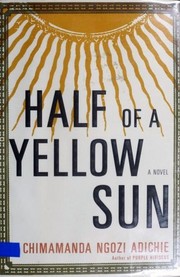
- 半轮黄日
- 主题
- 内战
- 故事发生地
- 尼日利亚
资料卡来自 Wikidata Q7261426(CC0),众包数据,个别字段可能不全。