 书单
百科
这个词条暂时没有中文维基百科条目,下面是英文维基百科的内容(英文原文):
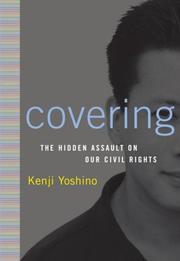
Covering: The Hidden Assault on Our Civil Rights, published in 2006 is an analysis on society's views on race and sexuality and a collection of autobiographical anecdotes. Kenji Yoshino, the author, is the Chief Justice Earl Warren Professor of Constitutional Law at the NYU School of Law. He wrote an article in the Yale Law Journal called Covering in 2002, but went into more detail on the subject of covering using legal manifesto and poetic memoirs. The preface of the book explains the meaning of covering:
Everyone covers. To cover is to tone down a disfavored identity to fit into the mainstream. In our diverse society, all of us are outside the mainstream in some way every reader of this book has covered. whether consciously or not, and sometimes at significant personal cost.
An uncovered self
Yoshino shares personal anecdotes to help frame the larger, societal issues he covers later in the book. He explores the idea and concept of a "normal" sexuality, with most conflict occurring as an adolescent and college student. His internal struggle to accept and embrace his identity inform the beginning of covering. Afterwards, when a colleague cautions him to be "a homosexual professional" instead of "a professional homosexual", Yoshino begins to reflect on the concept of muting different identities.
Yoshino then introduces the concept of "covering," explaining:
In the new generation, discrimination directs itself not against the entire group, but against the subset of the group that fails to assimilate to mainstream norms. This new form of discrimination targets minority cultures rather than minority persons. Outsiders are included, but only if we behave like insiders - that is, only if we cover. This covering demand is the civil rights issue of our time. It hurts not only our most vulnerable citizens but our most valuable commitments. For if we believe a commitment against racism is about equal respect for all races, we are not fulfilling that commitment if we protect only racial minorities who conform to historically white norms.
Yoshino's struggles with identity took various forms, and he writes that felt "neither Japanese nor American, neither poet nor pragmatist, neither straight nor gay."
Yoshino's main source of activism concerns gay rights, and argues that the idea and need for assimilation is inherently damaging, using the gay concepts of assimilation and closeted behavior as ways to frame the conversation on civil rights.
Part One
Part One deals with the "conversion", "passing" and "covering" of homosexuality: "If conversion separates ex-gays from gays, and passing separates closeted gays from out gays, covering separates normal from queers."
Gay Conversion
Homosexuality was not a very accepted trait. During the 1960s there were "voluntarily" embraced conversion therapy for the homosexual. This process created by Katz was said to "fix" someone's "problem" of homosexuality. In 1952, the first edition of the Diagnostic and Statistical Manual of Mental Disorders classified homosexuality as a psychopathologic problem. Though conversion therapy is scarce today, conversion therapists feel that Americans have been brainwashed into accepting homosexuality after such strong thoughts against the sexuality during the mid-late 1990s. To sum up the first chapter:
The gay critique of assimilation begins here. Conversion is the ultimate demand for assimilation- while passing and covering leave the underlying identity relatively intact, conversion destroys it. When someone asks for conversion, the difference between the two available refusals is immense. Which will we choose? Will we say we cannot change? Or will we, like the early gay activists, say we will not change, meeting the demands for conversion with a demand for equality?
Gay Passing
While in Oxford, Yoshino had fallen in love. The person he loved was not a woman. He had to tell his dad this. He then came out to his mom. Though they were both supportive, he knew that this was not what they wanted. Passing is best defined through the "don’t ask, don’t tell" policy, which has been in effect since the Congress and the Department of Defense put it in place in 1993. Rather than trying to change a gay person's perspective and likings, they would just ignore the fact that a person was gay. The shift from conversion to passing was gradual and did not necessarily represent an advance in society's acceptance of homosexuals, because of their overlapping. Passing was an act that his parents demonstrated. Though they accepted the fact that Kenji was gay, it was not something talked about, and more ignored from their thought of their son.
Gay Covering
Yoshino met his first boyfriend in 1995. Through the act of covering, Yoshino never brought his boyfriend to work events or talked about his boyfriend in public, when around straight people. Homosexuals see this as "straight-acting" as heterosexuals see flamboyant acts as "acting-gay." Acting "normal" or "acting-straight" is seen as covering. Though you do not doubt the fact you are homosexual, you also do not radically protest for it and show the world that you are gay. Yoshino writes:
Covering seems a more complex form of assimilation than conversion or passing. At the most basic level, it raises thornier issues of classification. I'm sometimes asked, for instance, whether I consider same-sex marriage to be an act of covering or flaunting. I think it is both.
Yoshino gives further evidence to his position through the Shahar case. This involved a lesbian losing her job deputy personnel because of her sexuality and the boss finding out of her marriage to her partner.
Part Two
Part Two discusses types of covering for different situation.
以上文字摘自英文维基百科「Covering: The Hidden Assault on Our Civil Rights」(有删节,去掉了参考文献等尾部小节),按 CC BY-SA 4.0 使用,作者为维基百科的各位编者。
资料卡
- 原题
- Covering: The Hidden Assault on Our Civil Rights
- 原作语言
- 英语
- 首次出版
- 2006 年
- 体裁
- 非虚构作品、LGBT文学
- 首版出版社
- 兰登书屋
- 主题
- 公民权利和政治权利
- 故事发生地
- 美国
资料卡来自 Wikidata Q5179246(CC0),众包数据,个别字段可能不全。