书单
百科
这个词条暂时没有中文维基百科条目,下面是英文维基百科的内容(英文原文):
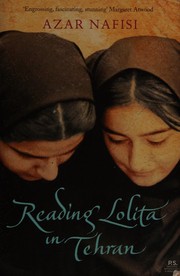
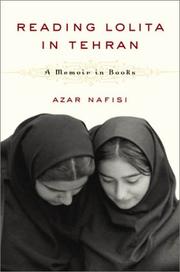
Reading Lolita in Tehran: A Memoir in Books is a non-fiction book by Iranian author and academic Azar Nafisi, published in 2003. It is based on her own experiences while teaching English literature at the University of Tehran during the Iranian Revolution.
Plot
The book is a memoir of Nafisi's experiences about returning to Iran during the revolution (1978–1981) and living under the Islamic Republic of Iran government until her departure in 1997. It narrates her teaching at the University of Tehran after 1979, her refusal to submit to the rule to wear the veil and her subsequent expulsion from the University, life during the Iran–Iraq War, her return to teaching at the University of Allameh Tabatabei (1981), her resignation (1987), the formation of her book club (1995–97), and her decision to emigrate. Events are interlaced with the stories of book club members consisting of seven of her female students who met weekly at Nafisi's house to discuss works of Western literature, including the controversial Lolita, and the texts are interpreted through the books they read.
Structure
The book is divided into four sections: "Lolita", "Gatsby", "James", and "Austen".
"Lolita" deals with Nafisi as she resigns from The University of Allameh Tabatabei and starts her private literature class with students Mahshid, Yassi, Mitra, Nassrin, Azin, Sanaz, and Manna. They talk not just about Lolita, but One Thousand and One Nights and Invitation to a Beheading. The main themes are oppression, jailers as revolutionary guards try to assert their authority through certain events such as a vacation gone awry and a runaway convict.
"Gatsby" is set about 11 years before "Lolita", just as the Iranian revolution starts. The reader learns how some Iranians' dreams, including the author's, became shattered through the government's imposition of new rules. Nafisi's student Mr. Nyazi puts the novel on trial, claiming it condones adultery. Chronologically, this is the first part of Nafisi's story. The Great Gatsby and Mike Gold's works are discussed in this part. The reader meets Nassrin.
Nafisi states that the Gatsby chapter is about the American dream, the Iranian dream of revolution and the way it was shattered for her; the James chapter is about uncertainty and the way totalitarian mindsets hate uncertainty; and Austen is about the choice of women, a woman at the center of the novel saying no to the authority of her parents, society, and welcoming a life of dire poverty in order to make her own choice.
"James" takes place right after "Gatsby", when the Iran–Iraq War begins and Nafisi is expelled from the University of Tehran along with a few other professors. The veil becomes mandatory and she states that the government wants to control the liberal-minded professors. Nafisi meets the man she calls her "magician", seemingly a literary academic who had retired from public life at the time of the revolution. Daisy Miller and Washington Square are the main texts. Nassrin reappears after spending several years in prison.
"Austen" succeeds "Lolita" as Nafisi plans to leave Iran and the girls discuss the issue of marriages, men and sex. The only real flashback (not counting historical background) is into how the girls and Nafisi toyed with the idea of creating a Dear Jane society. While Azin deals with an abusive husband and Nassrin plans to leave for England, Nafisi's magician reminds her not to blame all of her problems on the Islamic Republic. Pride and Prejudice, while the main focus, is used more to reinforce themes about blindness and empathy.
Throughout the book, Nafisi tackles the question of what is a hero and a villain in literature. Each independent section of the book examines notions of heroism and villainy by connecting characters from books such as Invitation to a Beheading or The Great Gatsby to others. The basis of her definition of heroism and villainy is the connection between characters who are "blind to other's problems" such as Humbert Humbert in Lolita and characters who can empathize. This theme is intertwined with that of oppression and blindness.
Title
The title refers to Vladimir Nabokov's novel Lolita, a story about a middle-aged man who has a sexual relationship with a 12-year-old pubescent girl. Lolita is used by the author as a metaphor for life in the Islamic Republic of Iran. Although the book states that the metaphor is not allegorical (p. 35), Nafisi does want to draw parallels between "victim and jailer" (p. 37). The author implies that, like the principal character in Lolita, the newly formed Islamic government in Iran imposes its own "dream upon our reality, turning us into his figments of imagination." In both cases, the protagonist commits the "crime of solipsizing another person's life."
Background
Nafisi's account flashes back to the early days of the revolution, when she first started teaching at the University of Tehran amid the swirl of protests and demonstrations. In 1980, Nafisi claims she was dismissed from the University of Tehran for refusing to wear a veil; she subsequently pursued an independent writing career, bore two children, and, after a long hiatus from teaching, took a full-time job at Allameh Tabatabaii University where she resumed the teaching of fiction.
The book also discusses issues concerning the politics of Iran during and after the Iranian revolution, the Iran–Iraq War, and the Iranian people in general. In one instance, for example, Nafisi's students ridicule Iranian soldiers who served and died during Iran–Iraq War. She writes: "[The students] were making fun of the dead student and laughing. They joked that his death was a marriage made in heaven – didn't he and his comrades say that their only beloved was God?"
以上文字摘自英文维基百科「Reading Lolita in Tehran」(有删节,去掉了参考文献等尾部小节),按 CC BY-SA 4.0 使用,作者为维基百科的各位编者。
资料卡
- 原题
- Reading Lolita in Tehran
- 原作语言
- 英语
- 首次出版
- 2003 年
- 作品形式
- 长篇小说
- 体裁
- 回忆录
- 主题
- 伊斯兰性法学
- 故事发生地
- 中东、德黑兰
资料卡来自 Wikidata Q2260452(CC0),众包数据,个别字段可能不全。
改编作品
电影1
名单来自 Wikidata(CC0):只列条目里写明「改编自 / 取材于」这本书的作品,不按名字猜;众包数据,可能不全。