书单
百科
这个词条暂时没有中文维基百科条目,下面是英文维基百科的内容(英文原文):
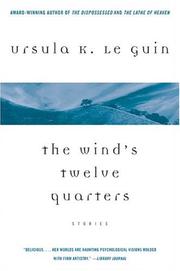
The Wind's Twelve Quarters is a collection of short stories by American writer Ursula K. Le Guin, titled after a line from A. E. Housman's A Shropshire Lad and first published by Harper & Row in 1975. A retrospective of Le Guin's short stories, it collects 17 previously published pieces of speculative fiction. Four of these were the germs of novels that she wrote later, and a few others shared connections to her novels. At least four stories are set in the Hainish Universe, and two others in Earthsea. Many stories share themes and motifs, including time and utopia; certain images and characters also recur, including isolated scholars or explorers seeking knowledge in a hostile world.
The Wind's Twelve Quarters won the Locus Award for Best Single Author Collection in 1976. Several stories had won awards upon initial publication. The collection was critically well-received. Several contemporary reviewers wrote that it showcased Le Guin's development as an author, and it highlighted Le Guin's introduction to each story for providing insight into her writing. Scholar Suzanne Reid wrote in 1997 that the stories showcased Le Guin's "wide range of talents and ethical concerns" and praised her comfort with widely-varied settings. Publishers Weekly described it as "First-rate Le Guin", while the Sydney Morning Herald praised Le Guin's "startlingly original approach to the genre" in the collection.
Contents
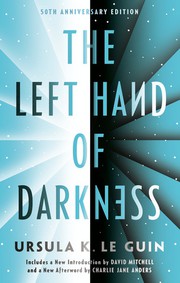
The Wind's Twelve Quarters was first published in 1975 by Harper & Row, and was republished in standalone editions and omnibus volumes several times. It collects 17 previously published stories. Most appear unchanged from their original publication: "Nine Lives" was published as originally written, and "Winter's King" was considerably rewritten. Literary scholar Barbara Bucknall divides the stories into three approximate categories: early fantasies, "surrealistic" later fantasies described by Le Guin as "psychomyths", and science fiction stories. Le Guin considered four stories to be the germs of novels she was to write later: "The Word of Unbinding" and "The Rule of Names" were Le Guin's first pieces set in Earthsea; "Semley's Necklace" was first published as "Dowry of the Angyar" in 1964 and then as the prologue of the novel Rocannon's World in 1966; and "Winter's King" is about the inhabitants of the planet Winter, as is Le Guin's 1969 novel The Left Hand of Darkness. Several of the other stories are also connected to Le Guin's novels. The protagonist of "The Day Before the Revolution" was an inspiration for the society depicted in The Dispossessed (1974), and the short story is described as a prologue to that novel, though it was written later. Like Le Guin's later novel The Word for World Is Forest, "Vaster than Empires and More Slow" has an immense forest as a setting, and examines the relationship between humans and their natural environment.
The stories are arranged approximately in order of publication, and although they share little direct connection, several share themes and motifs. Four stories are part of the Hainish Cycle, while Bucknall writes that "Nine Lives" could plausibly belong in that loose grouping as well. Three stories — "Winter's King", "Vaster Than Empires and More Slow", and "Semley's Necklace" — touch on the effects of relativistic time dilation. Two others, "April in Paris" and "Darkness Box", also feature time as a prominent theme. Literary scholar Suzanne Reid writes that "The Ones Who Walk Away from Omelas" shares philosophical underpinnings with the utopian experiment depicted in The Dispossessed, while "The Day Before the Revolution" examines the life of Odo, who inspired the society of The Dispossessed. "The Masters" and "The Stars Below" both concern "science as an idea to be cherished" even in the face of authoritarian opposition to it. Literary scholar Charlotte Spivack writes that "The Field of Vision" also contains thematic similarities, in its exploration of science and religion, though it features a futuristic setting. Scholar Elizabeth Cummins links "The Day Before the Revolution" and "The Ones Who Walk Away from Omelas" to "The Field of Vision", writing that they "show Le Guin's continued concern with utopia". The collection as a whole, in Bucknall's view, moves from "tender, romantic" pieces to ones that Le Guin describes as concerning "something stronger, harder and more complex", showcasing a shift from "private concerns to public ones". Literary scholar Susan Wood suggested that the collection shared broad themes, including a "concern with the nature of truth" and the "right way to live". The collection also had recurring images and characters, in Wood's view, including motifs of light and darkness, and isolated characters seeking knowledge in a hostile world.
以上文字摘自英文维基百科「The Wind's Twelve Quarters」(有删节,去掉了参考文献等尾部小节),按 CC BY-SA 4.0 使用,作者为维基百科的各位编者。
资料卡
- 原题
- The Wind's Twelve Quarters
- 原作语言
- 美国英语
- 首次出版
- 1975 年
- 作品形式
- 短篇小说集
- 体裁
- 科学幻想
资料卡来自 Wikidata Q747087(CC0),众包数据,个别字段可能不全。