书单
百科
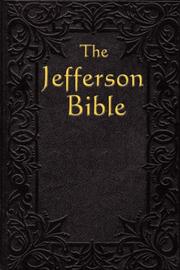
杰斐逊圣经(英文:Jefferson Bible)是由第3任美国总统《美国独立宣言》主要起草人托马斯·杰斐逊自《新约圣经》删改而成。
简介
托马斯·杰斐逊把《新约圣经》前四章中引用的神灵干预和奇迹干预的部分删除了。在杰斐逊的圣经中,没有记载福音故事的开始和结束,没有关于天使的报喜,处女生育或天使出现在牧羊人面前的故事,甚至没有提到复活。杰斐逊发现了这样一位耶稣:他是一位伟大的常识老师,他的信息传递的是绝对的爱和服务的道德观,他的真实性不依赖于三位一体的教条,甚至不依赖于耶稣是上帝唯一的启示。
托马斯·杰斐逊被认为信仰基督自然神论,他在《美国独立宣言》序文中称赞“自然法则”和“自然之神”(Laws of Nature and of Nature's God)。
以上文字摘自维基百科「杰斐逊圣经」(去掉了参考文献等尾部小节),按 CC BY-SA 4.0 使用,作者为维基百科的各位编者。
中文维基百科的条目比较短,下面附上英文维基百科的内容(英文原文):
The Life and Morals of Jesus of Nazareth, commonly referred to as the Jefferson Bible, is one of two religious works constructed by Thomas Jefferson. Jefferson compiled the manuscripts but never published them. The first, The Philosophy of Jesus of Nazareth, was completed in 1804, but no copies exist today. The second, The Life and Morals of Jesus of Nazareth, was completed in 1820 by cutting and pasting, with a razor and glue, numerous sections from the New Testament as extractions of the doctrine of Jesus. Jefferson's condensed composition excludes all miracles by Jesus and most mentions of the supernatural, including sections of the four gospels that contain the Resurrection and most other miracles, and passages that portray Jesus as divine.
Early draft
In an 1803 letter to Joseph Priestley, Jefferson stated that he conceived the idea of writing his view of the "Christian System" in a conversation with Benjamin Rush during 1798–99. He proposes beginning with a review of the morals of the ancient philosophers, moving on to the "deism and ethics of the Jews", and concluding with the "principles of a pure deism" taught by Jesus, "omitting the question of his deity". Jefferson explains that he does not have the time, and urges the task on Priestley as the person best equipped to accomplish it.
Jefferson accomplished a more limited goal in 1804 with The Philosophy of Jesus of Nazareth, the predecessor to The Life and Morals of Jesus of Nazareth. He described it in a letter to John Adams dated October 12, 1813:
In extracting the pure principles which he taught, we should have to strip off the artificial vestments in which they have been muffled by priests, who have travestied them into various forms, as instruments of riches and power to them. We must dismiss the Platonists & Plotinists, the Stagyrites & Gamalielites, the Eclectics the Gnostics & Scholastics, Logos & Demi-urgos, Aeons & Daemons male & female, with a long train of Etc. Etc. Etc. or, shall I say at once, of Nonsense. We must reduce our volume to the simple evangelists, select, even from them, the very words only of Jesus, paring off the Amphibologisms into which they have been led, by forgetting often, or not understanding, what had fallen from him, by giving their own misconceptions as his dicta, and expressing unintelligibly for others what they had not understood themselves. There will be found remaining the most sublime and benevolent code of morals which has ever been offered to man. I have performed this operation for my own use, by cutting verse by verse out of the printed book, and arranging the matter which is evidently his, and which is as easily distinguishable as diamonds in a dunghill. The result is an 8vo of 46 pages of pure and unsophisticated doctrines
Jefferson wrote that "The doctrines which flowed from the lips of Jesus Himself are within the comprehension of a child". He explained these doctrines were such as were "professed & acted on by the unlettered apostles, the Apostolic fathers, and the Christians of the 1st century". In a letter to Reverend Charles Clay, he described his results:
Probably you have heard me say I had taken the four Evangelists, had cut out from them every text they had recorded of the moral precepts of Jesus, and arranged them in a certain order; and although they appeared but as fragments, yet fragments of the most sublime edifice of morality which had ever been exhibited to man.
Jefferson never referred to his work as a Bible, and the full title of this 1804 version was The Philosophy of Jesus of Nazareth, being Extracted from the Account of His Life and Doctrines Given by Matthew, Mark, Luke and John; Being an Abridgement of the New Testament for the Use of the Indians, Unembarrased [uncomplicated] with Matters of Fact or Faith beyond the Level of their Comprehensions.
以上文字摘自英文维基百科「Jefferson Bible」(有删节,去掉了参考文献等尾部小节),按 CC BY-SA 4.0 使用,作者为维基百科的各位编者。
资料卡
- 原题
- The Life and Morals of Jesus of Nazareth
- 原作语言
- 英语、法语、拉丁语 等 4 项
资料卡来自 Wikidata Q266362(CC0),众包数据,个别字段可能不全。