书单
百科
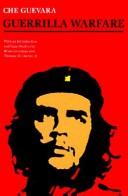
《游击战》(西班牙语:La Guerra de Guerrillas)是国际共产主义革命家切·格瓦拉撰写的军事手册。该书在古巴革命胜利后的1961年出版,成为世界各地数千名游击战士的重要参考文献。该书介绍了格瓦拉在古巴革命期间作为游击战士的个人经验,并为那些在自己国家开展游击战的读者提供了普遍性的指导。
该书指出游击战的理由、前提条件和经验教训。进行游击战的主要原因是在一个国家所有和平和合法的补救措施都已用尽。开展游击战的最重要前提是民众对游击队的支持。格瓦拉认为,古巴革命的成功提供了3个经验:人民武装可以战胜正规军;游击队可以创造自己的有利条件,无需等待理想条件的形成;在美洲不发达地区,游击队的基本活动场所是乡村。
该书提出的军事理论后来被称作“格瓦拉主义”或“焦点主义”。
以上文字摘自维基百科「游击战 (书)」(去掉了参考文献等尾部小节),按 CC BY-SA 4.0 使用,作者为维基百科的各位编者。
中文维基百科的条目比较短,下面附上英文维基百科的内容(英文原文):
Guerrilla Warfare (Spanish: La Guerra de Guerrillas) is a military handbook written by Marxist–Leninist revolutionary Che Guevara. Published in 1961 following the Cuban Revolution, it became a reference for thousands of guerrilla fighters in various countries around the world. The book draws upon Guevara's personal experience as a guerrilla soldier during the Cuban Revolution, generalizing for readers who would undertake guerrilla warfare in their own countries.
The book identifies reasons and prerequisites for, and lessons of, guerrilla warfare. The principal reason to conduct guerrilla warfare within a country is because all peaceful and legal means of recourse have been exhausted. The most important prerequisite for conducting guerrilla warfare in a country is the popular support of its people for the guerrilla army. Guevara asserted that the success of the Cuban Revolution provided three lessons: popular forces can win a war against a regular army, guerrillas can create their own favorable conditions (not needing to wait for ideal conditions to take shape), and in the underdeveloped parts of the Americas, the basic place of operation for a guerrilla army is the countryside.
Themes
Guerrilla Warfare is a manual for left-wing insurgency which draws upon Guevara's experience in the Cuban Revolution. It elaborates the foco theory (foquismo) of revolution in which the guerrilla operates as a vanguard, taking initiative to make revolution without waiting for ideal conditions to present themselves. Although the text has been compared to Mao Zedong's On Guerrilla Warfare, Guevara claimed not to have read Mao's book. Guerrilla Warfare was influenced by two books from the Spanish Civil War: Nuevas Guerras and Medicina contra invasión.
South African revolutionaries read the work in the early 1960s; former Minister of Intelligence Ronnie Kasrils noted that the apartheid regime's police questioned his late wife about an order of "Che Guevara's book on guerrilla warfare."
Pro-Guerrilla
Guerrilla warfare is presented as a feasible method of communist revolution. Guevara states that the "three fundamental lessons" of the Cuban Revolution are:
1) Popular forces can win a war against the army.
2) It is not necessary to wait until all conditions for making revolution exist; the insurrection can create them.
3) In underdeveloped America, the countryside is the basic area for armed fighting.
Social Reform
In Guevara's treatment, a guerrilla is not merely a soldier, but a committed social reformer who fights for a cause, a disciplined ascetic. The guerrilla should set the example which will inspire followers, forging solidarity with the peasantry: "The peasant must always be helped technically, economically, morally, and culturally. The guerrilla fighter will be a sort of guiding angel."
Combat
The book describes various forms of combat between guerrilla bands and regular armies; tactics include hit-and-run strikes, protracted combat at a distance, and sabotage. Guevara stresses that his specific Cuban examples should be adapted as local circumstances vary.
Synopsis
Guerrilla Warfare is divided into seven parts:
an opening dedication to Camilo Cienfuegos, Guevara's friend and fellow revolutionary, who died shortly before the book was completed, three chapters (in 21 sections) which form the body of the work, a chapter of two appendices (in two sections), and finally, an epilogue which gives an appraisal of Cuba's then-current political situation, as it stood in 1961, following the revolution.
A section-by-section synopsis of the book is given below.
Dedication to Camilo
Guevara dedicates the book to Camilo Cienfuegos, "who was to have read and corrected it when another destiny intervened." Cienfuegos is described as a good friend and model revolutionary.
Chapter I: General Principles of Guerrilla Warfare
The book's first chapter describes the nature, strategy, and tactics of guerrilla warfare, with reference to its employment in the case of the Cuban Revolution.
以上文字摘自英文维基百科「Guerrilla Warfare (Che Guevara book)」(有删节,去掉了参考文献等尾部小节),按 CC BY-SA 4.0 使用,作者为维基百科的各位编者。
资料卡
- 原题
- La guerra de guerrillas
- 原作语言
- 西班牙语
- 首次出版
- 1960 年
- 体裁
- 政治文学
- 主题
- 游击战
- 故事发生地
- 古巴岛
资料卡来自 Wikidata Q1196149(CC0),众包数据,个别字段可能不全。