书单
百科
这个词条暂时没有中文维基百科条目,下面是英文维基百科的内容(英文原文):
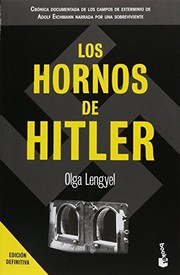
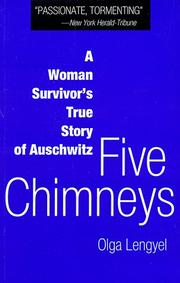
Five Chimneys, originally published 1946 in French as Souvenirs de l'au-delà (Memoirs from the Beyond), is the memoir of Olga Lengyel about her time as a prisoner in the Nazi concentration camp Auschwitz.
Background
Olga Lengyel was born on October 19, 1909, in Transylvania, then part of Hungary. In 1944, she was deported with her parents, husband and two children to Auschwitz-Birkenau. She eventually secured work in the infirmary at Auschwitz, a position which made her survival more likely. Olga survived Auschwitz, the only one of her family to do so. Her husband, Miklós Lengyel, died on the Death March. After the war, she emigrated to the United States via Odessa and France. Olga married Gustav Aguire and moved to Havana, but returned to New York City in 1962 and founded the Memorial Library in Manhattan. The mission of the Memorial Library is to support Holocaust education and to help teachers from across the United States as well as other countries promote an agenda for social justice. She died on April 15, 2001, in New York City at age 92.
In 2021, Holocaust scholar Lawrence Langer argued that Lengyel's book contained falsified stories, false memories, and embellishment.
Book
Early life
In 1944, Olga Lengyel worked as a surgical assistant in Cluj (original name Kolozsvár), the capital of Transylvania, at the clinic owned by her husband Miklós, a Berlin-educated surgeon. As early as 1943, the Lengyels had heard about German atrocities against civilians in occupied territories. However, they refused to believe what they considered "fantastic rumors".
In May 1944, Dr. Lengyel was summoned to the police station in Cluj (despite being a Christian) and did not return. When Olga was told that her husband was to be immediately deported to Germany, she insisted that she and her children be allowed to join him. So that the family would not be separated, Olga's parents also joined Miklós at the train station for the trip to Germany. Suddenly, the station was surrounded by soldiers and the Lengyel family and other hapless passengers were forced into crowded cattle cars. By the time the train arrived in Auschwitz, on the seventh day, many of the deportees had died and the train seemed to Olga "as so many coffins".
Auschwitz-Birkenau
Upon arrival in Auschwitz-Birkenau, young men, including Miklós, were selected for slave labor, while Olga's parents and children were sent "to the left", that is, directly to the gas chambers. After Olga's group was admitted to the camp, she was told by old inmates that the burnt, sweetish smell came from the "camp bakery". Over the next several weeks Olga's naiveté gave way to the sober realization that Auschwitz-Birkenau was an extermination camp, where internees were murdered in the gas chambers and burnt in the crematoria when they were judged sufficiently enfeebled to be no longer useful for slave labor.
The conditions in the barracks were abominable, with 1500 persons eating out of twenty bowls which were used for chamber pots at night. The soup distributed at midday often could not be consumed without holding one's nose, while the six and a half ounces (180 g) of bread given each inmate in the evening contained a high proportion of sawdust. Olga noted that the camp was operated in a capricious, even contrarian manner, with women who were intellectuals, or were in poor physical condition, often given backbreaking physical work, while illiterates might be assigned office jobs.
At one roll call Olga wrapped herself in a woolen garment to combat the cold. This was considered a serious infringement of discipline, and Olga was selected for the gas chamber. The selected were surrounded by ethnic German internees and Stubediensts (inmate police) so that none would escape. When the gas chamber truck arrived, Olga strode away purposefully in the momentary confusion, carrying a stick (a symbol of authority at Auschwitz) she had found on the ground.
Three weeks after her arrival in Auschwitz, Olga was propositioned by a Polish prisoner, a carpenter who was working in the women's camp. He suggested a food for sex exchange, but Olga, though starving, demurred. Another woman in her barrack, who accepted the offer, contracted syphilis. Such arrangements were relatively common in the women's camp. Women with such "friends" were not only better nourished, but enjoyed a certain distinction because men were in such short supply.
After Olga had been several weeks in the camp, a call came for internees with medical experience. Olga was one of the women drafted to work at the new, but ramshackle, infirmary. With a staff of five for circa 35,000 women the work load was overwhelming. What disturbed Olga the most was the treatment of contagious cases, who were sent to the hospital where selections for the gas chamber were frequent.
Olga makes a distinction between organization (stealing from the Germans) and common thievery from fellow inmates. Items stolen from Kanada, the warehouses where goods stolen from new arrivals were sorted and stored, often wound up as bartered goods on the thriving black market in the camp, thus making the lives of internees more bearable. In this fashion, organization was ennobled as an act of social solidarity and resistance.
Olga and the other women in the infirmary were responsible for the delivery of newborns in the camp. However, unless a child were stillborn, both mother and newborn were sent to the gas chambers. Olga's companions wrestled with this ethical dilemma and eventually decided to save the mothers by inducing stillbirths. "And so, the Germans succeeded in making murderers of even us", mused Olga.
The mass murder of the Jews of Hungary in the summer of 1944 was without precedent even at Birkenau. Ten transports arrived daily and 400 Greeks from transports from Athens and Corfu were ordered into the Sonderkommando. Amazingly, the Greeks refused to kill the Hungarians. They declared that they preferred to die first.
以上文字摘自英文维基百科「Five Chimneys」(有删节,去掉了参考文献等尾部小节),按 CC BY-SA 4.0 使用,作者为维基百科的各位编者。
资料卡
- 原题
- Souvenirs de l'au-delà
- 首次出版
- 1946 年
- 主题
- 犹太人大屠杀
资料卡来自 Wikidata Q5455854(CC0),众包数据,个别字段可能不全。