书单
百科
这个词条暂时没有中文维基百科条目,下面是英文维基百科的内容(英文原文):
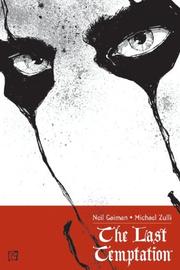
The Last Temptation is an American horror comic book written by Neil Gaiman and illustrated by Michael Zulli, created in collaboration with musician Alice Cooper. Originally published in three issues in 1994–1995 by Marvel Comics under its Marvel Music imprint, it was developed in connection with Cooper's 1994 concept album The Last Temptation.
The comic tells the story of a teenager who is offered freedom from his fears and from having to grow up by the mysterious proprietor of a theater. It combines elements of horror fiction and a coming-of-age story, drawing on Cooper's stage persona and themes of theatre, illusion and temptation.
The comic has received reviews in the press as well as scholarly analysis. Critics have frequently praised Zulli's artwork, while assessments of the originality and quality of the story have been more mixed.
Publication history
The Last Temptation was conceived as a project combining Alice Cooper's music with a comic book developing the same narrative concept. Gaiman, Cooper and Zulli collaborated on its creation, with ideas for the comic and the musical album developing partly in parallel. The work was published by Marvel Comics under the short-lived Marvel Music imprint, established by editor Mort Todd. The Last Temptation was the imprint's first publication. The comic was originally published in color, and its first issue was included free with Cooper's album. In 1995, Marvel published a collected color edition.
In a 1994 interview conducted by Edwin Pouncey, Cooper and Gaiman discussed the inspirations behind the project. Cooper cited horror films including The Haunting (1963) and Carnival of Souls (1962), which affected audiences primarily by building suspense and suggesting the presence of danger rather than showing it directly. The creators were interested in the idea of a mysterious travelling show arriving in a town. Cooper envisioned the principal antagonist as an ageing, washed-up Shakespearean actor running a vaudeville theater, while Gaiman emphasized his appearance as resembling a figure from the Victorian era.
Gaiman explained that he had been attracted to the project by the fictional nature of Cooper's stage persona. He regarded Cooper as a recognizable horror icon whose appearance—his characteristic makeup, top hat and snake—was widely known, but who, unlike classic cinematic monsters, lacked a single established backstory. The comic offered an opportunity to provide this character with a narrative context. Cooper, meanwhile, emphasized that Steven was intended to represent a young person capable of confronting threats independently. Both creators connected the story with the challenges of growing up in the 1990s.
In 2000, Dark Horse Comics published another collected edition, in which the artwork was reproduced in sepia tones on cream-colored paper. According to Julia Round, this color scheme gave the comic an old-fashioned appearance while intensifying its atmosphere of horror, making even ordinary scenes seem unsettling.
In 2014, Dynamite Entertainment published a twentieth-anniversary collector's edition in hardcover. It included, among other material, an introduction by Gaiman, an afterword by Zulli, a letter from Gaiman to Cooper and an excerpt from the script.
Plot
The story takes place in an unnamed town in the American Midwest. The protagonist of the comic is Steven, a teenager afraid of growing up and the changes associated with it. On the day before Halloween, accepting a dare from his friends, he enters the mysterious Theatre of the Real. Its proprietor is the sinister Showman, whose appearance resembles that of Alice Cooper. Steven watches a disturbing performance and encounters Mercy, a beautiful ticket-taker who belongs to the theatre's supernatural world. The Showman offers him the chance to remain in this world forever, allowing him to escape his fears, responsibilities and the necessity of growing up, but requiring him to surrender his potential for future development.
Steven initially rejects the offer and returns to his everyday life, but the Showman begins appearing around him, taking on the appearances of friends and family members. Steven discovers that the local Spaulding Memorial Theatre burned down in 1884 and that, ever since, children have disappeared from the town every five years on Halloween. Eventually, Steven argues with the Showman and sets fire to the theater. The ending leaves it uncertain, however, whether the supernatural being has truly been defeated.
Themes and narrative techniques
Representation of Alice Cooper
The comic draws on Alice Cooper's stage persona, although his name never appears in the story itself. The Showman is recognizable through his distinctive eye makeup, top hat, long coat and theatrical gestures. According to comics scholar Julia Round, the creators used these elements not merely to establish a resemblance to the musician, but also as narrative devices. The characteristic makeup also appears on the faces of other characters, signalling the Showman's influence over the reality surrounding Steven.
Round identified connections between the comic and the tradition of the French horror theater Grand Guignol, as well as the use of intertextual references to Cooper's work. The comic includes references to the album Hey Stoopid and to the snake motif featured in the musician's stage performances. According to Round, these elements allow Cooper to be represented as a theatrical and fantastical figure, rather than merely incorporating his likeness into a comic-book narrative.
以上文字摘自英文维基百科「The Last Temptation (comic)」(有删节,去掉了参考文献等尾部小节),按 CC BY-SA 4.0 使用,作者为维基百科的各位编者。
资料卡
- 原题
- The Last Temptation
- 首版出版社
- 漫威漫画
资料卡来自 Wikidata Q65561446(CC0),众包数据,个别字段可能不全。