书单
百科
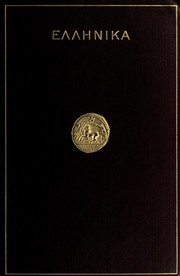
《希腊史》(希腊语:Ἑλληνικά),古希腊文原意是记述希腊人事件的著作。 事实上,有多部叙述公元前4世纪希腊历史的著作在拉丁文中拥有《希腊史》的标题。其中一些继承修昔底德的风格,另一些则自成一派。存世的《希腊史》是古希腊作家色诺芬的重要著作。 由于修昔底德的《伯罗奔尼撒战争史》未能完成对战争后期战局的叙述,《希腊史》成为记录伯罗奔尼撒战争最后七年战况以及战后希腊世界格局的重要历史参考文献。
色诺芬的《希腊史》
许多人认为此书是一本私人著作。色诺芬在退休后居住在斯巴达政府安排的地产内,写下此书,本意只在其朋友圈中传阅,写给那些参加过战争,对其中主要人物及事件都熟知的人们。色诺芬记述了从公元前411年,即修昔底德的《伯罗奔尼撒战争史》中断之时起,直至公元前362年的曼丁尼亚之战间近50年的历史。 在《希腊史》与《伯罗奔尼撒战争史》之间几乎没有明显的风格转变。从某种意义上说,《希腊史》的开场白,μετὰ δὲ ταῦτα,可以被翻译作“从此之后”,或者“紧接着这些事件”。
其他有《希腊史》标题的著作
在所有题为《希腊史》而现在已经亡佚的史籍中,有两部值得一提, 作者分别是库梅的埃福罗斯和希俄斯的忒奥朋普斯。埃福罗斯试图写一部通史,而尝试从神话中提取出史实。 他的记述始于传说中“赫拉克勒斯诸子的归来”,现代读者认为这完全是一种起源神话。 作为修辞学家伊索克拉底的弟子,他没有将可信的历史细节结合到自己的华丽辞藻之中。Oswyn Murray评论道:“不幸的是,他的叙事风格和故事的完整性使其颇受民众欢迎。然而他至少不是那种故意歪曲历史,使其服务于某种政治目的的人。” 另一位作者忒奥朋普斯,也是伊索克拉底的弟子,他的著作则是修昔底德作品的续篇。
另外,在俄克喜林库斯出土了一部莎草纸残卷《希腊史》,称为俄克喜林库斯的《希腊史》。此书涵盖了自公元前411年至公元前395年4月尼多斯之战间的史实。已有多名古代历史学家被猜测是此书的作者。
以上文字摘自维基百科「希腊史」(去掉了参考文献等尾部小节),按 CC BY-SA 4.0 使用,作者为维基百科的各位编者。
中文维基百科的条目比较短,下面附上英文维基百科的内容(英文原文):
Hellenica (also Hellenika; Ancient Greek: Ἑλληνικά) is a work of history by the Greek writer Xenophon. It was intended as a continuation of Thucydides' History of the Peloponnesian War, which was left unfinished and ends abruptly in the year 411 BC. Xenophon's history covers the years 411–362 BC, through the end of the Peloponnesian War and its aftermath.
Hellenica (or Hellenika) simply means writings on Greek (Hellenic) subjects. The title is commonly translated as The History of Greece. Xenophon's work was one of several Greek histories from the 4th century which bear the title Hellenica, of which very few survive.
Hellenica is usually considered to be a difficult work for modern audiences to understand, as Xenophon often assumed his reader's knowledge of events.
Composition
There are many theories on how and when Hellenica was written, but most scholars believe that Xenophon wrote the majority of it in the later years of his life, from around 362–356 BC. The first section (1.1.1-2.3.10), which covers the end of the Peloponnesian War, was probably written much earlier, in the mid-380s BC. Some have suggested that this early section was an attempt to mimic Thucydides, as it follows a strict chronological structure and minimizes religious significance, however, the respective writing styles are still distinctly different. The later sections through to the end of the work (2.3.11-7.5.27) are less strict in their chronological order, often following singular stories to their completion before going back and filling in events that had happened elsewhere.
Reliability
While Hellenica contains inaccuracies, it is generally considered that Xenophon didn't include anything he knew to be untrue. He shows a bias towards Sparta, most clearly through his dislike of Sparta's rival Thebes, describing them as foolish and cowardly in battle. The exclusion of certain significant events, such as the establishment of the Arcadian League and the Second Athenian League, the construction of Megalopolis, and the refoundation of Messene, all favor Sparta. However, it is possible that these events were left out because they were common knowledge to his readers. Also, despite this reputation for bias, Hellenica includes few evaluative phrases that directly praise or criticize its subjects.
Xenophon wrote his history soon after the events had occurred. As he was himself a cavalryman, the importance of cavalry in battles is emphasized, particularly in reference to Persia. He relied primary on his own memory, as well as testimony of others, mostly friends who visited him. As he trusted these eyewitnesses, rarely did he find multiple sources for an event, resulting in occasionally limited perspectives and unbalanced coverage.
Content
Hellenica is divided into seven books that cover the era between the golden age of Athens and the rise of Macedon.
The first two narrate the final years of the Peloponnesian War, while the remaining books (three to seven) focus primarily on Sparta as the dominant city-state in Greece after the Peloponnesian War, continuing into the period known as the Theban hegemony following Sparta's defeat at the battle of Leuctra. The main concerns are the power struggle between Athens and Sparta, as well as the ideological struggle between democracy and oligarchy.
Book 3 includes a brief description of the expedition of Cyrus the Younger and the Ten thousand, in which Xenophon took part and later wrote a history of, the Anabasis.
Unlike the histories of Herodotus and Thucydides, Xenophon's Hellenica has no preface or introduction. This has made it comparatively difficult to judge Xenophon's intentions and methods for writing his history. The narrative begins as a continuation of Thucydides' unfinished History of the Peloponnesian War, clearly designated by the opening words of Hellenica, "μετὰ δὲ ταῦτα," which are translated varyingly as "Then," "After this," "Some days later," or "Following these events."
以上文字摘自英文维基百科「Hellenica」(有删节,去掉了参考文献等尾部小节),按 CC BY-SA 4.0 使用,作者为维基百科的各位编者。
资料卡
- 原题
- Ἑλληνικά
- 原作语言
- 古希腊语
- 体裁
- 历史编篆学
资料卡来自 Wikidata Q674638(CC0),众包数据,个别字段可能不全。