书单
百科
这个词条暂时没有中文维基百科条目,下面是英文维基百科的内容(英文原文):
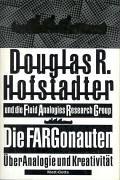
Fluid Concepts and Creative Analogies: Computer Models of the Fundamental Mechanisms of Thought is a 1995 book by Douglas Hofstadter and other members of the Fluid Analogies Research Group exploring the mechanisms of intelligence through computer modeling. It contends that the notions of analogy and fluidity are fundamental to explain how the human mind solves problems and to create computer programs that show intelligent behavior. It analyzes several computer programs that members of the group have created over the years to solve problems that require intelligence.
It was the first book ever sold by Amazon.com.
Origin of the book
The book is a collection of revised articles that appeared in precedence, each preceded by an introduction by Hofstadter.
They describe the scientific work by him and his collaborators in the 1980s and 1990s.
The project started in the late 1970s at Indiana University.
In 1983 he took a sabbatical year at MIT, working in Marvin Minsky's Artificial Intelligence Lab.
There he met and collaborated with Melanie Mitchell, who then became his doctoral student.
Subsequently, Hofstadter moved to the University of Michigan, where the FARG (Fluid Analogies Research Group) was founded.
Eventually he returned to Indiana University in 1988, continuing the FARG research there.
The book was written during a sabbatical year at the Istituto per la Ricerca Scientifica e Tecnologica in Trento, Italy..
Publication
Upon publication, Jon Udell, a Byte senior technical editor-at-large said:
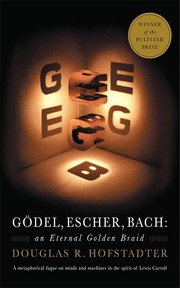
Fifteen years ago, Gödel, Escher, Bach: An Eternal Golden Braid exploded on the literary scene, earning its author a Pulitzer prize and a monthly column in Scientific American. Douglas Hofstadter's exuberant synthesis of math, music, and art, and his inspired thought experiments with "tangled hierarchy," recursion, pattern recognition, figure/ground reversal, and self-reference, delighted armchair philosophers and AI theorists. But in the end, many people believed that these intellectual games yielded no useful model of cognition on which to base future AI research. Now Fluid Concepts and Creative Analogies presents that model, along with the computer programs Hofstadter and his associates have designed to test it. These programs work in stripped-down yet surprisingly rich microdomains.
On April 3, 1995, Fluid Concepts and Creative Analogies became the first book ordered online by an Amazon.com customer.
Chapters and authors
To Seek Whence Cometh a Sequence (D.H.)
The Architecture of Jumbo (D.H.)
Numbo: A Study in Cognition and Recognition (Daniel Defays)
High-level Perception, Representation, and Analogy: A Critique of Artificial-intelligence Methodology (David Chalmers, Robert French, and D.H.)
The Copycat Project: A Model of Mental Fluidity and Analogy-making (D.H. and Melanie Mitchell)
Perspectives on Copycat: Comparisons with Recent Work (Melanie Mitchell and D.H.)
Prolegomena to Any Future Metacat (D.H.)
Tabletop, BattleOp, Ob-Platte, Potelbat, Belpatto, Platobet (D.H. and Robert French)
The Emergent Personality of Tabletop, a Perception-based Model of Analogy-making (D.H. and Robert French)
Letter Spirit: Esthetic Perception and Creative Play in the Rich Microcosm of the Roman Alphabet (D.H. and Gary McGraw)
Summary of chapters
Chapter 1: To Seek Whence Cometh a Sequence
The first AI project by Hofstadter stemmed from his teenage fascination with number sequences.
When he was 17, he studied the way that triangular and square numbers interleave, and eventually found a recursive relation describing it.
In his first course on AI, he set to the students and to himself the task of writing a program that could extrapolate the rule by which a numeric sequence is generated.
He discusses breadth-first and depth-first techniques, but eventually concludes that the results represent expert systems that incarnate a lot of technical knowledge but don't shine much light on the mental processes that humans use to solve such puzzles.
Instead he devised a simplified version of the problem, called SeekWhence, where sequences are based on very simple basic rules not requiring advanced mathematical knowledge.
He argues that pattern recognition, analogy, and fluid working hypotheses are fundamental to understand how humans tackle such problems.
Chapter 2: The Architecture of Jumbo
Jumbo is a program to solve jumbles, word puzzles consisting in five or six scrambled letters that need to be anagrammed to form an English word.
The resulting word does not need to be a real one but just to a plausible, that is, to consists of a sequence of letters that is normal in English.
The constituent elements of Jumbo are the following:
The "chunkabet": a database of chunks, small sequences of letters, with a numeric value giving their strength as possible components of a word.
The "cytoplasm": a loose data structure containing partial associations of letter, modeling a form of working memory. The name is inspired by the place in a cell where molecular fragments are assembled into proteins.
The "Coderack": a structure containing "codelets", small pieces of programs that are waiting to be executed in the cytoplasm; the codelet that is executed next is chosen non-deterministically, based on urgencies attached to them; a codelet may form new associations, break down old ones, or generate more codelets.
A "temperature" is associated to the present state of the cytoplasm; it determines how probable it is that a destructive codelet is executed.
There is a "freezing" temperature at which no destruction can occur anymore: a solution has been found.
Chapter 3: Numbo: A Study in Cognition and Recognition
Numbo is a program by Daniel Defays that tries to solve numerical problems similar to those used in the French game "Le compte est bon". The game consists in combining some numbers called "bricks", using the operations of multiplication, addition, and subtraction, to obtain a given result.
The program is modeled on Jumbo and Copycat and uses a permanent network of known mathematical facts, a working memory in the form of a cytoplasm, and a coderack containing codelets to produce free associations of bricks in order to arrive at the result.
以上文字摘自英文维基百科「Fluid Concepts and Creative Analogies」(有删节,去掉了参考文献等尾部小节),按 CC BY-SA 4.0 使用,作者为维基百科的各位编者。
资料卡
- 原作语言
- 英语
- 首次出版
- 1995 年
- 体裁
- 随笔
- 主题
- 认知科学
资料卡来自 Wikidata Q3686187(CC0),众包数据,个别字段可能不全。