书单
百科
这个词条暂时没有中文维基百科条目,下面是英文维基百科的内容(英文原文):
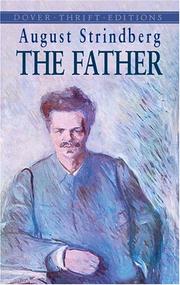
The Father (Swedish: Fadren) is a naturalistic tragedy by Swedish playwright August Strindberg, written in 1887. It is about the struggle between parents over the future of their child; resulting in the mother, using her cunning manipulative skills, subduing and finally destroying the father.
List of characters
CAPTAIN ADOLF - a cavalry officer
LAURA - his wife
BERTHA - their daughter
MARGRET - his old nurse
DOCTOR OESTERMARK
PASTOR JONAS - Laura's half-brother
CORPORAL NOYD - an orderly
SVAIRD - another orderly
Plot
Captain Adolph, an officer of the cavalry, and his wife, Laura, have a disagreement regarding the education of their daughter Bertha. Laura wants her to stay at home and become an artist, while Adolph wants Bertha to move into town and study to be a teacher. Adolph says that his decision is final, and that the law supports him, because, he points out, the woman sells her rights when she agrees to be married. The argument grows and becomes fierce.
Laura, cunning and manipulative, suggests that Adolph may in fact have no rights in the matter. Laura lies to the family doctor that Adolph may be mad, because, as an amateur scientist, he thinks he has discovered life on another planet by looking through a microscope. Adolph in fact has discovered signs of organic life by studying meteorites through a spectroscope. Laura also reveals to the doctor that she has obtained a letter that Adolph once wrote confessing that he himself feared he might go mad.
Trapped in Laura's web of manipulation, Adolph becomes frustrated and responds with violence — he throws a burning lamp in the direction of his wife as she exits. The moment he does that, he is sunk. He realizes that Laura has cunningly provoked him to commit this irrational act, which then becomes the pretext for having him committed. While waiting for the straitjacket to arrive, the pastor tells Laura she is incredibly strong. "Let me see your hand! Not one incriminating spot of blood to give you away!" he says, "One little innocent murder that the law can't touch; an unconscious crime!" In a scene of intense emotional pathos, it is Margaret, the captain's old nurse, who cajoles the captain, who indeed has now been driven mad, into a straitjacket. Laura is presented as having a stronger will than her husband, who says to her: "You could hypnotize me when I was wide awake, so that I neither saw nor heard, only obeyed." As the captain suffers a stroke and dies, Bertha rushes to her mother, who exclaims, "My child! My own child!" as the pastor says, "Amen".
Themes
This play expresses a recurrent theme in some Strindberg Naturalism: Laws and culture may influence the dynamics of men and women within their various social contracts. The play uncovers the inevitable struggle for legacy and power between the human sexes. At the time the play was written, Strindberg's marriage was deteriorating with his wife Siri von Essen, and situations in the play could have very loosely resembled situations occurring in his failing marriage. Different religions, Methodist, Baptist, and an occult spiritualism, exist in the household and vie for Bertha's acceptance. There are also references in the play to Greek Mythology and Shakespeare's Merchant of Venice and Hamlet.
Production background
Strindberg was aware of the literary discussions regarding what constituted naturalism in drama, and particularly the theory of Emile Zola, who was naturalism's chief proponent. Zola felt that the naturalistic playwright should observe life very carefully, and render it in a documentary fashion. In creating character the playwright should be scientific and show that character is determined by heredity and environment. And the playwright should apply understanding of psychology and physiology. Sets and costumes should be realistic, and the long expositions and complicated intrigues of romances and the "well-made play" should be avoided. Zola felt that the French drama had not achieved true naturalism, and Strindberg felt challenged to succeed where others had not. Because of blasphemous comments, Strindberg found it hard for his work to be published and produced in Sweden. This play was the first Strindberg play to be produced outside of Scandinavia, in Berlin in 1890. The Father marked a turning point for Strindberg, as he went to a style of writing he deemed "artistic-psychological writing".
In an essay "Psychic Murder", written just after "The Father" was completed, Strindberg discusses Henrik Ibsen’s play Rosmersholm, and suggests how Ibsen might have handled Rebecca West’s "psychic murder" of Mrs. Rosmer, which Ibsen doesn't describe. It might be affected, according to Strindberg, by planting jealousy in Mrs. Rosmer's mind, the way Iago did to Othello. He then goes on to describe the very same methods that Laura uses against the Captain in The Father. The use of psychological elements in Strindberg's play move it closer to Naturalism than Ibsen's play. There is almost a Darwinian struggle between the two principals, and Darwin's theory is referenced in the play.
English-language productions
Warner Oland's 1912 Broadway production of The Father was the first performance of a Strindberg play in the United States. Oland (who would later become famous for his portrayals of Fu Manchu and Charlie Chan in Hollywood films) translated, produced, and starred in the production, which met with mixed reviews and closed after 31 performances. Raymond Massey directed and starred in a 1949 Broadway production, which also featured Grace Kelly in the role of Bertha.
The play has been translated by Peter Watts (1958), Michael Meyer (1964), Harry G. Carlson (1981), Michael Robinson (1998), Gregory Motton (2000) and Laurie Slade (2012). The role of the Captain has been played in the West End by Michael Redgrave (1948), Wilfrid Lawson (1953) and Trevor Howard (1964). The play was adapted by John Osborne in 1989 a production at the Royal National Theatre. Osborne described himself as "Strindberg's Man in England" who was determined to be "the keeper of that unpredictable flame".
以上文字摘自英文维基百科「The Father (Strindberg play)」(有删节,去掉了参考文献等尾部小节),按 CC BY-SA 4.0 使用,作者为维基百科的各位编者。
资料卡
- 原题
- The Father
- 原作语言
- 瑞典语
- 首次出版
- 1887 年
- 作品形式
- 剧作
- 体裁
- 悲剧
- 主要人物
- Captain Adolph、Laura、Bertha、Nöjd、Doctor Östermark、The Pastor、Svaird、Margaret
资料卡来自 Wikidata Q1197789(CC0),众包数据,个别字段可能不全。
改编作品
电影1
电视剧 / 剧集1
名单来自 Wikidata(CC0):只列条目里写明「改编自 / 取材于」这本书的作品,不按名字猜;众包数据,可能不全。