书单
百科
这个词条暂时没有中文维基百科条目,下面是英文维基百科的内容(英文原文):
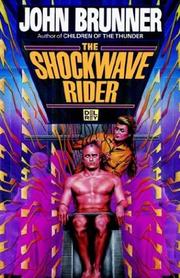
The Shockwave Rider is a science fiction novel by John Brunner, originally published in 1975. It is notable for its hero's use of computer hacking skills to escape pursuit in a dystopian future, and for the coining of the word "worm" to describe a program that propagates itself through a computer network. It also introduces the concept of a Delphi pool, perhaps derived from the RAND Corporation's Delphi method – a prediction market on world events which bears close resemblance to DARPA's controversial and cancelled Policy Analysis Market.
Origin of the title
The title derives from the futurist work Future Shock by Alvin Toffler. The protagonist is a survivor in a world of quickly changing identities, fashions, and lifestyles, where individuals are oppressed by a powerful, secretive state apparatus. His highly developed computer skills enable him to use any public telephone to punch in a new identity, thus reinventing himself, within hours. As a fugitive, he must do this from time to time to avoid capture.
Plot introduction
The novel shows a dystopian early 21st-century America dominated by computer networks. The hero, Nick Haflinger, is a runaway from Tarnover, a government program intended to find, educate and indoctrinate highly gifted children to further the interests of the state in a future where quantitative analysis backed by the tacit threat of coercion has replaced overt military and economic power as the deciding factor in international competition. In parallel with this, the government has become a de facto oligarchy that is effectively an offshoot of organised crime.
Nick's talent extends to programming the network using only a touch-tone telephone. One of his handlers at Tarnover explains that this is like a classical pianist being able to play entire sonatas and concertos from memory. However, Nick also has some personality flaws, amounting almost to a deathwish. These become manifest in exhibitions of his abilities, revealing his identity to his pursuers.
The background to the story includes a massive earthquake laying waste to the San Francisco Bay Area in California. Millions die and millions more are left to live on government handouts. The subsequent economic depression, coupled with the rootlessness enabled by access to online data and strong social pressure to be flexible (the results of corporations wanting highly mobile workforces without strong local ties), results in a fragmentation of society along religious, ethnic, and a variety of class markers, what Toffler called "subcults", including what would in 2010 be described as gangs. The equitable distribution of data access and data privacy is a prominent theme in the book; characters who have access to information which is nominally secret enjoy demonstrable economic advantages over others lacking access to such data. In the novel, data privacy is reserved for corporations and powerful individuals, who may then conceal wrongdoing; by contrast, normal citizens do not enjoy significant privacy.
The world described in the book is dystopian, with laissez-faire economics portrayed as leading to disaster as greed trumps long-term planning. The educational system is dysfunctional, with teachers unable to perform their jobs due to strictures. The only functional educational system seen in the book is portrayed as an enclave, the tightly controlled Tarnover school. Communities are either walled enclaves of privilege or largely lawless areas entirely lacking protection from corrupt civil authorities. Infrastructure has been allowed to crumble, and characters who reside within "paid avoidance zones" receive compensation from the government in lieu of actual services.
Plot summary
The novel is set in the weeks following Nick's recapture after several years on the run, alternating between moral arguments with his interrogator, who is trying to discover why the program's star pupil had absconded, and flashbacks of his career. The interrogator is Paul Freeman, a graduate of another secret installation known as Electric Skillet, which focuses on weapons and defence strategy.
Although he had initially felt at home at Tarnover, Nick eventually becomes aware of experiments in genetic engineering being performed there. These produce monstrous deformed children who are disposed of when they are no longer needed for study. At this point Nick becomes determined to escape. He studies data processing, steals a personal ID code intended for privileged individuals who wish to live their lives without surveillance, and goes on the run. He uses the stolen 4GH computer access code to cover his data trails and create new identities for himself, easily adopting entire new personas. One is the pastor of a popular church, another is a successful computer consultant.
In this last role, calling himself Sandy Locke, he becomes the lover of Ina Grierson, a top executive at Ground to Space Industries, a powerful "hypercorp" known to all as G2S. Intending to use the computer facilities at G2S to ensure that his stolen code is still valid, he signs on as a "systems rationalizer" with the company. This brings him into contact with Ina's daughter, Kate, who attracts him despite her plain appearance and simple lifestyle. At the age of 22, Nick's age when he left Tarnover, Kate is a perpetual student at the University of Missouri–Kansas City. She is perceptive enough to penetrate Nick's adopted persona, deeply disturbing him even though she fascinates him. He visits her at home, helping her to clean out some of her possessions, and meeting her tame cougar, Bagheera – the product of her late father's genetic research into intelligence. He died shortly after abandoning the research because the government was using it to produce animals for military uses.
以上文字摘自英文维基百科「The Shockwave Rider」(有删节,去掉了参考文献等尾部小节),按 CC BY-SA 4.0 使用,作者为维基百科的各位编者。
资料卡
- 原题
- The Shockwave Rider
- 原作语言
- 英语
- 首次出版
- 1975 年 3 月
- 作品形式
- 长篇小说
- 体裁
- 科学幻想、反乌托邦作品、赛博朋克、末日后幻想
- 首版出版社
- 哈珀与罗出版公司
- 故事发生地
- 美国
资料卡来自 Wikidata Q353231(CC0),众包数据,个别字段可能不全。