书单
百科
这个词条暂时没有中文维基百科条目,下面是英文维基百科的内容(英文原文):
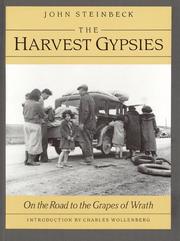
The Harvest Gypsies, by John Steinbeck, is a series of feature-story articles written on commission for The San Francisco News about the lives and times of migrant workers in California's Central Valley. Published daily from October 5 to 12, 1936, Steinbeck explores and explains the hardships and triumphs of American migrant workers during the Great Depression, tracing their paths and the stories of their lives and travels from one crop harvest to the next crop harvest as they eked out a stark existence as temporary farmhands.
In 1938, the feature-story articles were published as the pamphlet Their Blood Is Strong, by the Simon J. Lubin Society, a non-profit organization dedicated to educating Americans about the socio-economic plight of the migrant worker. The pamphlet included the seven articles, plus Steinbeck's new epilogue "Starvation Under the Orange Trees" and twenty-two photographs of the migrant workers, by Dorothea Lange; ten thousand copies of Their Blood Is Strong were sold at twenty-five cents each.
Historical context
Historical background
From 1931 to 1939, drought and soil erosion across the Midwestern and Southern Plains created one of the lasting images of the Great Depression: the Dust Bowl. During this time, over one million Americans emigrated from their native states to California. The number of emigrants was equal to more than twenty percent of the total population of California at the time. The abundance of workers desperate for employment led to extraordinarily low wages, which in turn created widespread underemployment and poverty amongst the migrant workers. Resultant of these conditions were the worker camps, labor strife, and horrific living arrangements described by Steinbeck in The Harvest Gypsies. Steinbeck, a California native himself, sought to capture these new developments and their impact on California culture. He first addressed the issue with his novel In Dubious Battle (1936), which took a harvesters’ strike as its subject. Impressed by the novel, San Francisco News editor George West commissioned Steinbeck to report on the situation with a series of articles in the fall of 1936.
The role of Tom Collins and Sanora Babb
Steinbeck obtained significant assistance from Farm Security Administration (FSA) documents, including reports compiled by Tom Collins, manager of a federal camp for migrants in Arvin, CA. Collins compiled these extensive interviews that contained residents' stories, songs, and folklore into a compendium which he shared with Steinbeck, who used it and his own notes to write The Harvest Gypsies.
Two years after the publication of The Harvest Gypsies, Sanora Babb began working for Collins and contributed notes to the FSA documents. "Unbeknownst to Babb, Collins was sharing her reports with writer John Steinbeck." The subsequent success of Steinbeck's The Grapes of Wrath (1939) precluded her publishing of her novel Whose Names Are Unknown, because Random House Publishers in New York feared that the market could not support two novels on the same topic in the same year.
Influence on future literary works
The Harvest Gypsies preceded several of Steinbeck's celebrated works with migrant workers at the center, among them Of Mice and Men (1937) and The Grapes of Wrath (1939). According to Steinbeck scholar Robert DeMott, The Harvest Gypsies provided Steinbeck a repository of precise information and folk values: "From countless hours of listening to migrant people, working beside them, listening to them and sharing their problems, Steinbeck drew all the correct details of human form, language, and landscape that ensure artistic verisimilitude, as well as the subtler nuances of dialect, idiosyncratic tics, habits, and gestures, which animate fictional characterization." This rich information would figure in his later works, as Steinbeck used the experience to create not only the vibrant characters but also the vivid settings of migrant camps. A host of details first described in The Harvest Gypsies reappear in The Grapes of Wrath, among them Steinbeck's portrayals of the “dignity and decency” of government camps, the widespread hunger and suffering of children, and the injustice of the authorities operating within the camps. Even the famous conclusion of The Grapes of Wrath finds a basis within the account of a stillborn child in The Harvest Gypsies.
Significance in John Steinbeck's career
The impact of Steinbeck's investigative reporting for The Harvest Gypsies on his literary career cannot be underestimated, according to scholar William Howarth. DeMott notes that The Harvest Gypsies "solidified [Steinbeck's] credibility—both in and out of migrant camps—as a serious commentator in a league with Dorothea Lange's husband, Paul Taylor, and Carey McWilliams, two other influential and respected investigators."
Production of the pamphlet
Helen Hosmer, a central figure in California labor circles, was responsible for the re-publication of the articles as Their Blood Is Strong. Steinbeck did not initiate the re-publishing of the series. By 1938, he had moved on to writing The Grapes of Wrath full-time and had to be persuaded by Hosmer to get involved in reissuing the series. Hosmer had worked as a researcher for the Farm Security Administration in the mid 1930s, where she met Dorothea Lange and economist Paul Taylor. She met Steinbeck in that period and supplied him with data files she had collected for the Farm Security Administration. After Hosmer left the FSA, she founded the Simon J. Lubin Society to advocate on behalf of workers.
According to Hosmer, Steinbeck was reluctant to participate in the project. “He was scared to death of all these left-wingers swarming around,” she said in an oral history interview in 1992. Eventually, Steinbeck agreed to allow Hosmer to publish the series. She combined the articles with Dorothea Lange's photographs and gave the pamphlet its title Their Blood Is Strong.
以上文字摘自英文维基百科「The Harvest Gypsies」(有删节,去掉了参考文献等尾部小节),按 CC BY-SA 4.0 使用,作者为维基百科的各位编者。
资料卡
- 首次出版
- 1936 年 10 月
- 主题
- 外来务工人员
资料卡来自 Wikidata Q20050633(CC0),众包数据,个别字段可能不全。