书单
百科
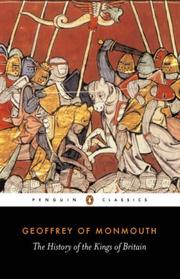
《不列颠诸王史》(拉丁语:Historia regum Britanniae;英语:The History of the Kings of Britain;原名:De gestis Britonum;英语:On the Deeds of the Britons)是蒙茅斯的杰弗里在1136年左右创作的一本历史书,以年代先后顺序记载了两千年里出现的不列颠诸王的生平。它是不列颠传说的主要源头之一。
直到16世纪,历史学家还把它当做信史,但此书内容多为杜撰,只是作为一本文学作品颇有价值。李尔王的故事最早见于本书,而亚瑟王传奇的流行和此书不无关系。
外部连接
维基文库中的文献全文:History of the Kings of Britain
维基共享资源上的相关多媒体资源:Historia Regum Britanniae
原文,Google Books
拉丁原文,Google Books
Historia regum Britanniae,Cambridge Digital Library
LibriVox中的公有领域有声书《History of the Kings of Britain》
以上文字摘自维基百科「不列颠诸王史」(去掉了参考文献等尾部小节),按 CC BY-SA 4.0 使用,作者为维基百科的各位编者。
中文维基百科的条目比较短,下面附上英文维基百科的内容(英文原文):
De gestis Britonum (On the Deeds of the Britons), commonly known as Historia regum Britanniae (The History of the Kings of Britain), is a fictitious account of British history written around 1136 by the Welsh cleric Geoffrey of Monmouth. It chronicles the lives of the kings of the Britons over the course of two thousand years, beginning with the Trojans founding the British nation and continuing until the Anglo-Saxons assumed control of much of Britain around the 7th century. It is one of the central pieces of the Matter of Britain.
Although taken as historical truth until the 16th century, it is now considered to have no value as history. Much is apocryphal, and when events described, such as Julius Caesar's invasions of Britain, can be corroborated from contemporary histories, Geoffrey's account can be seen to be wildly inaccurate. It remains, however, a valuable piece of medieval literature, which contains the earliest known version of the story of King Lear and his three daughters, and helped popularise the legend of King Arthur.
Contents
Geoffrey starts the book with a short dedication. He claims that he was given a source for the time period by Archdeacon Walter of Oxford, who presented him with a "certain very ancient book written in the British language" from which he has translated his history.
Books 1–3
The Historia begins with the Trojan hero Aeneas, who, according to the Aeneid, settled in Italy after the Trojan War. His great-grandson Brutus is banished for accidental patricide, and, after a period of wandering, is directed by the goddess Diana to settle on an island in the western ocean. Brutus lands at Totnes and names the island "Britain" after himself, defeating the previous giant inhabitants. He establishes the city that was eventually renamed London. After Brutus' death, the island is divided into three kingdoms, each given to one of his sons: Loegria (England) to Locrinus, Cambria (Wales) to Camber, and Alba (Scotland) to Albanactus.
Centuries later, Locrinus' descendant King Leir divides his kingdom among his three daughters, Goneril, Regan and Cordelia. However, because of a slight, he gives Cordelia no land, whereupon she departs for Gaul. Leir later regrets his actions towards Cordelia and travels to Gaul. Cordelia helps raise a Gaulish army for Leir, who returns to Britain, defeats his sons-in-law and regains the kingdom. Cordelia inherits the throne and rules for five years until Cunedagius and Marganus (sons of her two sisters) rebel against her. They imprison Cordelia; grief-stricken, she kills herself. Ending a civil war, Cunedagius eventually kills Marganus in Wales.
In a later era, Dunvallo Molmutius, the son of Cloten, the King of Cornwall, establishes his rule over the whole island. He is said to have established the Molmutine Laws. Dunvallo's sons, Belinus and Brennius, fight a civil war before being reconciled by their mother, and proceed to sack Rome. Victorious, Brennius remains in Italy, while Belinus returns to rule Britain. Numerous brief accounts of successive kings follow.
Books 4–6
After his conquest of Gaul, Julius Caesar looks over the sea and resolves to order Britain to swear obedience and pay tribute to Rome. Cassivellaunus pays tribute and makes peace with Caesar, who then returns to Gaul. He dies and is succeeded by his nephew Tenvantius. Tenvantius' grandson Guiderius refuses to pay tribute to emperor Claudius, who then invades Britain. After Guiderius is killed in battle with the Romans, his brother Arvirargus eventually agrees to submit to Rome, and is given the hand of Claudius's daughter Genvissa in marriage.
以上文字摘自英文维基百科「Historia Regum Britanniae」(有删节,去掉了参考文献等尾部小节),按 CC BY-SA 4.0 使用,作者为维基百科的各位编者。
资料卡
- 原题
- Historia regum Britanniae
- 原作语言
- 中世纪拉丁语
- 首次出版
- 1136 年
- 作品形式
- 散文
- 体裁
- 伪史学
- 主题
- 历史上的不列颠、亚瑟王、砵氏编年志
- 主要人物
- Civil War of the Five Kings、Civil War of the Weak King、Civil War between Alba and Cornwall
资料卡来自 Wikidata Q238693(CC0),众包数据,个别字段可能不全。
改编作品
取材于它的书2
名单来自 Wikidata(CC0):只列条目里写明「改编自 / 取材于」这本书的作品,不按名字猜;众包数据,可能不全。