书单
百科
这个词条暂时没有中文维基百科条目,下面是英文维基百科的内容(英文原文):
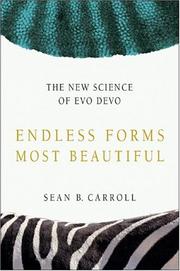
Endless Forms Most Beautiful: The New Science of Evo Devo and the Making of the Animal Kingdom is a 2005 book by the molecular biologist Sean B. Carroll. It presents a summary of the emerging field of evolutionary developmental biology and the role of toolkit genes. It has won numerous awards for science communication.
The book's somewhat controversial argument is that evolution in animals (though no doubt similar processes occur in other organisms) proceeds mostly by modifying the way that regulatory genes, which do not code for structural proteins (such as enzymes), control embryonic development. In turn, these regulatory genes turn out to be based on a very old set of highly conserved genes which Carroll nicknames the toolkit. Almost identical sequences can be found across the animal kingdom, meaning that toolkit genes such as Hox must have evolved before the Cambrian radiation which created most of the animal body plans that exist today. These genes are used and reused, occasionally by duplication but far more often by being applied unchanged to new functions. Thus the same signal may be given at a different time in development, in a different part of the embryo, creating a different effect on the adult body. Carroll argues that this explains how so many body forms are created with so few structural genes. Along with Carroll's The Making of the Fittest, it was the basis for the PBS documentary What Darwin Never Knew.
It has been called the most important popular science book since Richard Dawkins's The Blind Watchmaker "and in effect a sequel [to it]."
Author
Sean B. Carroll is a professor of molecular biology and genetics at the University of Wisconsin–Madison. He studies the evolution of cis-regulatory elements (pieces of non-coding DNA) which help to regulate gene expression in developing embryos, using the fruit fly Drosophila as the model organism. He has won the Shaw Scientist Award and the Stephen Jay Gould Prize for his work.
Book
Context
The book's title quotes from the last sentence of Charles Darwin's 1859 The Origin of Species, in which he described the evolution of all living organisms from a common ancestor: "endless forms most beautiful and most wonderful have been, and are being, evolved." Darwin, however, was unable to explain how those body forms actually came into being. The early 20th-century modern synthesis of evolution and genetics, too, largely ignored embryonic development to explain the form of organisms, since population genetics appeared to be an adequate explanation of how forms evolved. That task was finally undertaken at the end of the 20th century with the arrival of recombinant DNA technology, when biologists were able to start to explore how development was actually controlled.
Contents
Part I The Making of Animals
1. Animal Architecture: Modern Forms, Ancient Designs
Carroll argues that many animals have a modular design with repeated parts, as in trilobites with repeated segments, or the repeated fingers of a human hand.
2. Monsters, Mutants, and Master Genes
Embryologists study how bodies develop, and the abnormalities when things go wrong, such as homeotic variants when one body part is changed into another (for instance, a fruit fly antenna becomes a leg with the Antennapedia mutant).
3. From E. coli to Elephants
This chapter tells the tale of the genetic code, and the lac operon. François Jacob and Jacques Monod showed that the environment and genetic switches together control gene expression. He discusses Christiane Nüsslein-Volhard and Eric Wieschaus's work on the genetic control of embryonic development. He introduces the evo-devo gene toolkit.
4. Making Babies: 25,000 Genes, Some Assembly Required
Carroll looks at how a fruit fly's embryonic development is controlled and describes his own discoveries (back in 1994).
5. The Dark Matter of the Genome: Operating Instructions for the Tool Kit
The chapter describes how genes are switched on and off in a precisely choreographed time sequence and 3-dimensional pattern in the developing embryo and how the logic can be modified by evolution to create different animal bodies.
Part II Fossils, Genes, and the Making of Animal Diversity
6. The Big Bang of Animal Evolution
The Cambrian radiation saw an explosion in the variety of animal body plans, from flatworms and molluscs to arthropods and vertebrates. Carroll explains how shifting the pattern of Hox gene expression shaped the bodies of different types of arthropods and different types of vertebrates.
7. Little Bangs: Wings and Other Revolutionary Inventions
This chapter explains how evolution goes to work within a lineage, specialising arthropod limbs from all being alike to "all of the different implements a humble crayfish carries", with (he writes) more gizmos than a Swiss Army knife.
8. How the Butterfly Got Its Spots
Echoing the titles of Rudyard Kipling's Just So Stories, Carroll shows how butterfly wing patterns evolved, including his discovery of the role of the Distal-less gene there, until then known in limb development. Evidently, a genetic switch could be reused for different purposes.
9. Paint It Black
Carroll looks at zebra stripes, industrial melanism in the peppered moth and the spots of big cats, all examples of the control of pattern in animals, down to molecular level.
10. A Beautiful Mind: The Making of Homo sapiens.
This chapter discusses how humans differ from other apes and why there are not many structural genes for the differences. Most of the changes are in genetic control, not in proteins.
11. Endless Forms Most Beautiful
Carroll concludes by revisiting Darwin's Origin of Species, starting with how Darwin evolved the final paragraph of his book, leaving only these four words "completely untouched throughout all versions and editions". He shows that evo-devo is a cornerstone of a synthesis of evolution, genetics, and embryology, replacing the "Modern synthesis" of 20th century biology.
以上文字摘自英文维基百科「Endless Forms Most Beautiful (book)」(有删节,去掉了参考文献等尾部小节),按 CC BY-SA 4.0 使用,作者为维基百科的各位编者。
资料卡
- 首次出版
- 2005 年
- 体裁
- 大众科学
- 首版出版社
- 威廉·沃德尔·诺顿公司
- 主题
- 演化发育生物学
资料卡来自 Wikidata Q19571629(CC0),众包数据,个别字段可能不全。