 书单
百科
《黄金传说》(拉丁语:Legenda aurea),原名为《圣人传说》(Legenda sanctorum),是意大利雅各·德·佛拉金所著的基督教圣人传记集。逐章介绍含耶稣、圣母玛利亚、大天使米迦勒等100名以上圣人的生涯。
它是中世纪欧洲的一部畅销书,至今仍有一千多份手抄本存世,初稿完成时间在1259–1266年间,但后世一直有新的内容纂入。
1450年代,随着印刷术的出现,它被迅速翻译成英语等主要欧洲语言版本,一度比《圣经》的版本数量还多。它是如此出名,以至于欧洲人会用“黄金传说”来代指任何的圣人传说故事集。
内容
里面介绍的是当时受人敬拜的各位圣人的生平、圣迹,以瞻礼日的时间顺序排列。每章开头介绍的是圣人名字的来源,其中充满夸张的想像。
以上文字摘自维基百科「黃金傳說 (書籍)」(去掉了参考文献等尾部小节),按 CC BY-SA 4.0 使用,作者为维基百科的各位编者。
中文维基百科的条目比较短,下面附上英文维基百科的内容(英文原文):
The Golden Legend (Latin: Legenda aurea or Legenda sanctorum) is a collection of 153 hagiographies by Jacobus de Voragine that was widely read in Europe during the Late Middle Ages. More than a thousand manuscripts of the text have survived. It was probably compiled around 1259 to 1266, although the text was added to over the centuries.
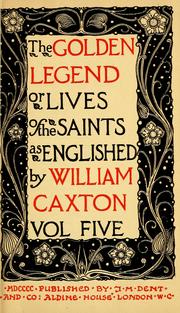
Initially entitled Legenda sanctorum (Readings of the Saints), it gained its popularity under the title by which it is best known. It overtook and eclipsed earlier compilations of abridged legendaria, the Abbreviatio in gestis et miraculis sanctorum attributed to the Dominican chronicler Jean de Mailly and the Epilogus in gestis sanctorum of the Dominican preacher Bartholomew of Trent. When printing was invented in the 1450s, editions appeared quickly, not only in Latin, but also in almost every major European language. Among incunabula, printed before 1501, Legenda aurea was printed in more editions than the Bible and was one of the most widely published books of the Middle Ages. During the height of its popularity the book was so well known that the term "Golden Legend" was sometimes used generally to refer to any collection of stories about the saints. It was one of the first books William Caxton printed in the English language; Caxton's version appeared in 1483 and his translation was reprinted, reaching a ninth edition in 1527.
Written in simple, readable Latin, the book was read in its day for its stories. Each chapter is about a different saint or Christian festival. The book is considered the closest thing to an encyclopaedia of medieval saint lore that survives today; as such, it is invaluable to art historians and medievalists who seek to identify saints depicted in art by their deeds and attributes. Its repetitious nature is explained if Jacobus meant to write a compendium of saintly lore for sermons and preaching, not a work of popular entertainment.
Lives of the saints
The book sought to compile traditional lore about saints venerated at the time of its compilation, ordered according to their feast days. Jacobus de Voragine for the most part follows a template for each chapter: etymology of the saint's name, a narrative about their life, a list of miracles performed, and finally a list of citations where the information was found.
Each chapter typically begins with an etymology for the saint's name, "often entirely fanciful". An example (in Caxton's translation) shows his method:
Silvester is said of sile or sol which is light, and of terra the earth, as who saith the light of the earth, that is of the church. Or Silvester is said of silvas and of trahens, that is to say he was drawing wild men and hard unto the faith. Or as it is said in glossario, Silvester is to say green, that is to wit, green in contemplation of heavenly things, and a toiler in labouring himself; he was umbrous or shadowous. That is to say he was cold and refrigate from all concupiscence of the flesh, full of boughs among the trees of heaven.
As a Latin author, Jacobus de Voragine must have known that Silvester, a relatively common Latin name, simply meant "from the forest". The correct derivation is alluded to in the text, but set out in parallel to fanciful ones that lexicographers would consider quite wide of the mark. Even the "correct" explanations (silvas, "forest", and the mention of green boughs) are used as the basis for an allegorical interpretation. Jacobus de Voragine's etymologies had different goals from modern etymologies, and cannot be judged by the same standards. Jacobus' etymologies have parallels in Isidore of Seville's Etymologiae, in which linguistically accurate derivations are set out beside allegorical and figurative explanations.
Jacobus de Voragine then moves on to the saint's life, compiled with reference to the readings from the Roman Catholic Church's liturgy commemorating that saint; then embellishes the biography with supernatural tales of incidents involving the saint's life.
以上文字摘自英文维基百科「Golden Legend」(有删节,去掉了参考文献等尾部小节),按 CC BY-SA 4.0 使用,作者为维基百科的各位编者。
资料卡
- 译者
- 威廉·卡克斯顿
- 原作语言
- 中世纪拉丁语
- 首次出版
- 1298 年
- 作品形式
- 散文、短篇小说集
- 体裁
- 圣徒传记
资料卡来自 Wikidata Q129493(CC0),众包数据,个别字段可能不全。
改编作品
取材于它的书1
名单来自 Wikidata(CC0):只列条目里写明「改编自 / 取材于」这本书的作品,不按名字猜;众包数据,可能不全。