书单
百科
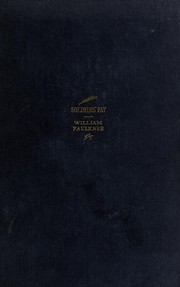
《士兵的报酬》(英语:Soldiers' Pay)是威廉·福克纳的第一部长篇小说,1926年出版。故事背景设定在第一次世界大战前后,风格上靠近迷惘的一代文学,美国南方文学的特征并不明显。故事讲述在英国皇家空军服役的唐纳德·马洪头部严重受伤而退役。回国后马洪丧失了记忆并失明,在乔·吉利根和玛格丽特·鲍尔斯的扶助下从纽约回到佐治亚州的家乡。玛格丽特的丈夫在战争中阵亡,爱上了重残的马洪,跟他回家。乔却爱着玛格丽特。回家后,马洪当牧师的父亲忽视儿子的悲剧。马洪又遇到了另外两个女人埃米和塞西莉。塞西莉已和马洪订婚,却爱着乔治·法尔,同他私奔。马洪因为和玛格丽特一直在一起而遭到众人怀疑。玛格丽特与马洪结婚,而乔一直在他们身边陪伴。
以上文字摘自维基百科「士兵的报酬」(去掉了参考文献等尾部小节),按 CC BY-SA 4.0 使用,作者为维基百科的各位编者。
中文维基百科的条目比较短,下面附上英文维基百科的内容(英文原文):
Soldiers' Pay is the first novel published by the American author William Faulkner. It was originally published by Boni & Liveright on February 25, 1926. It is unclear if Soldiers' Pay is the first novel written by Faulkner. It is however the first novel published by the author. Faulkner was working on two manuscripts while finishing Soldiers' Pay.
Plot overview
The plot of Soldiers' Pay revolves around the return of a wounded aviator home to a small town in Georgia following the conclusion of the First World War. He is escorted by a veteran of the war, and a widow. The aviator himself suffered a traumatic brain injury, and is in a state of perpetual silence, and blindness. Several conflicts revolve around the aviator's return including the state of his engagement to his fiancée, the widow's desire to marry the dying aviator herself, and the intrigue surrounding the fiancée who had been unfaithful to the aviator during his absence.
Soldier's Pay is one of only a few of the author's novels not set in his fictional Yoknapatawpha County, Mississippi.
Publication history
William Faulkner was a friend of American writer Sherwood Anderson and a member of his literary circle in 1920s New Orleans. As the story goes, it was Anderson who agreed to send the Soldiers' Pay manuscript to his publisher as long as Anderson himself did not have to read it.
In a 1950 letter from Faulkner's lifelong friend Phil Stone to Glenn O Carey, Stone acknowledges that it was Anderson who was instrumental in getting Soldiers' Pay published. "With all the efforts we made, I was not able to get Faulkner published and Sherwood Anderson was the one who got him started as far as publication goes."
Horace Liveright agreed to pay Faulkner $200.00 for the manuscript, which was originally titled Mayday. Editor and chief at Boni & Liveright T.R. Smith is likely the source of the title change. The first print run of Soldiers' Pay was 2,500 copies.
The New York Times reviewer described the novel as "poignant with beauty as well as a penetrating irony," and judged that "it belongs among such excellent conceptions of war and man as are to be found in "What Price Glory" and C. E. Montague's Disenchantment."
By the standards of the day, Soldiers' Pay and Faulkner's second novel Mosquitoes were commercial failures. Neither novel sold more than 1,200 copies after its initial release. Since Faulkner was awarded the 1949 Nobel Prize for Literature, Soldiers' Pay has remained in print. First edition copies are valuable among collectors, often selling for upwards of $35,000.
The original manuscript of Mayday from which Soldiers' Pay was edited was dedicated in Faulkner's manuscript to a love interest named Helen Baird.
Hollywood producer Jerry Wald once considered making Soldiers' Pay into a movie.
以上文字摘自英文维基百科「Soldiers' Pay」(去掉了参考文献等尾部小节),按 CC BY-SA 4.0 使用,作者为维基百科的各位编者。
资料卡
- 原作语言
- 美国英语、英语
- 首次出版
- 1926 年
- 作品形式
- 长篇小说
- 体裁
- 军事小说、历史类虚构作品
- 续作
- 蚊群
- 主题
- 第一次世界大战
资料卡来自 Wikidata Q1536034(CC0),众包数据,个别字段可能不全。