书单
百科
这个词条暂时没有中文维基百科条目,下面是英文维基百科的内容(英文原文):
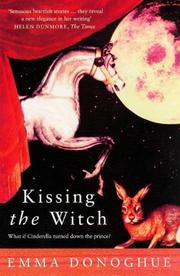
Kissing the Witch (or Kissing the Witch: Old Tales in New Skins) is a collection of interconnected fictional short stories written by Irish-Canadian Emma Donoghue. Each of the thirteen stories in the collection is an adaptation of a well-known European fairy tale, with several tales featuring feminist and queer themes. The stories are linked together by a narrative structure where the narrator of the previous story becomes the listener of the story that follows. None of the narrators or characters are named, instead being referred to via epithets and aliases. The book, originally published in 1997 by Hamish Hamilton Ltd., was Donoghue's third published fiction novel and first short story collection. Following its release, Kissing the Witch was translated into Dutch (1997), Catalan (2000), and Italian (2007).
The US paperback collection released in 1999 by HarperCollins Publishers Inc. features a cover designed by Christine Kettner. The cover features a simple black and white inverted design and a photograph by Eric Dinyer of a young woman with dark hair looking away from the camera. The publication features a short "Acknowledgments" section that pays respect to Emma Donoghue's agent and others who inspired her to complete the collection.
Story summaries
The Tale of the Shoe
(Based on "Cinderella")
Emma Donoghue opens the collection with the story of a young woman who is grieving the loss of her mother. Unlike the fairytale this section is based on, the Cinderella-like character does not have a father who remarries and brings home a wicked stepmother and evil sisters. In this retelling, the narrator's own mind is the torturous force that drives her to completing monotonous tasks and berates her whenever she does not. One day, a woman who claims to be an old friend of the narrator's mother appears at her door and pulls her out of her despair with laughter and magic. The woman—presumably some kind of witch—lavishes the narrator with beautiful dresses and, when the narrator asks to attend a ball, the woman readily fulfills her wish. The narrator attends the ball three nights in a row, each time surprised by how easy it is to speak to the nobles and even the king and prince. At the end of each night, the woman asks her whether she has had enough fun, but the narrator keeps asking to go back until the night the prince proposes to her. It is during his proposal that she realizes she doesn't love him and has instead fallen in love with the witch. She runs away and back to the witch to confess her love, leaving behind both shoes so the prince will never find her.
As with every story in this collection, the tale ends with the narrator asking the woman who she was before their story took place. This is formatted as a short free verse poem, and it often offers clues to the "Happily Ever After" of the narrator.
The Tale of the Bird
(Based on "Thumbelina")
The witch from the previous tale becomes the narrator of "The Tale of the Bird." Instead of being small in stature like the original Thumbelina, she is metaphorically small and she feels insignificant in the eyes of those around her. One of her few joys in life is sitting amongst the grass and the little creatures that call it home. While out enjoying nature, she meets a man with whom she falls in love. He ends up asking her father for her hand, and the two are quickly married. They consummate their marriage, and the two live in wedded bliss for some time as the narrator adjusts to her new life of wealth and managing the estate. The happiness comes to an end when she discovers she is pregnant and her husband begins to bar her from leaving the house. As time goes on, it becomes clear to the narrator that her hopes for the marriage are much different from those of her husband, who seems to have married her to produce children. Later in her pregnancy, she finds an injured bird in their home and nurses it back to health. Once the bird has fully recovered, the narrator releases it, as she promises that she, too, will one day be free from her marital cage.
When the bird circles back to her, she asks it who it was before it was a bird.
The Tale of the Rose
(Based on "Beauty and the Beast")
以上文字摘自英文维基百科「Kissing the Witch」(有删节,去掉了参考文献等尾部小节),按 CC BY-SA 4.0 使用,作者为维基百科的各位编者。
资料卡
- 原作语言
- 英语
资料卡来自 Wikidata Q123524405(CC0),众包数据,个别字段可能不全。