书单
百科
这个词条暂时没有中文维基百科条目,下面是英文维基百科的内容(英文原文):
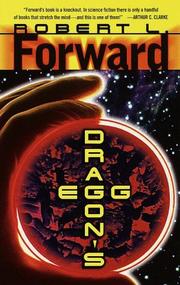
Dragon's Egg is a 1980 hard science fiction novel by American writer Robert L. Forward. In the story, Dragon's Egg is a neutron star with a surface gravity 67 billion times that of Earth, and inhabited by cheela, intelligent creatures the size of sesame seeds who evolve, live, and think a million times faster than humans. Most of the novel, from May to June 2050, chronicles the cheela civilization beginning with its discovery of agriculture to advanced technology and its first face-to-face contact with humans, who are observing the hyper-rapid evolution of the cheela civilization from orbit around Dragon's Egg.
Dragon's Egg attempts to communicate unfamiliar ideas and imaginative scenes while giving adequate attention to the known scientific principles involved.
Plot summary
The neutron star
Half a million years ago and 50 light-years from Earth, a star in the constellation Draco turns supernova, and the star's remnant becomes a neutron star. The radiation from the explosion causes mutations in many Earth organisms, including a group of hominina that become the ancestors of Homo sapiens. The star's short-lived plasma jets are lop-sided because of anomalies in its magnetic field, and set it on a course passing within 250 astronomical units of the Sun. In 2020 AD, human astronomers detect the neutron star, call it "Dragon's Egg", and in 2050 they send an expedition to explore it.
The star contains about half of a solar mass of matter, compressed into a diameter of about 20 kilometers (12 miles), making its surface gravity 67 billion times that of Earth. Its outer crust, compressed to about 7,000 kg per cubic centimeter, is mainly iron nuclei with a high concentration of neutrons, overlaid with about 1 millimeter (0.039 inches) of white dwarf star material. The atmosphere, mostly iron vapor, is about 5 centimeters (2.0 inches) thick. The star shrinks slightly as it cools, causing the crust to crack and produce mountains 5 to 100 millimeters (0.20 to 3.94 inches) high. Large volcanoes, formed by liquid material oozing from deep cracks, can be many centimeters high and over one hundred meters in diameter, eventually collapsing to cause starquakes.
Around 3000 BC Dragon's Egg cools enough to allow a stable equivalent of "chemistry", in which "compounds" are constructed of nuclei bound by the strong force, instead of atoms bound by the electromagnetic force. As the star's chemical processes are about one million times faster than Earth's, self-replicating "molecules" appear shortly and life begins on the star. As the star continues to cool, more complex life evolves, until plant-like organisms appear around 1000 BC. One lineage of these later became the first "animals", the earliest of which live by stealing seedpods from sessile organisms and later lineages becoming predators.
The adults of the star's most intelligent species, called cheela (no flexion for gender or number), have about the same mass as an adult human. However, the extreme gravity of Dragon's Egg compresses the cheela to the volume of a sesame seed, but with a flattened shape about 0.5 millimeters (0.020 inches) high and about 5 millimeters (0.20 inches) in diameter. Their eyes are 0.1 millimeters (0.0039 inches) wide. Such minute eyes can see clearly only in ultraviolet and, in good light, the longest wavelengths of the X-ray band.
Growth of civilization
In 2032, a cheela develops the race's first weapon and tactics while overcoming a dangerous predator. In November 2049 a human expedition to Dragon's Egg starts building orbital facilities. The rest of the story, including almost the whole history of cheela civilization, spans from 22 May 2050 to 21 June 2050. By humans' standards, a "day" on Dragon's Egg is about 0.2 seconds, and a typical cheela's lifetime is about 40 minutes.
One clan organizes the first cheela agriculture, which brings predictable food supply but provokes grumbling about the repetitive work. Shortly after, a volcano emerges in the area, and the clan invents the first sledge to carry food from more distant sources. However, within a few generations the volcano pollutes the soil. One clan leads its population on a long, arduous journey to new territory that is fertile and uninhabited. Although one genius invents mathematics to calculate and measure the band's food supply, the situation is desperate and the clan's survival depends on the self-sacrifice of the oldest members.
Over the course of generations, the cheela come to worship the humans' spacecraft as a god, and their records of its satellites' movements cause them to develop writing. Several generations later, the cheela build an arena to accommodate thousands of worshippers. The humans notice this novel and very regular feature, conclude that intelligent beings inhabit the star, and use a laser to send simple messages. Cheela astronomers gradually realize that these are diagrams of the spaceships, its satellites and its crew – impossibly spindly creatures, who communicate with frustrating slowness, and are apparently almost 10% as long as the cheela's great arena. A cheela engineer proposes to send messages to the humans. As her attempts to transmit from the civilization's territory are ineffective, she travels to a mountain range to transmit directly under the spacecraft – conquering the fear of heights that is instinctive for flattened creatures living in 67 billion g. The humans recognize her message and realize that the cheela live a million times faster than humans.
以上文字摘自英文维基百科「Dragon's Egg」(有删节,去掉了参考文献等尾部小节),按 CC BY-SA 4.0 使用,作者为维基百科的各位编者。
资料卡
- 原题
- Dragon's Egg
- 原作语言
- 英语
- 首次出版
- 1980 年 5 月
- 作品形式
- 长篇小说
- 体裁
- 科学幻想、硬科幻
- 续作
- Starquake
- 获奖
- 星云奖最佳外国小说奖(1983);另有 1 项只有外文名
资料卡来自 Wikidata Q3205839(CC0),众包数据,个别字段可能不全。