书单
百科
这个词条暂时没有中文维基百科条目,下面是英文维基百科的内容(英文原文):
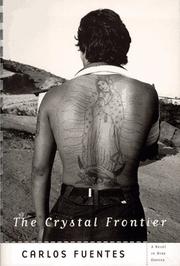
The Crystal Frontier (original Spanish title: La frontera de cristal) is a 1995 novel written by Mexican writer Carlos Fuentes. The title can also be translated as "The Glass Border". An English translation, by Alfred MacAdam, was published in 1997.
Basic plot
A series of short stories which explores relationships between people of Mexico and the United States. There are many connections between the stories, such as characters that appear in multiple stories (the most prominent of which is the wealthy Mexican businessman, Leonardo Barroso). A major, recurring theme in the text is that large parts of the USA were once part of Mexico, all the way from California to Texas, and so the Mexican people feel a special connection with that area. Another important idea is that both countries depend on each other for trade and culture, and many people divide their time and their lives between both sides of the border.
In the second story a Mexican student goes to medical school in New York state, where he finds that people there know nothing about the conditions in Mexico, but feel ready to make judgments.
Index
The novel is made up of nine short stories, which take place on both sides of the Rio Grande/Río Bravo. The stories are:
La capitalina (translated as "A Capital Girl")
La pena (translated as "Pain")
El despojo (translated as "Spoils")
La raya del olvido (translated as "The Line of Oblivion")
Malintzin de las maquilas (translated as "Malintzin of the Maquilas")
Las amigas (translated as "The Friends")
La frontera de cristal (translated as "The Crystal Frontier")
La apuesta (translated as "The Bet")
Río Grande, Río Bravo
Story Summaries
La capitalina
The protagonist, Michelina, is a young woman who grew up in Mexico City and is the daughter of a very old Mexican family. Her family has become poor over time, but still sticks to the aristocratic traditions and values. The very rich man Leonardo Barroso from northern Mexico offers his “protection” services to the family as Michelina's godfather. To seal the deal, he invites Michelina up to his northern town Campazas for a visit, to meet his son Marianito, with whom Michelina will be set up to get married. There is emphasis on the contrast between Mexico City (which is presumed to be polished) and northern Mexico (which seems more liberal, but also flaunts the accessibility to the border and the U.S... Location is POWER!). There is also some problematization of expected gender roles and familial relationships... Michelina frequently reflects on female purity and subtlety (most prominently exemplified in her fixation on old-fashioned clothing, especially the crinoline, and on Mexico's historical connection to Catholicism and especially nuns), but she is also a confident and strong woman. In turn, Marianito is supremely introverted and timid and doesn’t know how to deal with women; he just wants to be left alone. Meanwhile, Michelina and her father-in-law-to-be are totally crushing on each other. However, anything can be bought, and Michelina agrees to marry Marianito; the story ends with their wedding, after which Michelina and Leonardo flit across the border to the U.S. and hook up at last.
La pena
Juan Zamora is the main character; the narrator tells Juan's story in a first person voice, while Juan "keeps his back to us". Juan is a 23-year-old medical student from Mexico who goes to Cornell University for a postdoc. This is during the early 1980s, when Mexico has its oil peak and the Salvadoran Civil War is getting started. Money is a big theme, because Mexico has money from the oil peak yet still isn’t managing it well and is still corrupt. The theme of money and how to use it touches Juan personally since his father was a rare honest lawyer and his mother always resented him for not using bribes to make the family rich. After father's death, Juan's mother asked boss-man Leonardo Barroso (from story “La capitalina”) to give Juan a grant for Cornell as a favor. Juan goes to live with an American Republican family, the Wingates, who are huge fans of Reagan and his policies of interference in Central America. At Cornell, Juan struggles to understand American society and to fit in, and to do so, he lies and says he's rich (from a Mexican landowners background). However, he only really fits in when he meets Jim, and they start dating. They try to focus on the present but there are glimpses of the huge cultural divide between them, and the Wingate family disapproves of their homosexuality. Eventually Jim breaks up with Juan because he has a certain future to maintain as part of the American aristocratic elite, and Juan abandons his studies and goes home to Mexico. Four years later, the Wingate family travels to Mexico and they have the idea to surprise Juan with a visit... they go to his address and are surprised that it's a dumpy little apartment complex, and Juan's not in. Juan, meanwhile, has a recurring dream of being with Jim at Cornell and committing suicide together.
El despojo
以上文字摘自英文维基百科「The Crystal Frontier」(有删节,去掉了参考文献等尾部小节),按 CC BY-SA 4.0 使用,作者为维基百科的各位编者。
资料卡
- 原题
- La frontera de cristal
- 原作语言
- 西班牙语
- 首次出版
- 1995 年
- 作品形式
- 长篇小说
- 首版出版社
- Alfaguara
- 主题
- 格兰德河
资料卡来自 Wikidata Q3209256(CC0),众包数据,个别字段可能不全。