书单
百科
这个词条暂时没有中文维基百科条目,下面是英文维基百科的内容(英文原文):
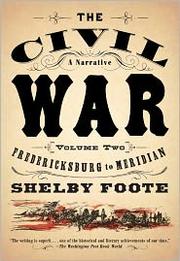
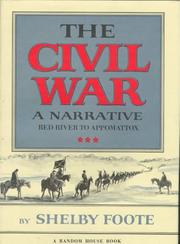
The Civil War: A Narrative (1958–1974) is a three-volume, 2,968-page, 1.2 million-word history of the American Civil War by Shelby Foote. Although previously known as a novelist, Foote is most famous for this non-fictional narrative history. While it touches on political and social themes, the main thrust of the work is military history. The individual volumes include Fort Sumter to Perryville (1958), Fredericksburg to Meridian (1963), and Red River to Appomattox (1974).
Writing
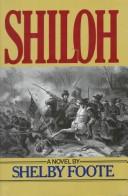
On the strength of his novel Shiloh, Bennett Cerf of Random House asked Foote to write a short history of the Civil War in time to capitalize on the centenary of the war. Cerf offered him a contract for a work of approximately 200,000 words. Foote worked for several weeks on an outline and decided that Cerf's specifications were too small. He requested the project be expanded to three volumes of 5–600,000 words each. He estimated it would take nine years. It took twenty.
During the project, Foote lived off three Guggenheim Fellowships (1955, 1956, 1959), Ford Foundation grants, and loans from his longtime friend Walker Percy. Foote finished the trilogy's first volume, Fort Sumter to Perryville, a 400,000-word account, in 1958. By 1963 Foote had finished the second volume, Fredericksburg to Meridian. In 1964 he began Volume 3, Red River to Appomattox, but found himself repeatedly distracted by the ongoing events in the nation and was not able to finish and publish it until 1974. Writing the third volume took as many years as had the first two combined.
Foote had no training as a historian. He visited battlefields and read widely: standard biographies, campaign studies, and recent books by Hudson Strode, Bruce Catton, James G. Randall, Clifford Dowdey, T. Harry Williams, Kenneth M. Stampp and Allan Nevins. He also mined the primary sources in the 128-volume Official Records of the War of the Rebellion. He developed new respect for such disparate figures as Ulysses S. Grant, William T. Sherman, Patrick Cleburne, Edwin Stanton and Jefferson Davis. By contrast, he grew to dislike such figures as Phil Sheridan and Joe Johnston.
Foote described himself as a "novelist-historian" who employed "the historian’s standards without his paraphernalia" and "employed the novelist’s methods without his license." To heighten the storytelling of his book, Foote did not utilize footnotes. Citations would have "totally shattered what I was doing. I didn't want people glancing down at the bottom of the page every other sentence".
Volumes
Fort Sumter to Perryville
The first volume covers the roots of the war to the Battle of Perryville on October 8, 1862. All the significant battles are here, from Bull Run through Shiloh, the Seven Days Battles, Second Bull Run to Antietam, and Perryville in the fall of 1862, but so are the smaller and often equally important engagements on both land and sea: Ball's Bluff, Fort Donelson, Pea Ridge, Island No. Ten, New Orleans, Monitor versus Merrimac, and Stonewall Jackson's Valley Campaign.
Fredericksburg to Meridian
The second volume is dominated by the almost continual confrontation of great armies. The starting point for this volume is the Battle of Fredericksburg, fought on December 13, 1862, between General Robert E. Lee's Army of Northern Virginia and the Army of the Potomac commanded by Maj. Gen. Ambrose E. Burnside. For the fourth time, the Army of the Potomac attempts to take Richmond, resulting in the bloodbath at Fredericksburg. Then Joseph Hooker tries again, only to be repulsed at Chancellorsville as Stonewall Jackson turns his flank, resulting in Jackson's mortal wounding.
In the West, one of the most complex and determined sieges of the war has begun. Here, Ulysses S. Grant's seven relentless efforts against Vicksburg demonstrate Lincoln's and Grant's determination. With Vicksburg finally under siege, Lee again invades the North. The three-day conflict at Gettysburg receives significant coverage. (The lengthy chapter on Gettysburg has also been published as a separate book, Stars in Their Courses: The Gettysburg Campaign, June–July 1863; his account of Vicksburg was published separately as The Beleaguered City: The Vicksburg Campaign, December 1862 – July 1863.)
Red River to Appomattox
The final volume opens with the beginning of the two final, major confrontations of the war: Grant against Lee in Virginia, and Sherman pressing Johnston in north Georgia in 1864. The narrative describes the events and battles from Sherman's March to the Sea to Lincoln's assassination and the surrender of Lee at Appomattox.
Reception and legacy
Many reviews of The Civil War: A Narrative praised its style. Southern historian C. Vann Woodward argued Foote's work was acceptable "narrative history," which "nonprofessionals have all but taken over." Foote was criticized for his lack of interest in more current historical research, and for a less firm grasp of politics than of military affairs. John F. Marszalek praised Foote's grasp of military history, "Twenty years of dedicated labor have resulted in a literary masterpiece which places Shelby Foote among those very few historians who are authors of major syntheses...this history will long stand with the volumes of Bruce Catton as the final word on the military history of the Civil War."
In 1993, Richard N. Current argued that Foote too often depended on a single source for lifelike details, but "probably is as accurate as most historians...Foote's monumental narrative most likely will continue to be read and remembered as a classic of its kind." Academic historians routinely lament Foote's lack of citations.
以上文字摘自英文维基百科「The Civil War: A Narrative」(有删节,去掉了参考文献等尾部小节),按 CC BY-SA 4.0 使用,作者为维基百科的各位编者。
资料卡
- 原题
- The Civil War
- 原作语言
- 英语
- 首次出版
- 1958 年
- 体裁
- 叙事史学
- 主题
- 南北战争
资料卡来自 Wikidata Q7723239(CC0),众包数据,个别字段可能不全。