书单
百科
这个词条暂时没有中文维基百科条目,下面是英文维基百科的内容(英文原文):
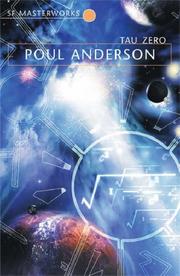
Tau Zero is a hard science fiction novel by American writer Poul Anderson. The novel was based upon the short story "To Outlive Eternity" appearing in Galaxy Science Fiction in 1967. It was first published in book form in 1970. The book is a quintessential example of "hard sci-fi", as its plot is dominated by futuristic technology grounded in real physics principles. It was nominated for the Hugo Award for Best Novel in 1971.
Plot
Tau Zero follows the crew of the starship Leonora Christine, a colonization vessel crewed by 25 men and 25 women aiming to reach the nearby star Beta Virginis. The ship is powered by a Bussard ramjet. This mode of propulsion is not capable of faster-than-light travel, and so the voyage is subject to relativity and time dilation: the crew will spend 5 years on board, whereas 33 years will pass on the Earth before they arrive at their destination. The ship accelerates at a modest constant rate for most of the first half of the journey, eventually achieving an appreciable percentage of the speed of light, and the goal is to decelerate at the same rate during the second half of the journey by reversing the ram scoop fields. However, the Leonora Christine passes through a small nebula before the half-way point, damaging the deceleration field generators. Since the Bussard engines must be kept running to provide particle/radiation shielding, and because of the hard radiation produced by the engines, the crew can neither repair the damage nor turn off their ramjet.
The text consists of narrative prose interspersed with paragraphs in which Anderson explains the scientific basis of relativity, time dilation, the ship's mechanics and details of the cosmos outside.
As there is no hope of completing the original mission, the crew increase acceleration even more; they need to leave the Milky Way altogether in order to reach a region where the local gas density, and the concomitant radiation hazard, are low enough that they can repair the decelerator. The ship's ever-increasing velocity brings the time dilation to extreme levels and takes the crew further and further away from any possibility of contact with humanity. The initial plan is to locate and land on a suitable planet in another galaxy. Millions of years would have passed since their departure, and in any case they would be millions of light years from Earth. However, they find the vacuum of intergalactic space insufficient for safety; they must instead travel to a region between superclusters of galaxies to make repairs. They do, but the extremely thinly spread matter is then too dispersed to use for deceleration. They must wait, flying free but essentially without the ability to change course, until they randomly encounter enough galactic matter to decelerate adequately to search for habitable planets. To make the waiting time shorter, they continue accelerating through the galaxy clusters they encounter, more and more closely approaching the speed of light with tau, or proper time, decreasing closer and closer to zero.
Throughout the story, Charles Reymont, the ship's Constable, fights to keep hope alive in the confined community and at the same time maintain order and discipline, sometimes at great emotional cost to himself. He explains his system to his partner Chi-Yuen Ai-Ling:
The human animal wants a father-mother image but, at the same time, resents being disciplined. You can get stability like this: The ultimate authority source is kept remote, god-like, practically unapproachable. Your immediate superior is a mean son-of-a-bitch who makes you toe the mark and whom you therefore detest. But his own superior is as kind and sympathetic as rank allows ... The end result is that Captain Telander's been isolated. His infallibility doesn't have to cope with essentially unfixable human messes ... I'm the traditional top sergeant. Hard, harsh, demanding, overbearing, inconsiderate, brutal. Not so bad as to start a petition for my removal. But enough to irritate, be disliked, although respected. That's good for the troops. It's healthier to be mad at me than to dwell on personal woes... [First Officer] Lindgren smooths things out. As first officer, she sustains my power. But she overrules me from time to time. She exercises her rank to bend regulations in favor of mercy. Therefore she adds benignity to the attributes of Ultimate Authority.
The storyline is similar to that of the long poem and later opera Aniara, in which the ship was unable to stop and doomed to travel endlessly, but Tau Zero has a more upbeat ending. By the time the ship is repaired, tau has decreased to less than a billionth and the crew experience "billion-year cycles which pass as moments". But by the time that they are ready to attempt to find a future home, they realize that the universe is approaching a Big Crunch (the Big Crunch was a leading theory of the fate of the universe at the time this book was written). The universe collapses (a process the starship survives because there is still enough uncondensed hydrogen for maneuvering outside the growing singularity) and then explodes in a new Big Bang. The voyagers then decelerate and finally disembark at a planet with a habitat suitably similar to Earth, on which the vegetation has a vivid bluish-green color.
Prominent characters
Ingrid Lindgren, Ship's First Officer – Swedish; she and Reymont had a relationship until he learned of her liaisons with Boris Federoff; she becomes the "face" of authority and the link between crew and passengers.
Charles Reymont, Ship's Constable – Interplanetarian (i.e. no Earth-country citizenship, by choice), veteran of two previous interstellar flights; determined to maintain order and ensure survival in the face of disaster and hopelessness, he becomes the ship's de facto leader (although he defers to the ship's hierarchy).
Boris Fedoroff, Ship's Chief Engineer – Russian
以上文字摘自英文维基百科「Tau Zero」(有删节,去掉了参考文献等尾部小节),按 CC BY-SA 4.0 使用,作者为维基百科的各位编者。
资料卡
- 原题
- Tau Zero
- 原作语言
- 英语
- 首次出版
- 1970 年
- 作品形式
- 长篇小说
- 体裁
- 硬科幻
- 首版出版社
- 双日出版社
- 获奖
- 星云奖最佳外国小说奖(1993)
资料卡来自 Wikidata Q1968531(CC0),众包数据,个别字段可能不全。
更多资料与书评
在哪读
波尔·安德森 的其他作品
作者页 ›相似的书
 豆瓣 #38
 豆瓣 #82